
Automatic blog content creation can give small business websites a practical way to publish useful information without depending on a large marketing team.
For many small companies, content marketing looks simple from the outside. A business creates a WordPress website, adds service pages, publishes a few blog articles, and expects to continue producing content regularly.
In practice, this often becomes difficult.
The owner may be responsible for sales, customer communication, operations, invoicing, supplier relationships, staff management, and daily business decisions. Writing a detailed article every week is rarely the highest operational priority.
This creates a common problem.
The business understands that content is important, but it cannot maintain the consistency required to build a strong information base around its services.
AI can help change this.
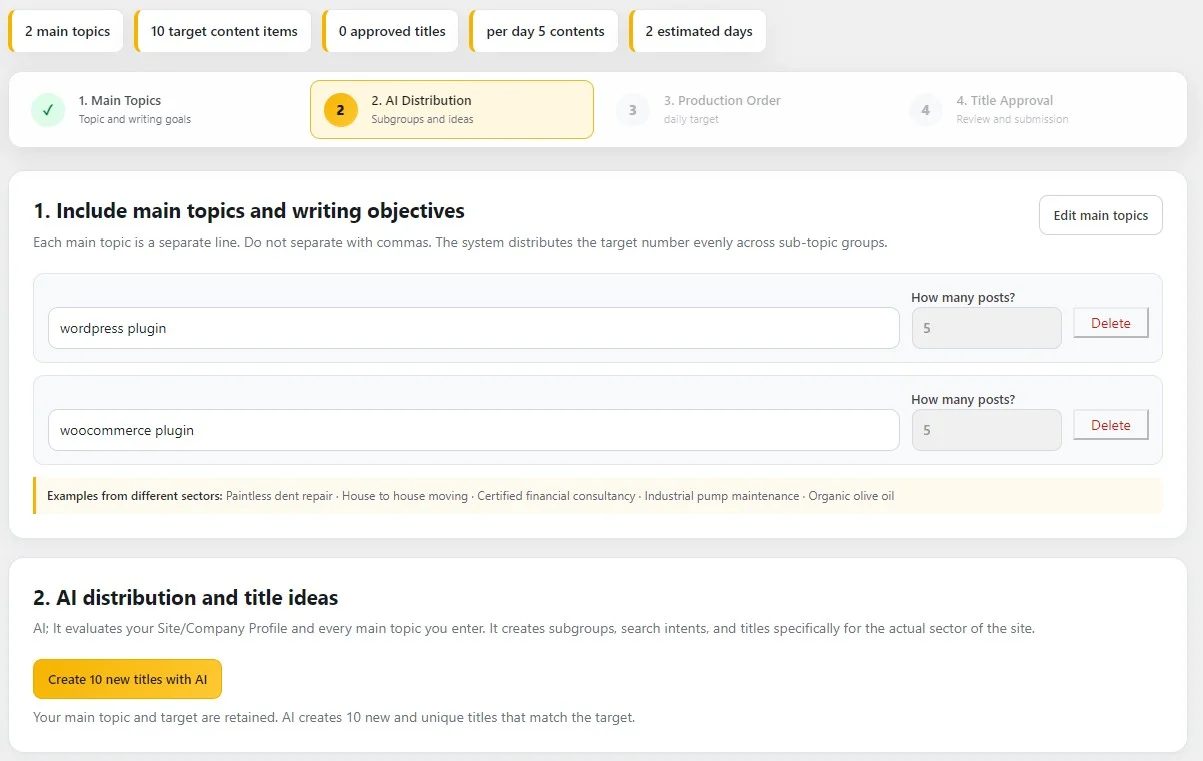
Automatic blog content creation allows a small business to define the subjects it wants to cover and use artificial intelligence to assist with producing relevant WordPress content according to predefined rules.
PW Feed supports this type of approach by combining AI content generation, SEO, GEO, and wordpress plugin functionality in a workflow designed to reduce repetitive work.
The purpose is not to turn a small business website into a high-volume publishing platform.
The purpose is to help the website explain its expertise more consistently.
Why small businesses struggle with content production
Small businesses usually have limited resources.

A large company may employ separate people for SEO, copywriting, content planning, social media, website management, and analytics.
A smaller business may have one person handling several of these responsibilities.
This creates a natural limitation.
Even when the business has strong real-world knowledge, that expertise may never be converted into online content.
A repair company may answer the same customer questions every week.
A consultant may explain the same process during every meeting.
A professional service company may repeatedly clarify the same technical subjects.
A retailer may receive similar product questions from many customers.
All of this information has potential value as website content.
The problem is turning day-to-day business knowledge into articles.
AI can reduce the production barrier.
Instead of expecting the business owner to become a full-time writer, an automated system can help transform defined topics into structured content.
A small business does not need hundreds of random articles
One of the most important principles of automatic blog content creation is restraint.
Small businesses do not need to compete with major media publishers by producing enormous quantities of content.
They need relevant content.
A local service company may benefit more from thirty strong articles directly connected to its services than from three hundred generic articles covering unrelated topics.
The same is true for many niche businesses.
A focused content library can answer important customer questions, explain services, support commercial pages, and improve the overall clarity of the website.
AI makes publishing easier, but the business should still control the subject area.
A strong content plan might focus on:
Customer problems.

Service explanations.
Frequently asked questions.
Common mistakes.
Buying considerations.
Product or service comparisons.
Industry terminology.
Maintenance advice.
Process explanations.
Local or sector-specific concerns.
Each article should be connected to something the business genuinely understands.
Automatic content should begin with real customer questions
Small businesses have an important advantage over generic content publishers.
They interact directly with customers.
This means they already possess valuable search-intent information.
Questions asked by customers can become excellent blog subjects.
Imagine a company receives questions such as:
How long does the service take?
What is included?
What is the difference between two service options?
How should a customer prepare?
Can the problem be repaired?
How much maintenance is required?
Which option is suitable for a particular situation?
These questions may also appear in search engines.

An AI content system can help turn them into detailed articles.
This creates a much stronger strategy than generating topics simply because an AI model considers them popular.
Real customer questions often represent real user intent.
For SEO and GEO, this can be highly valuable because the content addresses specific information needs directly.
AI can help businesses convert expertise into searchable content
Many business owners underestimate how much useful knowledge they possess.
They may consider certain information obvious because they work with it every day.
For potential customers, the same information may be unfamiliar.
This knowledge gap creates content opportunities.
For example, a specialist may understand why one solution is appropriate in one situation but not another.
A customer may search online for exactly that distinction.

AI can help structure this expertise into an article.
The business defines the subject and important information.
AI assists with organization, writing, explanations, related terminology, and formatting.
This approach allows small companies to publish content based on genuine experience without requiring the owner to write every paragraph manually.
SEO gives small business content direction
Automatic content generation should not operate without SEO planning.
SEO helps determine which subjects may be useful to people searching online.
For a small business, the goal is not necessarily to target the highest-volume keyword in the industry.
Large keywords can be extremely competitive.
More specific searches may be more valuable.
For example, a broad keyword may attract thousands of searches but include users with very different intentions.
A specific question may have lower volume but attract people who are much closer to needing the business’s service.
This is why long-tail content can be effective for small websites.
An AI SEO content workflow can target detailed questions while naturally incorporating related terms.
A wordpress plugin can help bring this content directly into the WordPress publishing environment.
PW Feed can support businesses that want to turn defined topics into structured SEO and GEO-oriented articles without repeating the same manual process every time.
Local businesses can use content to explain service relevance
Many small businesses operate within a particular city, region, or service area.
Their content should reflect real business geography where appropriate.
This does not mean adding city names artificially to every paragraph.
Geographic relevance should be accurate and useful.
A business can discuss real service areas, local conditions, regional customer needs, or practical considerations that genuinely vary by location.

This approach can support local search visibility while keeping the content natural.
For GEO, geographic clarity can also help AI systems understand where a business operates and which audiences its information may be relevant to.
Businesses should avoid creating hundreds of nearly identical city pages where only the location name changes.
That type of automation produces weak content.
A better strategy creates genuinely distinct information when geographic differences matter.
Automatic content can support service pages
Blog articles should not exist separately from the commercial parts of a small business website.
They can support important service pages.
Suppose a company has a primary service page that explains what it offers.
The blog can answer more detailed questions around that service.
One article may explain when the service is appropriate.
Another may discuss common mistakes.
Another may compare different solutions.
Another may explain what customers should expect.
These informational articles can then connect users naturally to the relevant service.
This creates a useful journey.
A visitor may first arrive through an informational search, learn about the subject, and then discover the commercial solution offered by the company.
AI-generated blog content becomes more valuable when it supports this wider site structure.
Small businesses should avoid generic AI language
One of the risks of automatic content creation is generic wording.
Phrases such as revolutionary solution, game-changing technology, and transform your business may appear frequently in weak AI-generated content.
These expressions often say very little.
Small business content should be specific.
If a company provides a particular service, the article should explain the service clearly.
If PW Feed is discussed, the content should identify what PW Feed relates to: WordPress, AI content automation, SEO, GEO, and wordpress plugin workflows.
Specific language builds clarity.
It also makes the article more useful for generative systems because important entities and relationships are easier to identify.
GEO benefits from clear statements more than vague promotional language.
Brand voice still matters when content is automated
Automation should not remove the personality of the business.
A professional services company may want a formal tone.
A local service provider may prefer accessible and practical language.
A technology company may need more technical explanations.
A retailer may focus on simple buying guidance.
The AI workflow should reflect these differences.
Small businesses often build customer loyalty through communication style.
Their website should feel connected to the same business.
Automatic content creation works best when the system follows defined language and brand rules rather than producing the same style for every website.
A consistent publishing schedule can help small businesses
Many small business blogs follow an irregular pattern.
Several articles are published during the website launch.
Then nothing appears for six months.
Another article is added.
Then the blog becomes inactive again.
AI can help create greater consistency.
The business can define a realistic publishing schedule.
This could be several articles per month rather than several articles per day.
The ideal frequency depends on the website, industry, and amount of useful subject matter available.
Consistency is more valuable than a short burst of unnecessary publishing.
A controlled schedule also gives the business time to evaluate whether new articles remain relevant and useful.
Automatic content creation should therefore focus on sustainability.
Draft mode can be particularly useful for small companies
A small business may want the efficiency of AI without giving up final control.
Draft mode provides a practical compromise.
AI can generate an article and place it in WordPress as a draft.
The business owner or administrator can review it before publication.
This review may only take a fraction of the time required to write the article from scratch.
The reviewer can check:
Business facts.
Prices if mentioned.
Service terminology.
Local information.
Brand tone.
Links.
Product descriptions.
Examples.
This model reduces production time while allowing the company to protect accuracy.
For businesses just beginning with AI content, draft-first publishing is often a useful way to build confidence in the workflow.
Automatic publishing can work when the rules are mature
Some businesses may eventually choose to automate publication for specific content categories.
This can work when the rules are well defined.
For example, the company may approve a list of informational topics.
The system may be limited to a certain number of articles each month.
Commercial claims may be restricted.
Required brand terminology may already be configured.
SEO and GEO requirements may be established.
Under these conditions, selected content can move from generation to publication with less manual intervention.
The important factor is control.
Automatic publishing should be based on rules rather than unlimited content generation.
Content variety helps small websites grow
A business blog becomes stronger when it covers different user needs.
Every article should not be another version of the same commercial message.
Useful content categories may include educational articles, comparisons, troubleshooting, FAQs, explanations, guides, industry insights, and practical advice.
This variety supports different stages of the customer journey.
Some users are only researching.
Others are comparing options.
Some already understand the problem and want a provider.
A diverse content library can communicate with each group.
AI can help produce this variety when topic planning is organized properly.
Without planning, automation can create ten articles with different titles that all say the same thing.
Duplicate search intent should be controlled
Small websites need to use their content resources carefully.
Publishing multiple pages for the same search intent can dilute the structure.
For example, these topics may appear different:
AI content for small business.
AI blog content for small businesses.
Automatic business blog writing with AI.
AI-generated small business content.
Depending on how they are written, all four could answer essentially the same query.
Instead of producing separate articles for every wording variation, the website should create one strong page and use other content opportunities for different questions.
This allows the site to expand its overall search footprint.
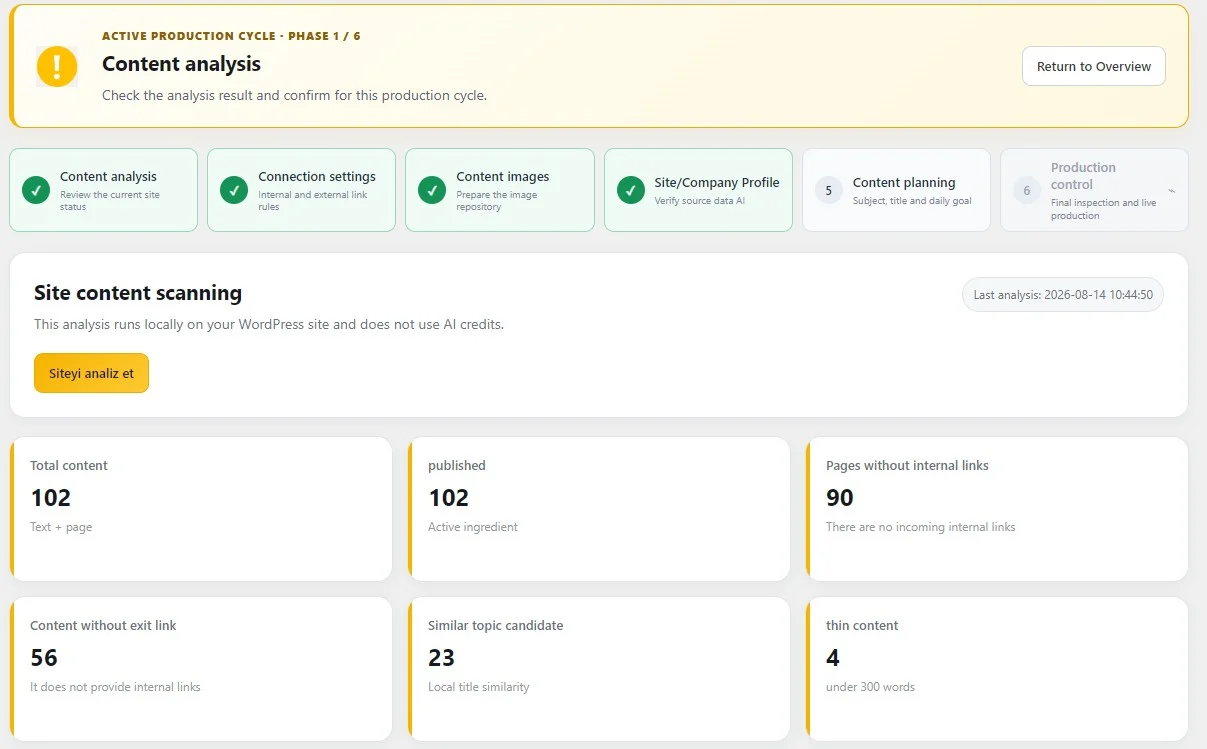
AI content automation should therefore consider subject uniqueness before generating new pages.
GEO gives small businesses another reason to be clear
Search is no longer limited to a list of traditional blue links.
Users increasingly ask questions through AI assistants and generative search systems.
This makes information clarity important.
A small business should clearly explain:
Who it is.
What it offers.
Which problems it solves.
Where it operates when location matters.
How its products or services work.
How users can contact or buy from the company.
Consistent information across the website can support this understanding.
GEO-oriented content should make these relationships easy to interpret.
The objective is not to manipulate AI systems.
It is to publish information in a form that is clear enough for both people and machines to understand.
SEO and GEO can work together for small business sites
SEO and GEO do not need separate content strategies.
Many good practices support both.
Clear topics help SEO and GEO.
Useful answers help both.
Consistent business information helps both.
Strong semantic relationships help both.
Relevant internal links help both.
Well-defined entities help both.
Accurate content helps both.
A small business can therefore create articles that support traditional search while also preparing for increasing AI-driven discovery.
PW Feed can be part of this workflow by helping create WordPress content that considers both SEO and GEO principles during generation.
Automatic content can reduce dependence on external writing resources
Hiring professional writers can be valuable, but it may not be financially practical for every small business.
Some companies may only need occasional professional editorial support.
AI can reduce the amount of external production required.
The business can use automation for routine informational content while reserving professional writing resources for high-value pages, technical subjects, major campaigns, or important commercial material.
This hybrid model can provide better cost control.
It also allows professional staff to focus on content that genuinely requires their expertise.
AI becomes a productivity tool rather than a complete replacement for all forms of writing.
Content should lead naturally toward business action
Informational content should provide genuine value first.
However, users should also be able to find the next step when they are interested in the solution.
For readers who want more information about PW Feed, WordPress AI content automation, SEO, GEO, and related functionality, the PW Feed contact page provides a direct route for further questions.
Businesses ready to examine purchase options can continue to the PW Feed buy page.
These calls to action should appear naturally.
The article itself should remain useful even for a visitor who is not yet ready to purchase.
This balance can improve trust.
Small business content should build expertise over time
One article rarely transforms a website.
The benefit of content develops gradually.
A business publishes one useful explanation.
Then another.
Over time, the site may contain detailed information about its primary services, customer questions, common problems, comparisons, terminology, and practical considerations.
This creates an increasingly complete knowledge base.
Search engines gain more context.
Potential customers find more answers.
AI systems encounter a more consistent description of the business and its area of expertise.
Automatic content creation makes this gradual development easier to sustain.
The objective should therefore be cumulative value.
Each new article should add another useful piece to the website.
AI can make niche expertise more visible
Many small businesses operate in specialized fields.
Their expertise may not be represented well online because staff are focused on delivering services rather than publishing information.
AI can help close this gap.
A specialist can provide the core subject matter.
The content system can transform it into readable articles.
This allows niche expertise to become searchable.
It can also help differentiate the company from competitors whose websites provide only basic sales information.
Educational content can demonstrate that the business understands the subject in depth.
This is particularly valuable when customers need to trust the provider before making contact.
Content automation should protect business accuracy
Small business content often includes details specific to the company.
These may include service areas, product features, processes, availability, or operational policies.
AI should not invent these details.
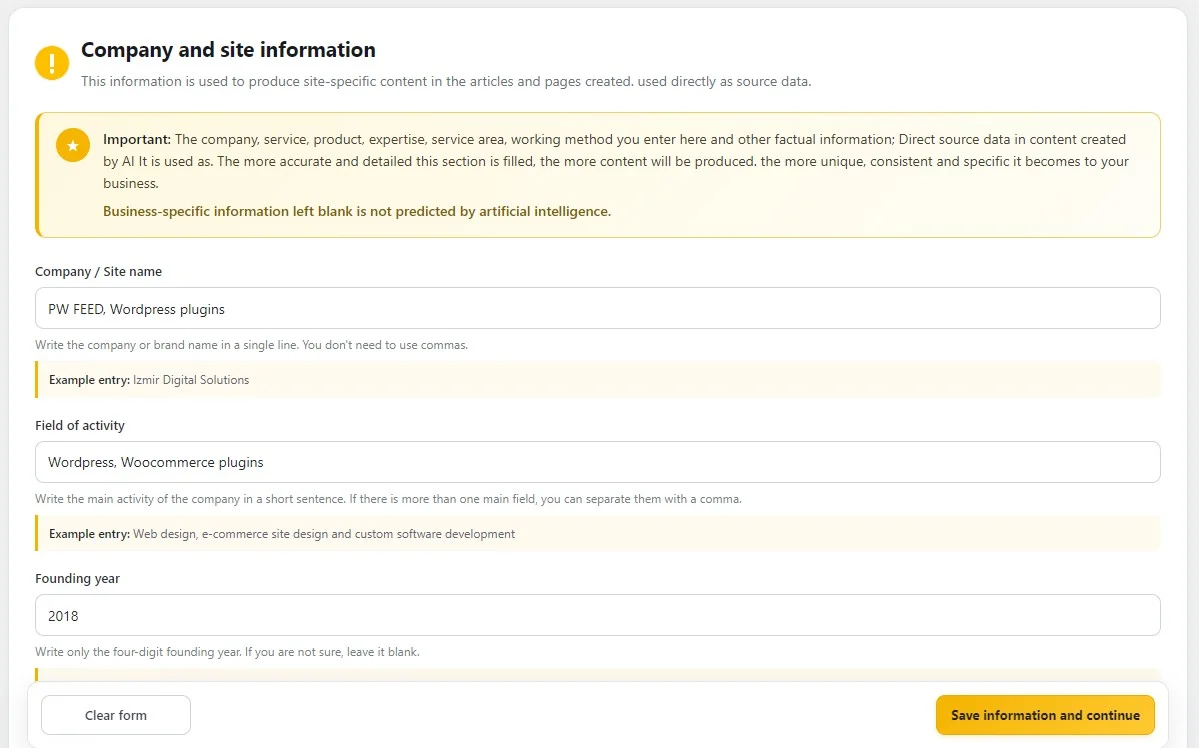
A good workflow should use verified business information.
When a fact is unknown, the system should avoid presenting speculation as company information.
This is another reason why business profiles and controlled content rules matter.
Automation is safest when AI works from defined data rather than assumptions.
Accuracy supports users, SEO quality, and GEO clarity.
The best topics often come from the business itself
Keyword tools can be useful, but businesses should also examine their own daily operations.
Customer emails can reveal questions.
Sales conversations can reveal objections.
Support requests can reveal confusion.
Service enquiries can reveal common problems.
These are valuable content signals.
A company that collects these subjects can build a highly relevant blog plan.
AI can then help convert this plan into detailed articles.
This approach gives small businesses an advantage.
Their content is based on real interactions rather than purely theoretical keyword lists.
A wordpress plugin can simplify the operational process
The more external tools a small business needs, the more complicated content production becomes.
A workflow that requires multiple applications, manual copying, separate formatting, and repeated configuration can discourage consistent publishing.
A wordpress plugin can simplify this by keeping content generation closer to the website.
The business can manage content from the platform it already uses.
PW Feed is designed to support AI content production within this type of WordPress-oriented environment.
The goal is practical efficiency.
Small businesses should not need an enterprise-level content infrastructure simply to maintain a useful blog.
Automation should make content easier, not noisier
There is a temptation to measure AI productivity by volume.
How many articles can be generated in one hour?
How many pages can be published in one day?
For most small businesses, these are the wrong questions.
A better question is:
How much useful content can the business publish without reducing quality?
The difference matters.
Fifty weak articles can create clutter.
Five strong articles addressing real customer questions may provide much more value.
Automation should remove the difficulty of producing useful content.
It should not create a new problem by flooding the website with unnecessary pages.
PW Feed and small business WordPress content
PW Feed can help small businesses approach AI-generated content as a controlled, long-term publishing process.
The workflow can combine WordPress, artificial intelligence, SEO, GEO, target topics, and publishing rules.
This can help companies that want to maintain a more active website but do not have a dedicated content team.
The business remains responsible for its expertise and strategic direction.
AI assists with turning those priorities into structured content.
This distinction is important.
The company should not become dependent on generic AI ideas.
Its real business knowledge should remain the foundation.
A small business content strategy should remain manageable
The best system is one that the business can actually maintain.
A complicated editorial process may look impressive but fail if no one has time to manage it.
AI automation can simplify the workflow by reducing the number of repetitive actions.
A manageable strategy might include:
A defined list of subject areas.
A controlled publishing frequency.
Clear SEO targets.
GEO-oriented clarity.
A business profile.
Draft review where needed.
Automatic publication only for approved content.
Regular checks for topic duplication.
This creates a practical system rather than an overwhelming one.
Final thoughts on automatic blog content creation for small businesses
Automatic blog content creation can be particularly valuable for small business websites because it addresses one of their biggest limitations: time.
Small companies often possess valuable expertise but lack the resources to convert that knowledge into consistent online content.
AI can help reduce this gap.
It can assist with topic development, article structure, long-form writing, SEO terminology, GEO clarity, titles, metadata, and WordPress publishing workflows.
A wordpress plugin can help keep these processes closer to the existing website environment.
PW Feed brings these elements together for businesses seeking a structured approach to AI content production.
The strongest strategy is not to publish as much content as possible.
It is to publish information that reflects real customer needs and genuine business expertise.
Small businesses can use AI to explain what they know, answer what customers ask, support important service pages, and gradually build a stronger information base around their brand.
When this process is guided by SEO, GEO, originality, controlled publishing, and accurate business context, automatic blog content creation becomes more than a shortcut.
It becomes a practical way for small businesses to maintain a stronger and more visible WordPress presence over time.