
How to automate long-form content creation in WordPress
Long-form content can give a WordPress website room to explain complex subjects in depth, answer multiple related questions, demonstrate expertise, and build stronger topical coverage around important search themes.
The challenge is production.
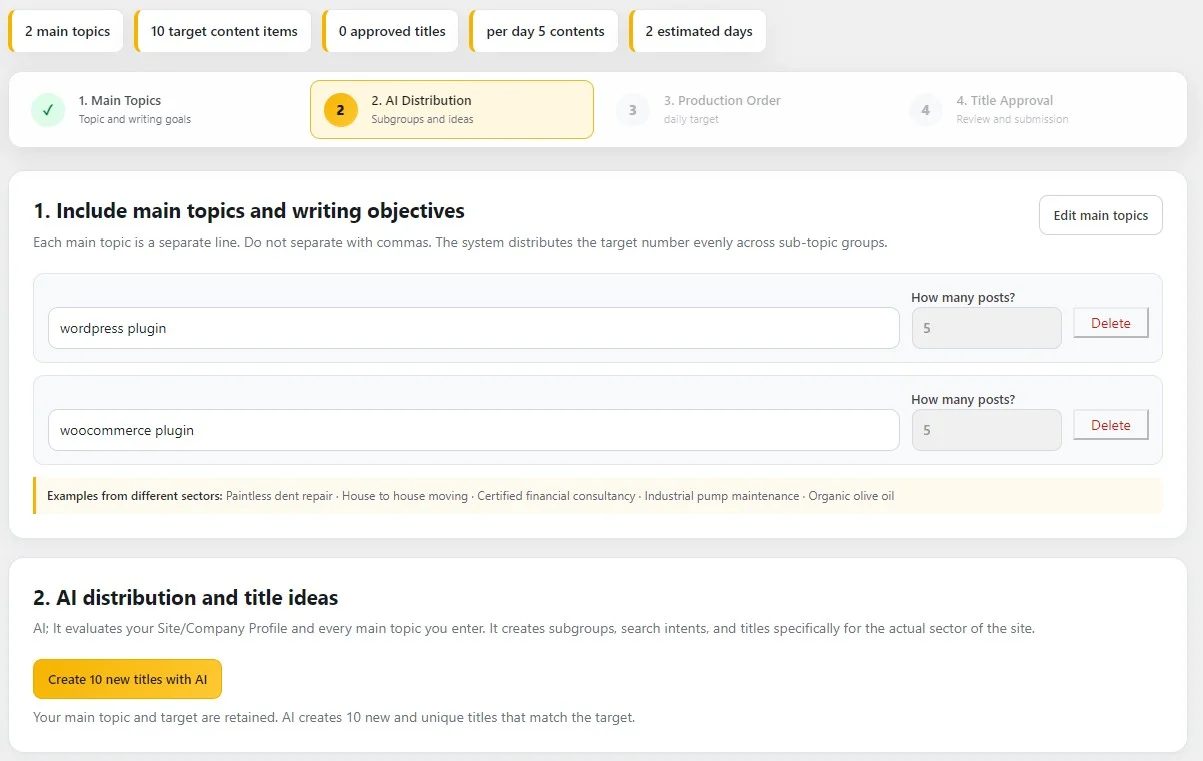
A detailed article may require research, planning, structure, writing, editing, SEO preparation, internal linking, and publication. When every step is completed manually, producing high-quality long-form content consistently can become difficult for small businesses, agencies, publishers, and website owners.
Artificial intelligence can reduce much of this repetitive workload.
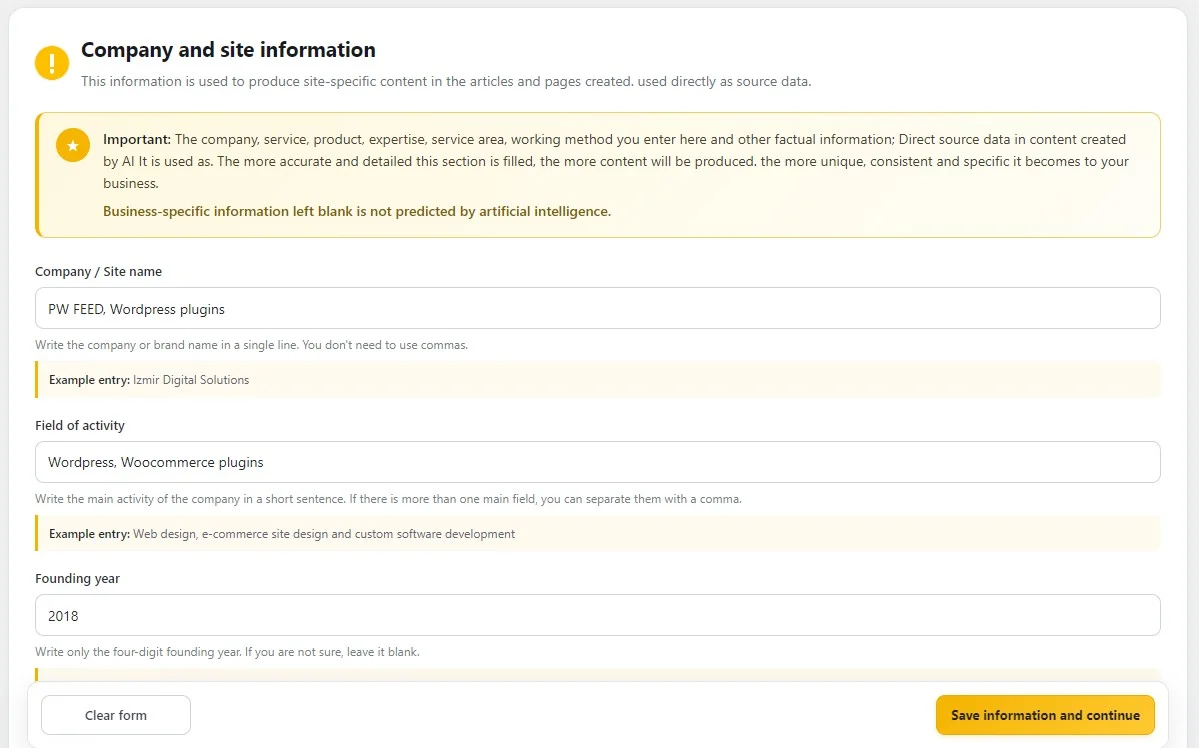
With a structured AI content process, WordPress users can define a topic, establish the intended search purpose, provide relevant website context, and generate a comprehensive article according to predefined rules. The content can then be reviewed, saved as a draft, or published depending on the workflow selected by the website owner.
PW Feed supports this type of process by bringing AI content generation together with WordPress, SEO, GEO, and wordpress plugin functionality.
The objective is not simply to make articles longer. It is to make detailed content production more manageable while maintaining relevance, originality, and a clear purpose for every page.
What makes content genuinely long-form?
Long-form content should not be defined only by word count.
An article containing 2,000 words can still be shallow if the same idea is repeated continuously. A shorter article may provide much more value if every section answers a different question.
Useful long-form content provides depth.
It explores the main topic from multiple relevant perspectives.
It may explain a problem, define terminology, compare possible approaches, address common questions, discuss limitations, offer practical considerations, and connect the topic to related subjects.

The additional length exists because the subject requires explanation.
This distinction becomes especially important with AI.
Artificial intelligence can produce text quickly, making it technically easy to create extremely long articles. Without strong rules, however, additional length can become repetition.
An effective AI workflow should therefore focus on informational coverage rather than arbitrary expansion.
Why long-form content can be useful for WordPress websites
Some search queries can be answered in a few paragraphs.
Others require deeper information.
A user researching a simple definition may need a short explanation. Someone trying to understand an entire process may expect considerably more detail.
Long-form content gives a WordPress website the space to cover related questions on one page without forcing the reader to search across many small articles.
It can also help establish context around a subject.
For example, an article about automatic WordPress content creation may discuss AI generation, search intent, article structure, SEO, GEO, internal links, publishing controls, originality, and quality review.

These topics belong together.
A detailed article can explain their relationships rather than treating each point as an isolated statement.
This creates a richer resource for readers.
Long-form content should start with a narrow objective
One of the biggest mistakes is beginning with an extremely broad topic.
A title such as Everything About WordPress is too large to cover effectively in one article.
Long-form content works better when it explores a specific problem deeply.
For example:
How to automate long-form content creation in WordPress.
How to build a WordPress content cluster.
How to prevent duplicate AI content.
How to optimize WordPress content for generative search.
Each subject is focused enough to have a clear search intent while still allowing substantial depth.
AI should receive this defined objective before content generation begins.
Otherwise, the article may drift between unrelated topics.
A narrower objective often creates a stronger long-form page.
Search intent determines what should be included
A long article should not attempt to include every fact connected to a keyword.
It should include the information relevant to the user’s purpose.
Someone searching for how to automate long-form content creation in WordPress likely wants practical information about creating substantial articles more efficiently.
The page should therefore address questions such as:
Can long-form WordPress content be generated automatically?

How should topics be selected?
How can repetition be prevented?
What role does SEO play?
How should GEO be considered?
Should generated content be reviewed?
Can drafts be created automatically?
How can the content remain unique?
These questions create a natural structure.
The article becomes long because it provides meaningful answers, not because the writer is trying to reach a specific number.
AI can automate the first complete draft
The first draft is often the most time-consuming stage of long-form writing.
A writer must develop the article from an empty page.
AI changes this process significantly.
Once the topic, purpose, business context, and content rules are defined, AI can prepare a complete first draft.
This provides a foundation for review.
The website owner no longer needs to write every paragraph manually.
Instead, human attention can focus on accuracy, business-specific information, examples, and strategic improvements.
For many organizations, this can transform long-form content from an occasional project into a repeatable activity.
Planning the article before generation improves quality
Long articles benefit from planning.
Without a clear structure, AI may repeat ideas or move between subjects unpredictably.
A content workflow can define the main informational areas before generation.

For example, the system may know that an article needs to explain:
The main problem.
Why the subject matters.
How automation works.
SEO considerations.
GEO considerations.
Quality control.
WordPress integration.
Publishing options.
Practical limitations.
The exact structure should vary between articles.
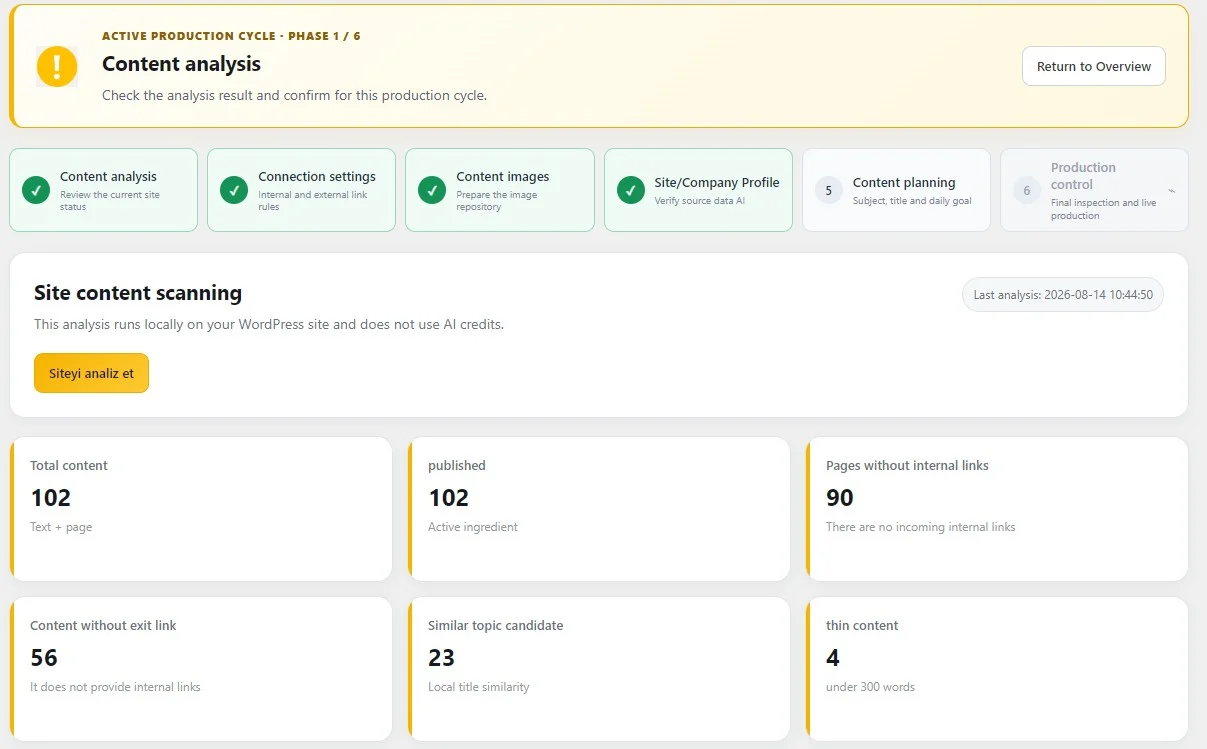
The important principle is that every major section has a purpose.
Planning reduces the likelihood of filler content.
AI should not expand content by repeating statements
A weak method for creating long-form content is to take a short article and repeatedly rephrase the same information.
Readers quickly recognize this.
Search engines also gain little additional value from repeated explanations.
A better method is horizontal expansion.
Instead of saying the same thing again, the article explores another relevant dimension.
For example, after explaining AI writing, the article can examine topic selection.
After topic selection, it can discuss search intent.
Then it can examine semantic relevance.

Another section may address GEO.
Another may explain editorial review.
Every section moves the subject forward.
This produces genuine depth.
Long-form SEO content needs semantic breadth
A detailed article creates opportunities to use related terminology naturally.
For this subject, relevant phrases may include:
Long-form WordPress content.
AI content generation.
Automatic article creation.
WordPress AI writer.
SEO content automation.
AI-generated articles.
WordPress content workflow.
GEO content.
Automatic blog content.
wordpress plugin.
These phrases should appear because they are relevant to the discussion.
They should not be forced into every paragraph.
Semantic breadth helps explain the full subject.
It also allows an article to become relevant to related searches without creating separate pages for every small keyword variation.
One strong article can replace several weak pages
AI makes it easy to create numerous small pages.
This is not always beneficial.
Suppose a website creates separate pages for:
AI long-form content.
Automatic long articles.
AI WordPress long articles.
WordPress long-form writing automation.
These may all address the same search intent.
One comprehensive article may be stronger.
It can consolidate the subject into a single resource.
This reduces keyword cannibalization and creates a clearer page for users.
Content planning should therefore determine whether a new question deserves its own article or belongs within an existing long-form page.
Long-form content can strengthen topic clusters
Detailed articles can serve important roles within topic clusters.
A topic cluster contains related pages organized around a broader subject.
For example, WordPress AI content automation may be the broader topic.
Supporting pages might address:
Automatic publishing.
Long-form generation.
Content freshness.
Internal linking.
SEO metadata.
GEO.
Content planning.
Each supporting article can explore one area deeply.
Internal links then connect these resources.
This creates a structured information network.
Long-form content works well within this model because each page has enough depth to stand on its own while remaining connected to the broader subject.
Automated long-form writing still requires originality
A page does not become original merely because its wording is unique.
True originality also requires a distinct informational purpose.
This is especially important when creating multiple AI-generated articles within the same industry.
If every page begins with the same argument, follows the same structure, and reaches the same conclusion, the website can become repetitive even when individual sentences differ.
AI workflows should encourage structural variation.
One article may begin with a practical problem.
Another may start with a misconception.
Another might compare two approaches.
Another could focus on a specific business use case.
PW Feed content can maintain consistent SEO and GEO principles while still allowing each article to develop differently.
Long-form content should remain readable
Depth does not require complexity.
A long article can become difficult to read when paragraphs are unnecessarily dense or when technical language is left unexplained.
Good long-form content breaks complex subjects into manageable explanations.
Paragraphs should remain focused.
Transitions should make the relationship between ideas clear.
Technical terminology should be explained when necessary.
Readers should be able to move through the article without losing the main purpose.
This readability is useful for SEO and GEO as well.
Clear explanations make information easier to interpret.
GEO benefits from comprehensive explanations
Generative Engine Optimization provides another reason to think carefully about long-form content.
AI-powered systems often need enough context to understand the relationship between concepts.
A short statement may provide limited information.
A detailed explanation can identify what a concept means, how it works, when it is relevant, and how it relates to other subjects.
For example, simply mentioning GEO provides little context.
Explaining that Generative Engine Optimization concerns how clearly content communicates information to generative AI-driven discovery systems provides much more meaning.
Long-form articles create room for these definitions.
They can also reinforce important entity relationships.
PW Feed can be consistently connected with WordPress, AI content generation, SEO, GEO, automation, and wordpress plugin functionality.
This helps create a clearer informational environment.
Long-form AI content should avoid unnecessary keyword repetition
Long articles naturally provide many opportunities to use the primary keyword.
This can become excessive if the content system is instructed to repeat it frequently.
A better approach uses variations and related concepts.
If the article clearly explains WordPress AI content automation, the exact same phrase does not need to appear continuously.
Natural language produces a better reading experience.
It also allows search engines to understand the broader semantic context.
The objective should be comprehensive topical relevance rather than mechanical keyword density.
Business context makes long-form content more distinctive
Generic long-form AI articles can look very similar.
Business context helps create differentiation.
A company can define:
Its products.
Its services.
Its target users.
Preferred terminology.
Important features.
Relevant limitations.
Commercial pages.
Primary subject areas.
AI can then use this information when appropriate.
The resulting article becomes more closely connected to the actual website.
For PW Feed, business context ensures that discussions around AI content remain connected to a real WordPress-focused product rather than becoming generic commentary about artificial intelligence.
Human knowledge can be added before generation
One useful way to improve long-form content is to provide AI with key facts before it writes.
A business may have specific insights that are not available in general AI knowledge.
These could include common customer questions, internal processes, practical observations, product capabilities, or lessons from real experience.
The information can be supplied as context.
AI can then organize it into a broader article.
This model combines human expertise with automated production.
It often produces more distinctive content because the article is based partly on knowledge unique to the business.
Human knowledge can also be added after generation
Another workflow begins with an AI-generated draft.
The business then adds specific examples and corrections.
This approach can also be effective.
AI handles the general structure.
The expert strengthens the areas where real-world knowledge matters most.
This can reduce the writing workload significantly while preserving authenticity.
The best workflow depends on the organization.
Some businesses may prefer to provide detailed inputs before generation.
Others may find editing a complete draft easier.
A flexible wordpress plugin should support different working styles.
AI can help create long-form drafts directly in WordPress
Moving large articles between different applications can create unnecessary work.
Content generated outside WordPress may need to be copied, reformatted, and checked again after pasting.
An integrated wordpress plugin can simplify this.
The article can be generated closer to the publishing environment.
It can be created as a draft.
The administrator can review it inside WordPress.
This reduces operational friction.
For websites publishing long-form content regularly, these small efficiencies can accumulate significantly.
Draft mode is useful for detailed articles
Long-form content contains more information than short posts.
This also means there are more details to verify.
Draft mode can therefore be especially valuable.
The system can generate the complete article automatically while leaving the final publication decision to the administrator.
The reviewer can examine:
Business facts.
Terminology.
Links.
Examples.
SEO targeting.
Potential duplication.
Claims.
Overall usefulness.
The editing stage becomes a quality-control process rather than a full writing process.
This is one of the most practical uses of AI for long-form content.
Automatic publishing can still be used selectively
Not every long-form article needs manual approval forever.
Once a workflow has been tested and refined, certain content categories may be suitable for automatic publishing.
The key is defining clear limits.
The website may approve specific topic groups.
Publication frequency can be controlled.
High-risk subjects can remain draft-only.
Low-risk informational content may be published automatically.
This creates different levels of automation within the same WordPress website.
Automation should reflect the type of content rather than applying one rule to everything.
Metadata should be generated from the actual article
A long-form article often covers many subtopics.
The SEO title and meta description should still communicate the central purpose clearly.
AI can generate metadata based on the completed article.
This can save time.
However, uniqueness remains important.
Two long-form pages should not receive almost identical descriptions simply because they belong to the same topic cluster.
Each page should communicate its specific focus.
For this article, automation of detailed WordPress content creation should remain central.
Another page about content freshness would require different metadata.
This differentiation supports a cleaner SEO architecture.
Internal links can make long-form pages more useful
Long articles often mention several related concepts.
This creates natural internal linking opportunities.
A discussion of automatic publishing may connect to a dedicated article about publishing workflows.
A section about GEO can link to deeper GEO content.
A section about internal linking may point toward a dedicated resource on that subject.
These links allow readers to explore details without making one article responsible for explaining everything.
The result is a connected content network.
Search engines can also use these relationships to understand the site’s structure.
Long-form articles can support commercial pages without becoming advertisements
A detailed informational article should provide value first.
Users may arrive because they are researching a problem, not because they are ready to purchase.
The article should respect this intention.
Commercial paths can appear naturally when relevant.
Readers who want more information about PW Feed and its AI-powered WordPress content capabilities can visit the PW Feed contact page.
Users ready to explore available purchase options can continue to the PW Feed buy page.
These links provide a logical next step while allowing the article itself to remain educational.
Quality control becomes more important as article length increases
Longer content creates more opportunities for errors.
A detailed article may contain repeated statements, contradictory explanations, unsupported claims, or sections that drift away from the main subject.
Automation should therefore include quality checks.
The review process can examine:
Does every section support the main topic?
Is information repeated unnecessarily?
Are there claims requiring verification?
Does the article overlap significantly with another page?
Are SEO keywords used naturally?
Is the product described accurately?
Are internal links relevant?
Does the article remain clear?
Long-form content should earn its length.
Quality control helps ensure that it does.
AI can reduce editing time by following rules from the beginning
The strongest way to reduce editing is to prevent problems during generation.
If the system already knows that repeated topics should be avoided, the editor has less duplicate material to remove.
If the business terminology is defined, fewer corrections are needed.
If article length and depth requirements are established, fewer sections need expansion.
If SEO and GEO principles are included in the initial instructions, fewer optimization changes are required afterward.
This is why structured AI workflows can be more useful than isolated prompts.
Good rules improve the first output.
Long-form content can answer several related queries naturally
A detailed page may become relevant to multiple related searches.
This can happen without targeting dozens of keywords individually.
Consider a page about automated long-form WordPress content.
A reader may arrive through searches involving AI article creation, WordPress content automation, long-form SEO writing, AI WordPress writing, or automatic content generation.
If the article covers the subject comprehensively, these related queries fit naturally within the same page.
This can be more effective than creating separate thin articles for every phrase.
The page builds a broader semantic footprint around one clear intent.
The amount of content should match the subject
Not every topic deserves a 2,000-word article.
Automation should not turn every simple question into an unnecessarily long page.
Some questions require short answers.
Others need substantial detail.
A strong content strategy distinguishes between them.
Long-form content is appropriate when users benefit from deeper explanation.
Forcing excessive length can reduce quality.
PW Feed content generation should therefore be considered part of a broader publishing strategy where different topics can receive different levels of depth according to their purpose.
Long-form publishing should remain controlled
AI can dramatically increase production speed.
A website could theoretically create many large articles in a short period.
That does not automatically improve the site.
Topics should still be prioritized.
Publishing frequency should remain controlled.
Existing pages should be considered.
New content should fill genuine gaps.
Creating ten substantial articles around clearly different search intents can be more useful than creating fifty pages that overlap.
Automation makes production easier.
Strategy determines what deserves to be produced.
PW Feed and long-form WordPress content automation
PW Feed can help WordPress users approach long-form content as a structured production process.
AI can perform much of the initial writing work.
SEO can define search relevance.
GEO can improve clarity for generative systems.
Business context can make the content more specific.
WordPress can manage drafts and publication.
A wordpress plugin can bring these elements together in a practical workflow.
This model can be valuable for businesses that need substantial educational content but do not have the resources to write every article manually.
Long-form content can build a durable information library
One advantage of detailed evergreen content is that it can remain useful for extended periods.
A strong article may continue answering user questions months or years after publication, provided the information remains accurate.
This creates a cumulative benefit.
The website gradually builds a library of substantial resources.
New articles can reference older pages.
Older pages can be updated when new information becomes relevant.
The site becomes increasingly interconnected.
This is a more sustainable model than continuously replacing weak, short-lived content.
Automation should make expertise easier to publish
The strongest long-form content often originates from genuine knowledge.
Businesses, specialists, developers, agencies, and professionals already possess information that could help users.
The challenge is documenting it.
AI can reduce that barrier.
Experts can define topics and provide key insights without spending hours turning every idea into polished prose.
The AI system can perform much of the organization and expansion.
The expert can review the output.
This allows more knowledge to become accessible through the WordPress website.
SEO and GEO benefit from useful depth
SEO and GEO have different focuses, but useful depth can support both.
Search engines benefit when a page comprehensively addresses a clear query.
Generative systems benefit when concepts are defined and relationships are explained clearly.
Readers benefit when they do not need to visit five different pages to understand one subject.
Long-form content can satisfy all three when it is carefully structured.
The critical condition is usefulness.
Length by itself provides no guarantee.
Final thoughts on automating long-form content creation in WordPress
Automating long-form content creation in WordPress can reduce one of the most demanding parts of website publishing.
A detailed article no longer needs to begin with hours of manual writing.
AI can create the initial structure, develop relevant explanations, integrate semantic terminology, support SEO requirements, and prepare content for GEO-oriented clarity.
A wordpress plugin can connect this process directly with the WordPress environment.
PW Feed brings these elements together within a controlled AI content workflow.
However, effective automation requires clear boundaries.
The topic should have a distinct search purpose.
The article should provide genuine depth.
Repeated information should be avoided.
Business context should guide relevant sections.
SEO should be considered from the beginning.
GEO should make important concepts easier to understand.
Existing content should be checked before another long-form page is created.
Publishing volume should remain reasonable.
The greatest advantage of AI is therefore not that it can make an article extremely long.
It is that it can make comprehensive content economically and operationally easier to produce.
When long-form automation is guided by originality, expertise, SEO, GEO, and a clear WordPress content strategy, each substantial article can become a durable part of a growing information library rather than simply another page added to the site.