
How to structure WordPress articles for answer engines
Answer engines are changing how people find information online.
Instead of typing a short keyword and opening several search results, users increasingly ask complete questions and expect a direct response. AI assistants, generative search systems, and answer-focused interfaces may try to extract the most useful information from a page and present it in a concise form.

This creates a new content challenge for WordPress websites.
A page may contain excellent information but still be difficult to interpret if the structure is weak. Important answers may be hidden inside long paragraphs. Headings may be vague. Several unrelated subjects may appear on the same page. Definitions may be missing. The article may repeat ideas without creating clear informational sections.
Structuring WordPress articles for answer engines means organizing information so that the primary question, direct answer, supporting explanation, related concepts, and next steps are easy to identify.
This does not mean writing only for machines.
A clear article structure also helps human readers.
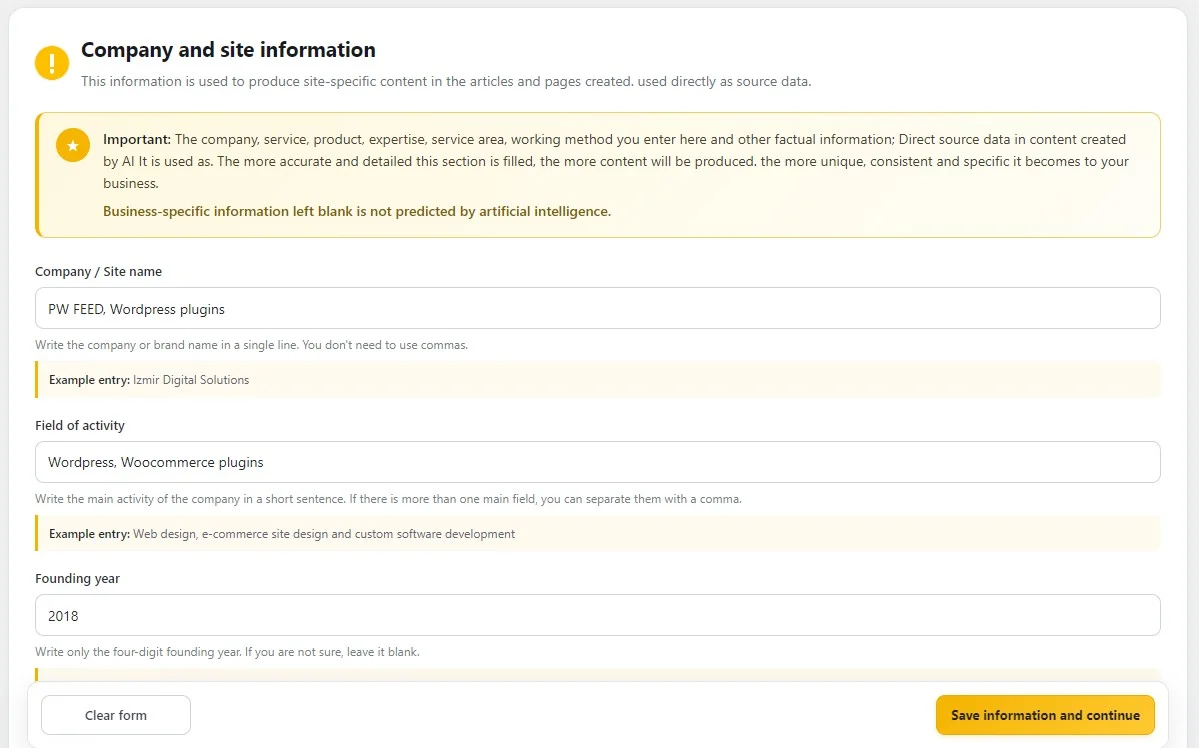
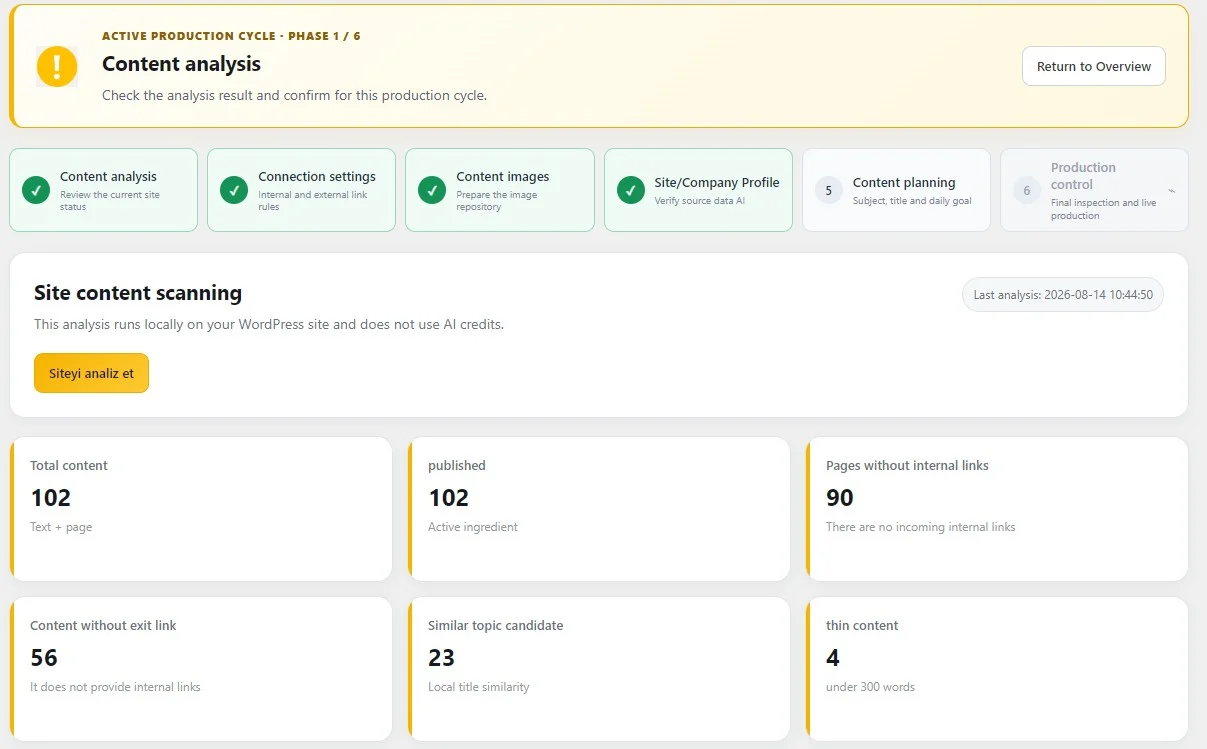
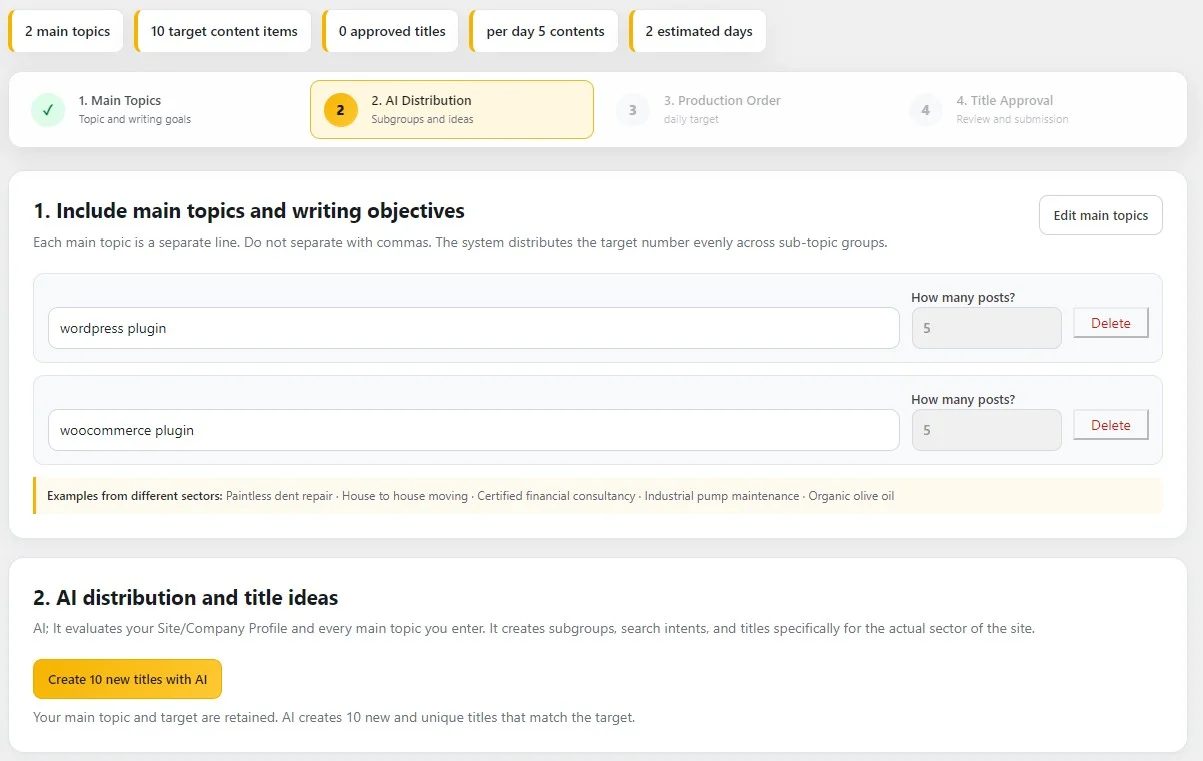
PW Feed can support this approach by combining WordPress AI content generation, SEO, GEO, AEO, internal linking, topic planning, and controlled publishing within a wordpress plugin workflow.
The objective is to create articles that are easy to read, easy to navigate, and easy to interpret.
What is an answer engine?
An answer engine is a system designed to provide a direct response to a user question rather than only presenting a list of webpages.
The system may:
Interpret the question.
Identify relevant information.
Retrieve content.
Summarize several sources.
Compare alternatives.
Generate a response.
Recommend additional resources.
AI assistants and generative search experiences can behave like answer engines.
This creates different expectations for content.
A page should make important information easy to locate.
The answer should not require unnecessary interpretation.
Article structure matters because answer engines work with information units
A long article is not one single idea.
It contains many individual pieces of information.

For example, an article about WordPress AI publishing may contain separate information about:
Draft publishing.
Direct publishing.
Editorial review.
Publishing limits.
SEO.
GEO.
Automation risks.
These concepts should be separated logically.
When each section has a clear purpose, users can understand the article more easily.
Answer systems can also identify relevant passages more efficiently.
This is why structure matters independently of word count.
Begin with one primary question or intent
The strongest article usually has one central purpose.
For example:
How should WordPress articles be structured for answer engines?
That question defines the page.
Supporting sections can then explain:
Direct answers.
Heading structure.
Paragraph length.
Definitions.

FAQ sections.
Internal linking.
SEO.
GEO.
AEO.
These topics all support the primary intent.
The article should not suddenly become a guide to WordPress hosting or WooCommerce checkout customization.
Clear focus creates clearer structure.
The title should communicate the page purpose
The main title is one of the strongest context signals.
A useful title tells the reader what the article will explain.
For example:
How to structure WordPress articles for answer engines
is clearer than:
The future of content structure
The first title identifies:
The platform.
The task.
The target environment.
This improves user expectations.
It also helps search and AI systems classify the page.
Creative titles can still be useful in some contexts, but informational pages generally benefit from descriptive wording.

Answer the main question near the beginning
A good answer-engine structure does not require the user to wait.
For example:
How should WordPress articles be structured for answer engines?
WordPress articles should use a clear primary topic, an early direct answer, descriptive section headings, focused paragraphs, explicit definitions, relevant supporting questions, and meaningful internal links.
That sentence provides orientation.
The rest of the page can explain each element in depth.
This answer-first approach is particularly useful when the page targets a specific question.
The opening answer should be concise but useful
The opening response should not attempt to summarize a 2,000-word article in one sentence.
It should provide the essential answer.

For example:
A WordPress article becomes easier for answer engines to interpret when its main question is clear, the direct response appears early, and supporting information is divided into logically labeled sections.
This is concise.
The article can then discuss:
How to create those sections.
How much detail to include.
How SEO and GEO fit into the structure.
How to avoid repetitive formatting.
The initial answer acts as a map.
Do not begin every article with a generic introduction
AI-generated content often begins with phrases such as:
In today’s digital landscape.
As technology continues to evolve.
In the rapidly changing world of online marketing.
These sentences provide little informational value.
An answer-focused article should reach the subject quickly.
For example:
Users increasingly ask complete questions in AI-powered search systems. WordPress articles therefore benefit from structures that make direct answers easy to find.
This provides immediate relevance.
Generic introductions can make content feel templated.
Use descriptive section headings
Section headings should tell the reader what information follows.
Good examples include:
Why direct answers should appear early.
How internal links support answer-focused content.
When FAQ sections are useful.
How GEO influences article structure.
Less useful headings include:
Going deeper.
Something to consider.
The next step.
Descriptive headings improve scanning.
They also create stronger semantic boundaries between sections.
A heading should represent one meaningful subtopic
A heading should not exist merely to break up text visually.
Each section should answer a question or explain a distinct idea.
For example:
How long should the direct answer be?
This section should discuss answer length.
It should not suddenly move into internal-link strategy.
Clear boundaries improve article coherence.
They also reduce repeated information.
Do not create too many tiny sections
Structure can become excessive.
An article with a new heading every two sentences may feel fragmented.
The reader never develops a complete thought.
A good section should contain enough information to explain its topic properly.
The correct size depends on complexity.
A simple definition may need only two paragraphs.
A difficult comparison may need several.
Structure should support understanding rather than create visual noise.
Focused paragraphs improve extraction and readability
A paragraph should normally communicate one main idea.
For example:
AI assistants often receive complete questions rather than isolated keywords. This makes direct-answer paragraphs useful because they allow the page to respond immediately while leaving additional detail for later sections.
That paragraph has a clear purpose.
A weak paragraph may mix:
Keywords.
Schema.
Internal links.
Product marketing.
Publishing rules.
Separating those ideas creates cleaner information.
Paragraphs should not become unnecessarily long
Large blocks of text can make a WordPress page difficult to scan.
This is particularly noticeable on mobile devices.
Shorter paragraphs help users identify important ideas quickly.
They also make individual passages easier to interpret.
However, structure should remain natural.
One sentence does not need to become one paragraph every time.
The goal is clarity, not artificial fragmentation.
Use direct definitions for important concepts
Answer engines often need to identify what a term means.
If the concept is central to the article, define it.
For example:
AEO, or Answer Engine Optimization, is the practice of making content easier to use in direct-answer search experiences.
GEO, or Generative Engine Optimization, focuses on making information clearer and more useful in generative search environments.
A content cluster is a group of related pages organized around a broader topic.
These definitions help readers and machines establish context.
Definitions should appear near their first important use
If an article repeatedly discusses GEO but defines it only near the conclusion, the reader may spend most of the page without clear context.
Define central concepts when they first become relevant.
The explanation does not need to be long.
A concise definition followed by deeper discussion is usually enough.
This makes the entire article easier to understand.
Use question-and-answer sections selectively
Question-based headings work well when the article naturally addresses user questions.
For example:
Does traditional SEO still matter for answer engines?
Should every article include an FAQ?
Can AI generate answer-focused WordPress content automatically?
These headings can make the page easier to scan.
However, not every heading needs to be a question.
Descriptive headings can be equally strong.
The structure should remain varied and natural.
AEO does not mean converting the entire page into an FAQ
This is an important misconception.
Answer-focused content can include:
Explanatory paragraphs.
Definitions.
Processes.
Examples.
Comparisons.
Direct answers.
FAQ sections.
The article should use the format that best communicates the information.
An FAQ-only page can become repetitive if the subject requires deeper explanation.
AEO is about answer quality, not rigid formatting.
Lists are useful when information is naturally grouped
Some answers contain several related items.
For example, a WordPress article designed for answer engines may need:
A clear title.
One primary intent.
An early direct answer.
Descriptive headings.
Focused paragraphs.
Relevant internal links.
Accurate entity information.
Useful supporting questions.
A list helps users scan these items quickly.
Lists should be used when they simplify the information.
They should not replace normal explanation entirely.
Numbered steps are useful for processes
If the user asks how to do something, a sequence is often appropriate.
For example:
Identify the primary user question.
Write a direct answer.
Create supporting sections.
Define important terms.
Add relevant internal links.
Check for duplicate intent.
Create SEO metadata.
Review or publish.
This makes the process actionable.
A procedural article without a clear sequence may leave the user unsure where to begin.
Comparisons should be structured clearly
Answer engines frequently receive comparison questions.
Examples include:
SEO versus GEO.
Draft versus direct publishing.
Manual versus AI-assisted content creation.
The article should clearly establish the primary distinction.
For example:
SEO focuses primarily on traditional search visibility, while GEO emphasizes clarity and usefulness in generative search environments.
The following sections can then compare:
Goals.
Methods.
Use cases.
Limitations.
This is more useful than mixing the two concepts throughout the page.
Tables can help when the comparison has several dimensions
A table may be useful when users need to compare multiple attributes.
For example:
SEO.
GEO.
AEO.
The comparison could include:
Primary goal.
Typical query type.
Content emphasis.
Relationship with AI search.
However, a table is not automatically better.
If the comparison can be explained clearly in a few paragraphs, a table may be unnecessary.
Structure should follow user need.
Use examples to turn abstract answers into practical understanding
A concept becomes easier to understand when the article shows how it works.
For example:
Imagine a WordPress article about automatic publishing.
A weak structure may contain a long general discussion about AI.
A stronger structure might be:
What automatic WordPress publishing means.
Can AI publish directly?
Draft versus direct publishing.
Quality controls.
Publishing limits.
SEO and GEO considerations.
This example demonstrates how a broad topic becomes a structured answer.
Examples should clarify the concept rather than merely increase length.
Examples should be clearly identified as examples
AI can generate realistic scenarios.
The page should not imply that a hypothetical business is a real customer.
For example:
A small service business could generate one weekly WordPress article as a draft, review it, and publish it after checking service details.
This is clearly hypothetical.
Real case studies should use verified customer information.
This distinction protects credibility.
Important limitations should have their own clear sections
Answer-focused content should not present only benefits.
For example, an article about automatic AI content publishing should explain:
Potential factual errors.
Duplicate-content risk.
Need for business context.
Publishing limits.
High-risk content review.
These limitations are useful answers.
They make the page more credible.
They also help users make better decisions.
Do not hide important qualifications in footnote-style language
Suppose the main statement is:
AI can automatically publish WordPress content.
If the actual reality is that this depends on configuration and publishing rules, the qualification should appear clearly.
For example:
AI-generated content can be published automatically when direct publishing is enabled and the content passes the required workflow rules.
This is much clearer.
Answer engines benefit from explicit conditions.
Human readers do too.
Use entity names instead of ambiguous references
Consider:
It can automatically create titles and descriptions.
If the previous paragraph discusses several products, the word it is ambiguous.
A clearer sentence might be:
A WordPress AI content system can automatically create SEO titles and meta descriptions as part of the generation workflow.
Important answer passages should identify the subject explicitly.
Pronouns can still be used naturally elsewhere.
Entity clarity is especially important in product content
A product page should clearly explain:
Product name.
Product type.
Platform.
Audience.
Functions.
For PW Feed, relevant context may include:
PW Feed.
WordPress.
AI content generation.
SEO.
GEO.
AEO.
Publishing workflows.
wordpress plugin functionality.
These relationships help define the product clearly.
The same principles can be reflected across supporting articles.
Avoid changing product definitions across pages
If one page describes a product one way and another provides a contradictory definition, answer systems may receive mixed signals.
The wording can vary.
The facts should not.
A structured business profile can help AI-generated content maintain:
Product names.
Service descriptions.
Locations.
Core features.
Approved terminology.
This strengthens site-wide consistency.
Internal linking should follow the information structure
A well-structured article often creates obvious internal-link opportunities.
For example:
A section about duplicate content can link to a dedicated duplicate-content guide.
A section about content clusters can link to the cluster article.
A section about GEO can link to a deeper generative-search resource.
The link becomes a continuation of the answer.
This is more useful than inserting unrelated links for SEO alone.
Internal links can separate broad answers from deep explanations
One article does not need to explain every concept completely.
For example, an answer-engine article can define internal linking briefly.
Then it can link to a dedicated article about AI-powered internal linking for WordPress content.
This keeps the current page focused.
The supporting page provides depth.
This is one of the strengths of content clusters.
Anchor text should indicate the destination
Descriptive anchor text helps readers understand where the link leads.
Useful examples include:
AI-powered internal linking.
WordPress content clusters.
Generative search preparation.
SEO versus GEO versus AEO.
Generic phrases such as learn more or click here provide less context.
Anchor text should remain natural and varied.
Content clusters create stronger answer networks
Users may ask many questions around one broad topic.
Instead of trying to answer all of them on one page, a WordPress site can create a cluster.
For example:
AI search visibility.
Generative search preparation.
AI assistant readability.
Answer-focused content.
Answer-engine article structure.
ChatGPT search optimization.
Google AI Overviews.
Each page answers a distinct question.
Internal links connect them.
This creates a deeper information network.
Cluster pages should have distinct answer goals
Closely related topics require careful planning.
For example:
How to create answer-focused content in WordPress
and
How to structure WordPress articles for answer engines
are closely related.
The first can focus on what makes an answer useful.
The second can focus on how the full article should be organized.
This distinction prevents repetition.
Related pages should complement rather than copy one another.
Check search intent before creating another answer page
A website can accidentally generate multiple articles around the same question.
For example:
How to structure content for answer engines.
Best answer-engine article structure.
WordPress answer-engine content format.
These may represent one intent.
One strong page can cover the variations.
AI can compare proposed topics with existing content before generation.
This reduces cannibalization.
The direct answer should remain understandable outside the surrounding paragraph
A strong answer passage should contain enough context to make sense on its own.
For example:
AEO improves WordPress content for answer engines by making important questions and direct answers easier to identify.
This is clearer than:
It does this by making them easier to understand.
The second sentence depends too heavily on previous context.
Self-contained clarity is particularly useful in answer-focused writing.
Do not over-optimize every paragraph as a standalone answer
There is a balance.
If every paragraph repeats the full topic, product name, and definition, the article becomes unnatural.
Some context can flow normally between paragraphs.
The most important passages should be self-contained enough to remain clear.
The rest of the article can read naturally.
Human readability remains the priority.
SEO titles should reflect the real answer intent
The SEO title should describe what the page answers.
A page about answer-engine structure should not use an overly broad title such as:
Complete WordPress SEO guide.
The title would create mismatched expectations.
A more precise title supports:
Search intent.
Click relevance.
Content differentiation.
AI classification.
The visible title and SEO title can differ slightly, but they should describe the same page.
Meta descriptions can summarize the answer
A useful meta description can explain what the user will learn.
For example:
Learn how to structure WordPress articles for answer engines using direct answers, clear headings, focused sections, internal links, SEO, GEO, and AEO principles.
The description reflects the article accurately.
It also differentiates the page from neighboring content.
AI can generate this metadata as part of the publishing workflow.
Unique metadata matters across answer-focused pages
A cluster may contain several articles about AI search.
If every meta description says:
Learn how to optimize WordPress content for AI.
the pages become difficult to distinguish.
Each description should reflect the specific intent.
For example:
One page focuses on visibility.
One on generative search preparation.
One on article structure.
One on answer-focused writing.
Semantic uniqueness is more important than merely changing a few words.
Article structure should support GEO as well as AEO
GEO benefits from clear entity relationships.
AEO benefits from direct answers.
These can be combined.
For example, a section might say:
PW Feed is associated with WordPress AI content workflows designed to support SEO, GEO, and controlled publishing.
This provides entity context.
A later question-answer section can explain:
Can AI-generated WordPress content be saved as a draft?
This provides answer clarity.
The same article can support both optimization approaches.
SEO, GEO, and AEO should not create three different structures
A common mistake is treating each strategy as a separate content format.
One high-quality article can serve all three.
SEO contributes:
Search intent.
Titles.
Metadata.
Topic relevance.
Internal links.
GEO contributes:
Entity clarity.
Consistent terminology.
Explicit relationships.
AEO contributes:
Direct answers.
Question-focused sections.
Clear definitions.
These principles work together.
Use structured data where appropriate, but keep visible content strong
WordPress websites may use structured data for:
Articles.
FAQs.
Products.
Services.
Organizations.
The markup should reflect the visible content.
If an FAQ is marked up, users should be able to see the same questions and answers.
If product data is used, it should match the product page.
Structured data can reinforce clarity.
It should not become a hidden substitute for weak content.
FAQ schema does not make weak FAQs useful
A website should not create artificial questions simply because FAQ structured data exists.
The questions should reflect real user needs.
For example:
Does traditional SEO still matter for answer engines?
Can AI-generated WordPress articles be published automatically?
Should every article have a direct-answer paragraph?
These questions are useful if they support the topic.
Artificial questions designed only for markup create little value.
The article should remain readable without structured data
Visible content remains fundamental.
A user should be able to read the page and understand:
The question.
The answer.
The explanation.
The relationships.
Schema may support interpretation.
The article itself still needs to work.
This is an important principle for both SEO and GEO.
Use plain language where possible
Answer-focused content should not make simple concepts unnecessarily complicated.
For example:
A content cluster connects related pages around one broader topic.
is clearer than:
A content cluster establishes a multidimensional semantic framework around a centralized informational node.
Technical language is appropriate when the subject requires it.
Unnecessary complexity weakens clarity.
Specialist terminology can still be used
Plain language does not mean oversimplifying technical subjects.
A professional audience may need specific terminology.
The key is explanation.
For example:
Canonicalization can be discussed in a technical SEO article.
The term should be used accurately.
If the audience may not know it, provide a concise definition.
Clarity and expertise are compatible.
Avoid unnecessary repetition of the target keyword
An article about answer engines does not need the phrase answer engines in every paragraph.
Related concepts can appear naturally.
For example:
Direct answers.
Conversational search.
AEO.
AI assistants.
Generative search.
Question-focused content.
Semantic relevance matters more than mechanical repetition.
Keyword stuffing can reduce readability.
A long article should earn its length
Answer-engine optimization does not require extremely long pages.
Some questions need 600 words.
Others need 2,000.
The correct length depends on:
Complexity.
Number of relevant subquestions.
Need for examples.
Need for comparisons.
Required context.
Long-form content should add depth.
If the article repeats the same answer using different wording, it should be shortened.
Short answers should not be artificially expanded
A simple question may need only a concise section.
For example:
Does every WordPress article need an FAQ?
No. An FAQ is useful when the page has genuine supporting questions that are better answered separately.
That may be enough.
Forcing the question into 500 words would add little value.
Answer-focused content should respect the natural size of the answer.
Use article expansion when a page already owns the question
Suppose an existing article already answers a question but only briefly.
The site may not need a new URL.
The article can be expanded.
For example:
Add a clearer direct answer.
Add supporting questions.
Improve internal links.
Add new GEO context.
Update terminology.
This can strengthen the existing page.
AI can help identify these opportunities.
Create a new article when the answer deserves separate depth
A separate page is appropriate when:
The search intent is distinct.
The question requires substantial explanation.
The topic supports an important cluster.
The page has a clear internal-linking role.
This prevents the site from forcing too much information onto one resource.
It also prevents unnecessary duplication.
Old content can be restructured without being completely rewritten
An older article may contain valuable information but weak organization.
AI can help reorganize it.
For example:
Move the main answer earlier.
Create clearer sections.
Split large paragraphs.
Add missing definitions.
Improve internal links.
Preserve original expertise.
This can improve answer-engine readiness without discarding the page’s existing value.
High-performing pages should be changed carefully
If a page already performs well, structural changes should have a reason.
Do not rewrite everything simply to fit a new optimization trend.
A targeted improvement may be safer.
For example:
Add a direct-answer paragraph.
Clarify one section heading.
Add one missing supporting question.
This keeps the article stable while improving clarity.
Low-performing pages need diagnosis before restructuring
Poor performance can have many causes.
The problem may be:
Weak intent.
Poor topic choice.
Duplicate content.
Thin information.
Bad internal linking.
Technical indexing issues.
Changing the article structure alone may not solve the problem.
AI can help identify whether structure is actually the weakness.
This prevents unnecessary editing.
A business profile can improve answer accuracy
AI-generated articles need reliable context.
A business profile may provide:
Business name.
Product names.
Services.
Audience.
Locations.
Features.
Preferred terminology.
Statements to avoid.
This helps generated answers stay accurate.
For PW Feed, the profile can support consistent relationships between PW Feed, WordPress, AI content generation, SEO, GEO, AEO, and publishing workflows.
The writing may vary.
The underlying facts remain stable.
Commercial answers should remain transparent
If a user asks:
Can PW Feed help with WordPress AI content workflows?
The page should explain the relevant capabilities clearly.
It should not rely on exaggerated claims.
Readers who need additional information can continue through the PW Feed contact page.
Users ready to review purchasing options can proceed to the PW Feed buy page.
Commercial links work best when they follow useful information.
Do not make every answer a sales pitch
An informational article should answer the question first.
The product can appear where relevant.
For example, a section about automated content creation can mention PW Feed naturally.
Other sections may discuss general SEO, GEO, or article structure without product promotion.
This balance keeps the content useful.
It also improves credibility.
A wordpress plugin can automate article structure
Manually applying these rules to every article can require significant time.
A wordpress plugin can help standardize the workflow.
PW Feed can support processes such as:
Topic selection.
Search-intent definition.
AI generation.
Answer-focused structure.
SEO title creation.
Meta descriptions.
Internal linking.
Draft or direct publishing.
The rules can be defined before content creation.
This reduces corrective work after generation.
AI can create an outline before writing the article
A strong workflow can separate planning from writing.
For example:
Define the primary question.
Create the direct answer.
Identify supporting questions.
Group them into logical sections.
Identify internal-link destinations.
Determine required business context.
Then generate the full article.
This helps prevent repetition.
It also improves article coherence.
Outline validation can prevent topic drift
Before writing, the system can check whether each proposed section supports the main question.
Suppose the article is about answer-engine structure.
A proposed section about website hosting prices does not belong.
It can be removed before generation.
This is easier than rewriting the finished article.
AI-assisted outlining therefore improves efficiency.
AI can also detect repeated sections
Long-form AI content sometimes repeats the same idea using different headings.
For example:
Why direct answers matter.
The importance of direct answers.
How direct answers improve content.
These may overlap too much.
The outline can be compared semantically.
Redundant sections can be merged.
This creates a more original and useful page.
Draft mode provides a useful quality-control stage
A newly generated answer-focused article can first be saved as a WordPress draft.
The editor can review:
Primary intent.
Direct answer.
Heading structure.
Business facts.
Internal links.
SEO title.
Meta description.
GEO consistency.
If something is weak, the article can be improved before publication.
Draft-first workflows are especially useful while automation rules are still being refined.
Direct publishing requires stronger pre-publication validation
When the article publishes automatically, validation becomes more important.
The system can check:
The topic is approved.
The intent is distinct.
The answer exists.
Business facts are available.
The title is unique.
The metadata is complete.
Publishing limits are respected.
The article does not duplicate an existing page.
If a critical condition fails, the page can remain a draft.
This creates controlled automation.
Publishing frequency should not be driven by AI capacity
AI can generate many structured articles quickly.
That does not mean all of them should be published.
A site can use:
Approved topic queues.
Cluster priorities.
Daily limits.
Monthly limits.
Content-gap analysis.
This helps keep the site coherent.
Answer engines benefit from useful information, not sheer page count.
Answer-engine structure should be applied site-wide gradually
A WordPress website may have hundreds of older pages.
There is no need to restructure all of them immediately.
Start with:
Core service pages.
Product pages.
High-value articles.
Important cluster hubs.
Frequently visited resources.
Then continue gradually.
AI can help prioritize which pages have the weakest answer structure.
Service pages can use the same principles
A service page can be structured around questions such as:
What is the service?
Who is it for?
How does it work?
What problem does it solve?
Where is it available?
What happens next?
This makes the page clearer.
It also makes the service easier to interpret in AI-powered search environments.
Product pages can use the same principles
A product page can answer:
What is the product?
Which platform does it work with?
Who is it designed for?
What can it do?
What limitations exist?
How can it be purchased?
These are naturally answer-focused questions.
A clear product page may support both conversion and GEO.
Local business pages need location clarity
A local service page may answer:
Where is the business located?
Which areas are served?
Is this a real branch?
Which services are available?
Opening hours and other factual information should be accurate.
AI should not invent locations.
Clear geographic structure can support local SEO and AI search at the same time.
E-commerce pages need structured product facts
WooCommerce product content may benefit from organized information about:
Brand.
Model.
Category.
Specifications.
Compatibility.
Intended use.
Limitations.
These details can make product pages easier to interpret.
AI can help turn structured data into readable text.
The underlying product facts must remain verified.
Agencies can standardize structure without standardizing content
An agency can define reusable rules such as:
One primary intent.
Early direct answer.
Clear headings.
Client-specific business facts.
Relevant internal links.
Unique metadata.
These standards can be reused across clients.
The actual examples, services, products, locations, and terminology remain client-specific.
This improves scalability without producing duplicate websites.
The strongest structure follows the reader’s decision process
A useful article often moves through questions in the order a reader naturally asks them.
For example:
What is this?
Why does it matter?
How does it work?
What are the options?
What are the risks?
How do I implement it?
What should I do next?
This creates a natural information flow.
AI can use this sequence when it fits the topic.
Not every article needs the exact same order.
Avoid rigid templates across every page
A system can have standards without making every article identical.
If every page uses exactly:
Definition.
Benefits.
How it works.
Common mistakes.
FAQ.
Conclusion.
the site may feel repetitive.
Different questions require different structures.
A comparison article should emphasize contrasts.
A tutorial should emphasize steps.
A troubleshooting article should emphasize problems and solutions.
The content model should adapt to intent.
Answer engines reward clarity, but humans determine whether the page is good
The ultimate quality test remains user usefulness.
A human reader should be able to:
Find the answer.
Understand the explanation.
Navigate related content.
Trust the information.
Know what to do next.
If the structure helps an AI system but makes the article unpleasant to read, it is not a strong strategy.
Human readability and machine clarity should reinforce each other.
PW Feed and answer-engine article structure
PW Feed can support a WordPress AI content workflow where article structure is planned before full generation.
The process can include:
Selecting an approved topic.
Identifying primary intent.
Generating a concise direct answer.
Planning supporting sections.
Applying SEO and GEO rules.
Creating metadata.
Adding relevant internal links.
Saving as a draft or publishing according to predefined rules.
This can reduce the amount of manual restructuring required after content creation.
The wordpress plugin environment keeps the workflow close to the actual WordPress site.
Final thoughts on structuring WordPress articles for answer engines
Structuring WordPress articles for answer engines is not about creating robotic content.
It is about organizing information clearly.
The article should have one primary purpose.
The title should communicate that purpose.
The main answer should appear early.
Important concepts should be defined.
Sections should have descriptive headings.
Paragraphs should remain focused.
Processes should use logical sequences.
Comparisons should state the central difference clearly.
Supporting questions should add depth without creating topic drift.
Internal links should connect related knowledge.
SEO should support discoverability.
GEO should strengthen entity clarity.
AEO should make answers easier to identify.
Structured data can reinforce visible information when appropriate.
AI can help automate this process, but the underlying content still needs to be useful, accurate, and distinct.
A wordpress plugin such as PW Feed can bring topic planning, AI generation, answer-focused structure, SEO, GEO, internal linking, and publishing controls into one WordPress-centered workflow.
The strongest article does not try to look optimized for an answer engine.
It simply makes the answer difficult to miss.
When a user can quickly understand the main response, explore the supporting explanation, and follow logical links toward related information, the same structure can also make the page easier for search engines, generative systems, and AI assistants to interpret.