
AI content automation for agencies managing multiple WordPress sites
Managing content for one WordPress website can require significant planning and production. Managing ten, twenty, or fifty client websites creates an entirely different operational challenge.
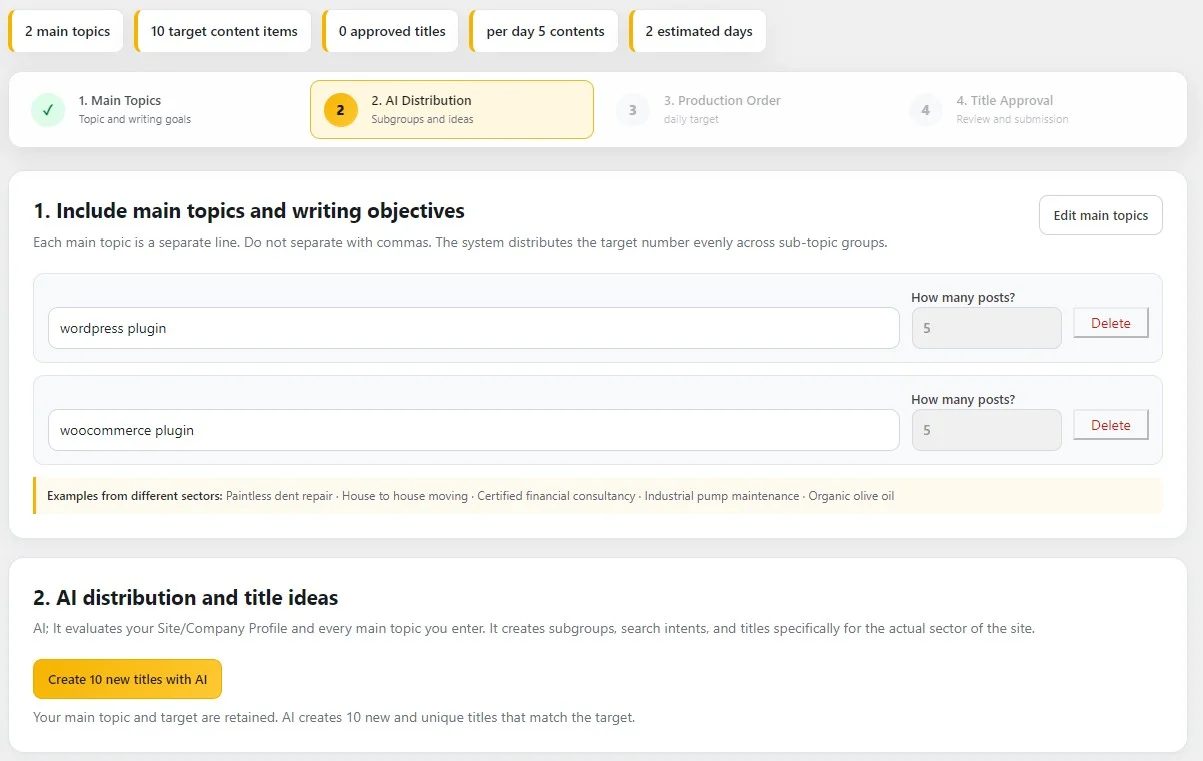
Every client may have a different industry, target audience, business model, geographic focus, keyword strategy, publishing frequency, brand voice, and approval process. An agency cannot simply create one article structure and copy it across every website.
At the same time, producing every article manually becomes increasingly expensive as the number of clients grows.
This is where AI content automation can provide practical value.
Instead of treating every WordPress article as an isolated writing project, agencies can build structured content systems for each client. Artificial intelligence can then assist with article production while predefined rules protect business context, SEO objectives, GEO requirements, publishing preferences, and content originality.
PW Feed can support this approach through a wordpress plugin workflow designed around AI-assisted content creation, SEO, GEO, and controlled WordPress publishing.
For agencies, the objective is not simply to generate more content. The objective is to manage more websites without allowing quality, relevance, or client differentiation to decline.
Why agency content production becomes difficult to scale
An agency may begin with a manageable number of clients.
One content manager can coordinate topics.
Writers create articles.
An editor reviews them.

The WordPress posts are then added manually.
As the client portfolio grows, this process becomes harder to maintain.
Five clients requesting four articles per month already require twenty pieces of content.
Twenty clients at the same publishing frequency require eighty articles.
Fifty clients require two hundred.
The writing workload is only part of the problem.
Someone must also remember which topics have already been published for each client, which keywords are important, which terminology belongs to each brand, what geographic areas are relevant, and whether articles require approval before publication.
The challenge is therefore operational as well as editorial.
AI can reduce repetitive production work, but agencies need a system that keeps individual clients separated.
Every client needs a separate content identity
One of the greatest risks of agency AI automation is producing content that feels identical across multiple websites.
Two businesses may both use WordPress, but they should not automatically receive the same content strategy.
A local automotive company has different customers from an accounting firm.
A software company has different priorities from a property service business.
An e-commerce brand requires different terminology from a professional consultant.
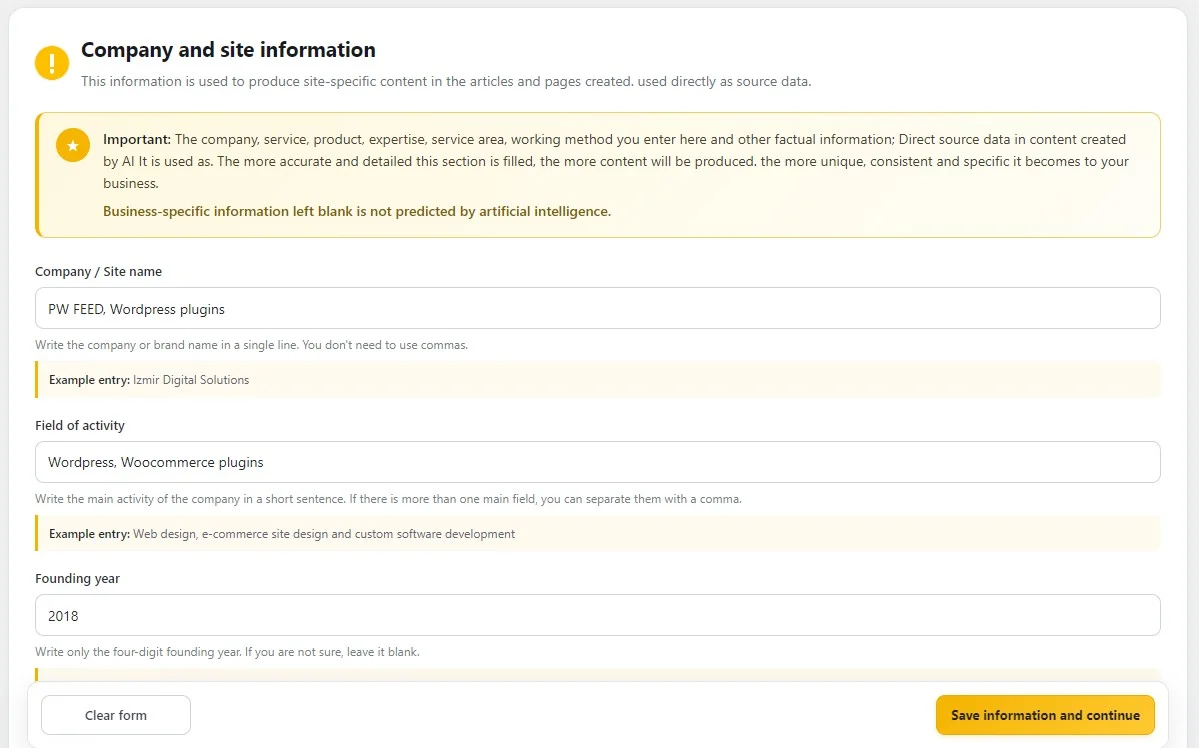
The agency should therefore define a separate content identity for every site.
This can include:
Business name.
Industry.
Products or services.
Target customers.
Primary keywords.

Preferred terminology.
Real service areas.
Important internal pages.
Brand tone.
Topics to avoid.
Publishing preferences.
This profile becomes the context for AI generation.
The stronger the client context, the less likely the resulting content is to sound generic.
A wordpress plugin can reduce repetitive agency operations
Agencies often use multiple tools during content production.
A topic may be planned in one system.
The article is written in another.
SEO elements are prepared separately.
Someone then logs into WordPress, creates the post, copies the article, adjusts formatting, adds links, sets the publication status, and repeats the same process for another client.
This creates unnecessary operational work.
A wordpress plugin that integrates AI content creation closer to WordPress can reduce these steps.
The article can be generated in the environment where it will eventually be managed.
Draft status can be applied automatically.
Publishing rules can vary by website.
SEO and GEO requirements can become part of the generation process.
For an agency managing multiple WordPress sites, small workflow improvements become significant when repeated hundreds of times.
Client-specific topic planning remains essential
AI can suggest topics, but agencies should not allow unrestricted topic generation.
Each client’s content plan should reflect real business goals.

A service business may need educational articles around customer problems.
An e-commerce client may need supporting informational content around product categories.
A local company may need accurate regional context.
A software product may require articles around features, use cases, integrations, and industry terminology.
Topic planning should therefore happen at the client level.
An agency can prepare approved content queues for each WordPress website.
AI then works from these queues rather than selecting unrelated subjects automatically.
This preserves strategic control while reducing writing workload.
Search intent should separate articles within each client site
Keyword lists often contain many similar phrases.
An agency that produces one article for every keyword can quickly create overlapping pages.

Suppose a client has these target phrases:
AI WordPress content automation.
WordPress AI automation.
Automatic AI content for WordPress.
AI content automation plugin.
These terms may belong to the same search intent.
Creating four separate articles could result in keyword cannibalization.
A better approach is to group similar phrases and create one comprehensive page.
Other articles should target genuinely different user needs.
This saves content production capacity and creates a cleaner site structure.
AI makes large-scale production possible, but search intent should determine whether a new page deserves to exist.
Agencies need stronger duplicate-content controls
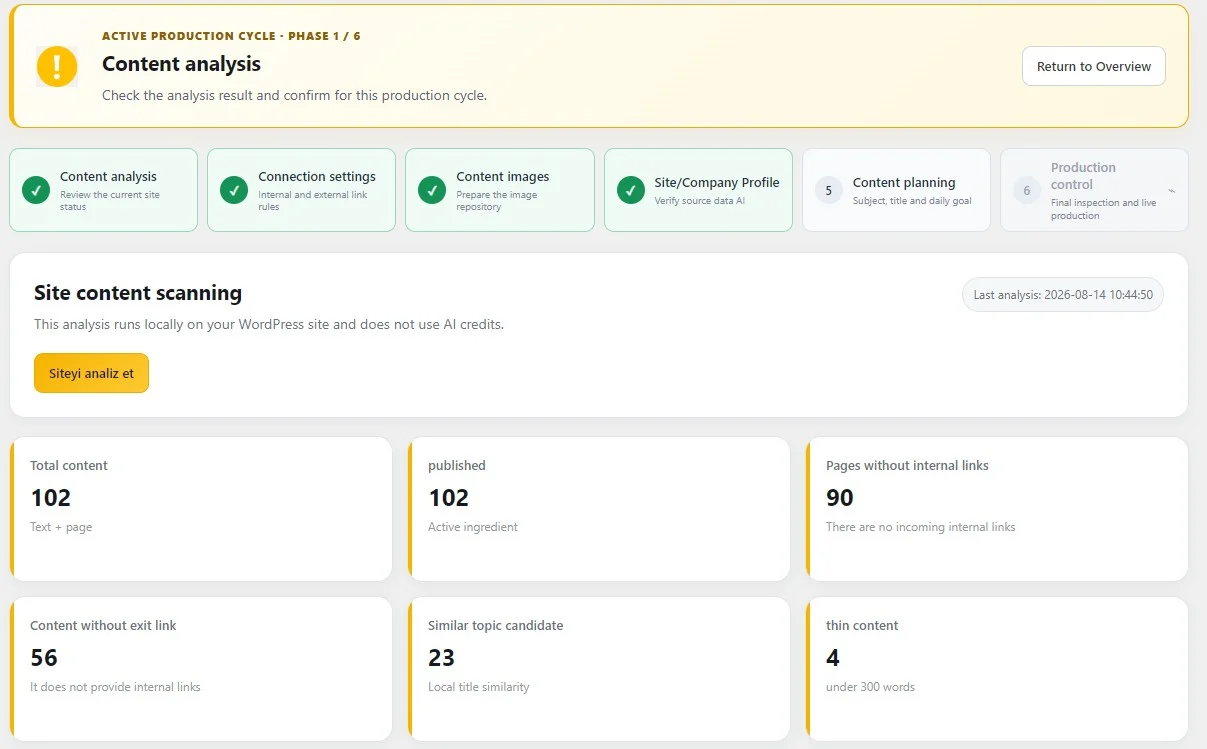
Duplicate content risk becomes more complex when multiple sites are involved.
The agency must prevent duplication within each website.
It should also avoid creating highly similar articles across different client sites.
Even when two clients operate in the same industry, their content should reflect their own business context.
Changing only the company name is not enough.
Different companies may have different expertise, services, customers, geographic markets, examples, and commercial priorities.
AI generation should use those distinctions.
This is especially important for agencies specializing in a particular niche because many clients may target similar keywords.
The content strategy needs genuine differentiation.
AI can help agencies create first drafts faster
The first-draft stage is one of the most obvious areas where AI can improve agency productivity.
Instead of assigning every article to a writer from a blank page, the system can generate an initial complete version based on the client’s content profile and topic instructions.

The agency team can then review the draft.
This changes the role of human staff.
More time can be spent on:
Client strategy.
Search intent.
Fact checking.
Brand refinement.
Unique examples.
SEO decisions.
Content gaps.
Performance analysis.
Less time is spent manually producing standard informational paragraphs.
This allows the same team to oversee a greater amount of content.
Draft workflows can support client approval requirements
Many agency clients want to approve content before it becomes public.
AI automation does not need to remove this process.
Articles can be generated automatically and saved as WordPress drafts.
The agency reviews the content first.
The client may then receive the draft for approval according to the agency’s normal process.
Only approved articles are published.
This keeps the client involved while reducing production time.
Other clients may trust the agency to publish directly.
Different WordPress sites can therefore use different approval rules.
A flexible AI workflow should adapt to these differences.
Some clients may be suitable for direct publishing
Not every website requires manual approval for every article.
An established client may already have clear content rules.
The agency may understand the business well.
The topics may be low risk.
The brand terminology may be stable.
In this situation, selected informational content may be suitable for direct publishing.
The system can generate and publish according to defined limits.
Important commercial pages can still remain draft-only.
This hybrid model allows agencies to automate routine work without treating every page identically.
SEO rules can be standardized without standardizing the content
Agencies often need consistent SEO quality across multiple websites.
Certain principles can be standardized.
Every article should have a clear search intent.
Titles should be unique.
Meta descriptions should correspond to the actual page.
Keyword usage should remain natural.
Internal links should be relevant.
New articles should avoid unnecessary overlap.
These rules can apply to every client.
However, the actual content should remain client-specific.
This distinction is important.
Standardized quality is useful.
Standardized wording is not.
AI automation should provide the first without creating the second.
GEO can become part of the agency’s content standard
Generative Engine Optimization creates another opportunity for agencies.
Clients increasingly need content that is understandable not only to traditional search engines but also to AI-powered discovery systems.
An agency can make GEO principles part of its standard content framework.
Important concepts should be explained directly.
Brand entities should be clear.
Products and services should be accurately associated with their functions.
Geographic information should remain consistent.
Questions should receive useful answers.
For PW Feed content, for example, the relationship between PW Feed, WordPress, AI content generation, SEO, GEO, automated workflows, and wordpress plugin functionality should remain clear.
An agency can apply the same principle to every client’s real business context.
Local clients require accurate geographic profiles
Agencies managing local businesses need additional controls.
A client may serve one city.
Another may serve several districts.
Another may operate nationally.
AI should know these differences.
Creating geographic content without accurate context can result in misleading pages.
A local company should not automatically receive articles targeting every nearby city.
Location names should only be included when they reflect genuine operations or useful local context.
This supports local SEO and GEO while protecting accuracy.
A separate client profile can ensure that AI uses approved geographic information rather than guessing.
Agencies can build reusable strategic frameworks
Although client content should remain unique, agencies do not need to reinvent their entire operational system for every business.
Strategic frameworks can be reused.
For example, a service-business framework may consider:
Customer questions.
Service explanations.
Common problems.
Comparisons.
Process guides.
Frequently asked questions.
Maintenance or preparation.
A software framework may focus on:
Features.
Use cases.
Automation.
Integrations.
Technical concepts.
Industry problems.
Comparisons.
These frameworks provide organizational efficiency.
The actual topics and information remain unique to each client.
This allows an agency to scale strategy without cloning content.
AI can support different brand voices
One agency may manage a law firm, a technology startup, a local workshop, and an online retailer.
These websites should not sound identical.
Brand voice should be part of the client profile.
A professional services firm may require formal language.
A technology company may use more technical terminology.
A consumer brand may prefer simpler and more conversational explanations.
AI can adapt to these requirements when they are defined clearly.
This reduces the amount of rewriting required during agency review.
The goal is for each client’s content to feel like part of that client’s website, not part of the agency’s internal content factory.
Client terminology should remain consistent
Different companies may describe similar services using different names.
An agency should preserve the terminology each client actually uses.
This matters for brand consistency and GEO.
If the same product or service is described differently on every page, entity relationships can become less clear.
A client profile can define preferred names, product terminology, abbreviations, and phrases.
AI can then use them consistently.
The agency does not need to correct the same terminology manually in every draft.
This is a practical example of automation reducing repetitive editing.
Agencies can create topic clusters at scale
Topic clusters are particularly useful when managing many WordPress websites.
Each client can have a set of primary subject areas.
Supporting articles can then be planned around those areas.
For example, a client selling an AI WordPress solution might have clusters covering:
AI content creation.
SEO automation.
GEO.
WordPress publishing.
Internal linking.
Content planning.
Another client in an unrelated industry would have completely different clusters.
The agency can review cluster coverage rather than managing hundreds of isolated article ideas.
This makes planning more manageable.
It also helps ensure that content production strengthens important subjects systematically.
Internal linking becomes a major agency opportunity
Clients often have poorly connected content.
Articles are published, but they remain isolated.
An agency can improve this by incorporating internal linking into the content workflow.
AI can identify potentially relevant pages based on topic relationships.
The agency can establish rules for important service pages or product pages.
Supporting articles can connect naturally to them.
This improves user navigation and can strengthen SEO structure.
For GEO, connected content can also reinforce relationships between the client and its areas of expertise.
Links should still be relevant.
The goal is not automatic link density.
It is meaningful site architecture.
Business knowledge can be collected efficiently
Agencies often struggle to obtain enough information from clients.
The client knows the business best but may not have time to write detailed briefs.
Instead of requesting complete articles, the agency can collect structured information.
Questions may include:
What are your main services?
Which customer questions occur most often?
Which problems do customers misunderstand?
Which products are most important?
What areas do you serve?
What terminology should we use?
What claims should we avoid?
This information can become part of the AI context.
The client contributes expertise without needing to become a writer.
AI can turn that expertise into more complete content.
Client feedback can improve future generation
Agency content workflows should improve over time.
If a client repeatedly changes the same expression, that preference can be added to the client profile.
If certain topics are rejected, the content rules can be updated.
If the client prefers shorter introductions, the AI instructions can reflect that.
Instead of correcting the same issue every month, the system learns through updated rules.
This creates operational efficiency.
Human feedback becomes reusable configuration.
AI can reduce dependence on a large freelance network
Many agencies scale content by hiring more freelance writers.
This model can work, but it introduces coordination challenges.
Writers have different availability.
Quality may vary.
Industry knowledge may vary.
Editorial workloads increase.
AI content automation provides another production layer.
Agencies may still use professional writers for high-value projects, thought leadership, specialist content, or campaigns.
Routine informational content can be produced with AI and reviewed internally.
This hybrid approach can reduce dependence on constantly expanding the freelance writing network.
It may also make production costs more predictable.
Professional writers can focus on higher-value work
AI does not have to replace professional writers.
It can change how their time is used.
Instead of assigning experienced writers to every routine explanatory article, agencies can reserve them for tasks where human creativity and expertise provide greater value.
These might include:
Brand campaigns.
Case studies.
Executive thought leadership.
High-value landing pages.
Complex technical content.
Original research.
Major editorial projects.
AI handles more standardized informational content.
This allocation can improve overall agency efficiency.
Content automation can improve turnaround times
Clients often expect content quickly.
Manual workflows can create delays when writers are busy or articles require several production stages.
AI can reduce the time between topic approval and first draft.
This gives the agency more flexibility.
Urgent content can be prepared faster.
Planned content can be produced further in advance.
Editors have more time for meaningful review.
Improved turnaround can also make the client experience more predictable.
The value comes from removing production bottlenecks rather than simply writing faster.
Publishing calendars can be managed per client
Each client can have a separate publication frequency.
A small business may need four articles per month.
A larger publisher may require more.
Another client may prefer only two detailed pieces.
AI automation should follow these schedules rather than applying one frequency to every website.
Publishing limits help protect quality.
They also help agencies forecast workload.
A wordpress plugin integrated with the individual site can support a controlled cadence.
Consistency becomes easier without creating unnecessary content.
Automation should not create an uncontrolled client backlog
AI can generate content faster than clients can approve it.
This can create hundreds of drafts waiting for review.
The agency should avoid this.
Production capacity should match approval capacity.
If a client approves only four articles each month, generating forty drafts may provide little benefit.
A controlled queue is more efficient.
Automation should solve workload problems, not move them from writing to administration.
Metadata can be produced within the same workflow
Agencies often need to prepare SEO titles and meta descriptions for every article.
This becomes repetitive at scale.
AI can generate metadata according to each page’s specific search intent.
The agency can then review it along with the draft.
Uniqueness is important.
Two pages within the same client site should not have nearly identical titles or descriptions.
A scalable system can treat metadata as part of content generation rather than a separate production stage.
This saves time and creates a more consistent process.
PW Feed can provide a common operational layer
PW Feed can help agencies establish a common AI-assisted content process across WordPress websites while maintaining different settings and context for each client.
The agency can standardize its quality rules without standardizing client identities.
SEO and GEO can be incorporated into content generation.
WordPress can remain the publishing environment.
Draft and direct publishing choices can reflect client preferences.
Business information can provide site-specific context.
Readers interested in learning more about how PW Feed can fit into an agency WordPress workflow can use the PW Feed contact page.
Agencies or businesses ready to examine available purchasing options can continue to the PW Feed buy page.
The goal is to create a repeatable system that becomes easier to manage as the client portfolio expands.
Reporting can focus more on strategy than production volume
Once production becomes easier, agencies can spend more time evaluating what the content actually achieves.
Instead of reporting only how many articles were delivered, agencies can examine:
Which topics attract relevant visitors?
Which content clusters are developing?
Which articles support commercial pages?
Where are content gaps appearing?
Which pages may need updating?
Which search intents should be prioritized next?
This shifts the agency relationship toward strategy.
Clients are not simply buying a fixed number of words.
They are receiving a developing information system around their website.
Content should remain valuable even when produced efficiently
Efficiency should never become the primary quality metric.
A content workflow may be capable of producing one hundred articles, but that does not mean all one hundred should exist.
Every page should still provide a reason for publication.
Does it answer a new question?
Does it support an important client service?
Does it fill a content gap?
Does it add topical depth?
Does it improve SEO or GEO context?
If not, the agency should reconsider the topic.
Automation makes production inexpensive.
Strategy determines whether production is worthwhile.
Agency scale comes from reusable rules
The most important advantage of AI content automation for agencies may be the ability to turn repeated decisions into reusable rules.
Instead of telling a writer the same brand requirements every month, those requirements can become part of the client profile.
Instead of manually specifying draft status for every article, publication rules can be defined.
Instead of repeatedly explaining target topics, clusters can be established.
Instead of fixing the same GEO terminology, preferred entity descriptions can be stored consistently.
This reduces operational repetition.
The agency invests time once and benefits across future content.
SEO and GEO can become differentiating agency services
Many agencies already offer SEO content.
GEO provides an opportunity to expand this service as generative search becomes more important.
Clients increasingly want to understand how their businesses may be represented in AI-powered discovery environments.
An agency that combines traditional SEO with clear, entity-focused, answer-oriented content can address both needs.
PW Feed content workflows can support this combined approach.
Traditional search relevance remains important.
Generative interpretation becomes an additional consideration.
The two can be addressed within the same article rather than requiring completely separate content.
The agency’s role becomes more strategic
When AI performs more routine production work, the agency’s value shifts.
The strongest agency is no longer necessarily the one that can manually write the most articles.
Its value comes from deciding:
Which topics matter.
How client expertise should be represented.
Which pages should exist.
What should be automated.
What requires human review.
How SEO and GEO should work together.
How content should connect with commercial objectives.
How results should influence the next publishing cycle.
AI can produce text.
The agency designs the system around it.
Final thoughts on AI content automation for WordPress agencies
AI content automation can help agencies manage multiple WordPress websites without allowing content production requirements to grow at the same rate as the client portfolio.
The opportunity comes from structured automation.
Every client should maintain a separate business profile.
Topics should reflect genuine business priorities.
Search intent should prevent unnecessary duplication.
SEO should guide traditional search relevance.
GEO should improve clarity for AI-driven discovery.
Draft and direct publishing rules should vary according to client needs.
A wordpress plugin can connect these processes directly with the WordPress environment.
PW Feed can support agencies seeking to transform AI content generation into a repeatable operational workflow rather than an isolated writing tool.
The strongest model does not eliminate human involvement.
It uses people differently.
Clients provide business knowledge.
Agency teams define strategy.
Editors protect quality.
Specialists handle high-value content.
AI performs a larger share of repetitive production.
This allows an agency to grow content capacity without forcing every new client to create an equivalent increase in manual writing work.
When automation is combined with distinct client context, controlled publishing, SEO, GEO, originality, and ongoing strategic review, agencies can scale WordPress content while preserving the qualities that make each client’s website different.