
AI-assisted content expansion for WordPress websites
A WordPress website does not always need more pages.
Sometimes it needs better pages.

Many websites already contain valuable articles, service pages, product explanations, guides, and older blog posts that attract users but do not cover their subjects deeply enough. Some pages were created years ago when the website had fewer products, less expertise, or a different SEO strategy. Others answer the main question but leave important supporting questions unexplained.
Artificial intelligence can help expand this existing content.
Instead of generating a completely new article for every keyword or topic, AI can analyze an existing WordPress page, identify missing information, discover unanswered questions, strengthen semantic coverage, improve SEO and GEO clarity, and add useful sections while preserving the page’s original purpose.
This approach can be more efficient than continuously creating new URLs.
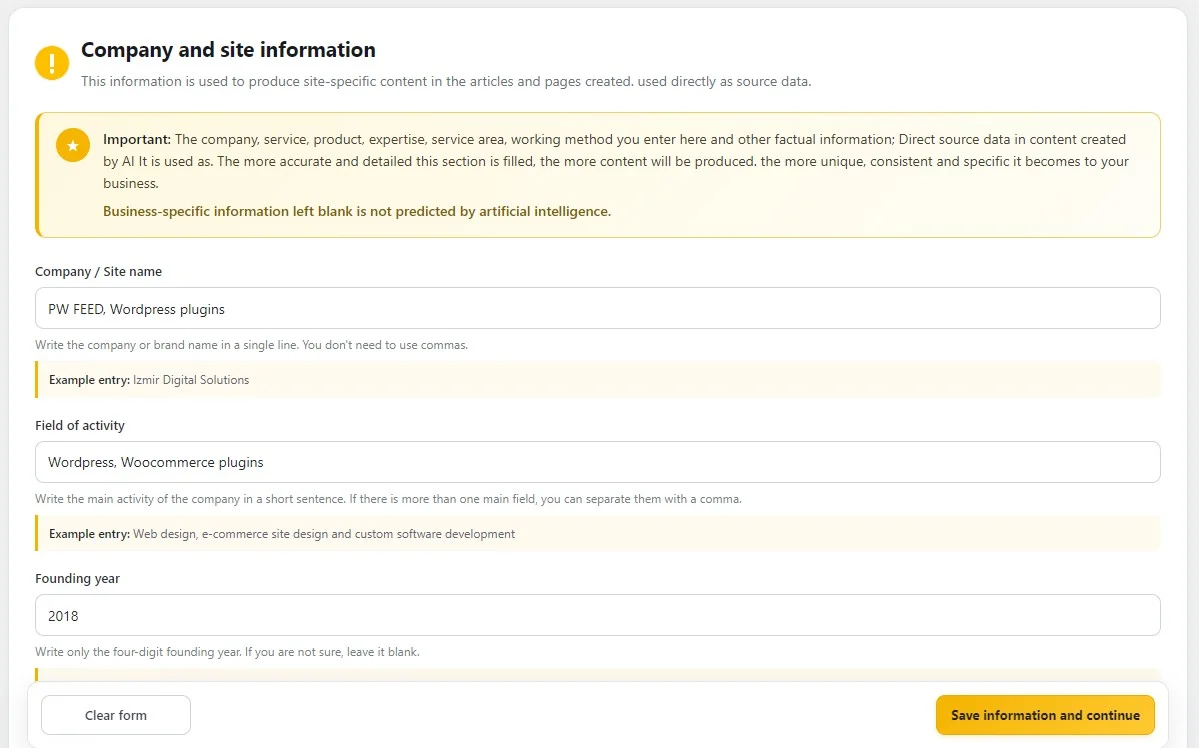
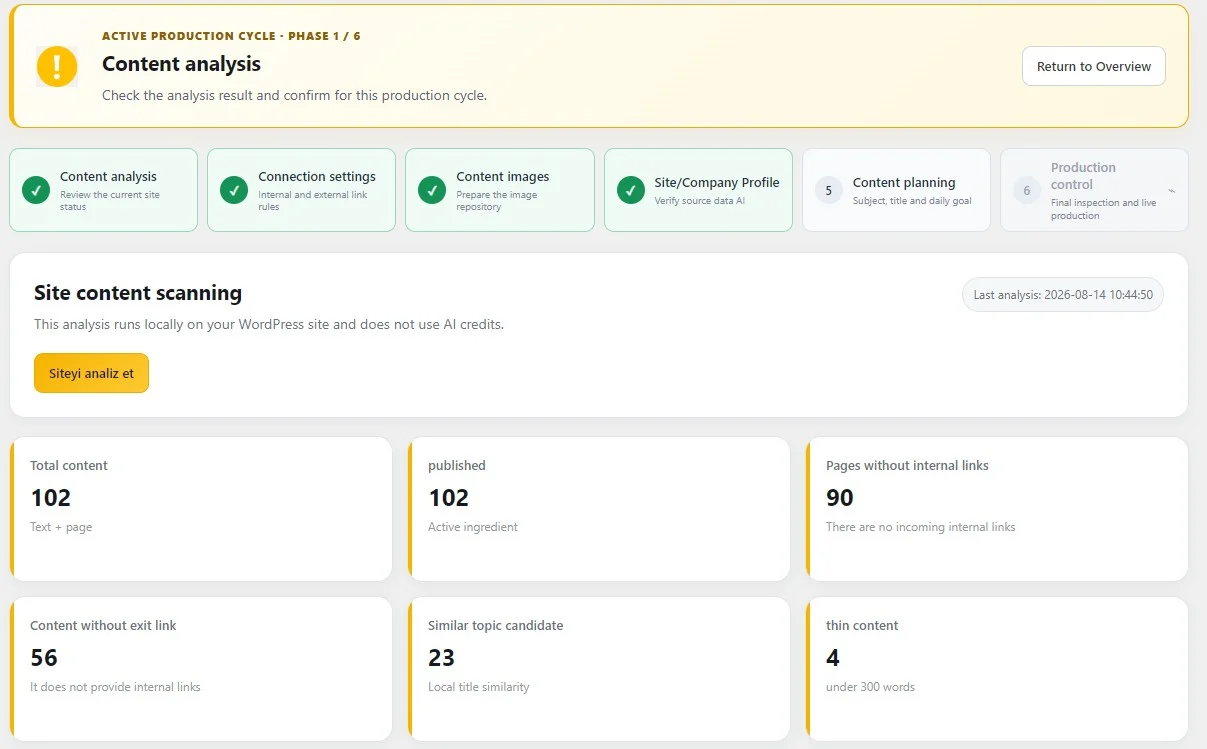
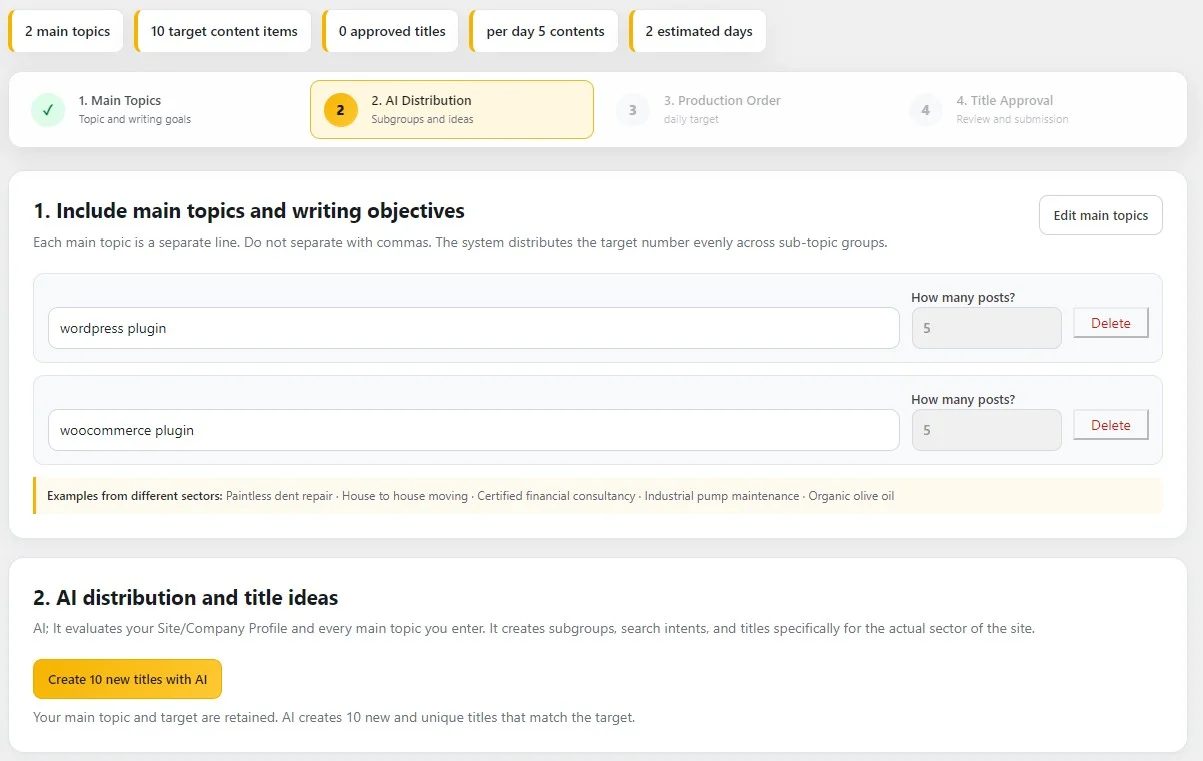
PW Feed can support AI-assisted content expansion as part of a wider WordPress content workflow that includes AI generation, SEO, GEO, internal linking, content planning, and wordpress plugin functionality.
The objective is not to make every page longer.
The objective is to make important pages more complete.
What is AI-assisted content expansion?
Content expansion means improving an existing page by adding information that increases its usefulness.
This may involve:
Explaining a concept in greater depth.
Answering additional user questions.
Adding missing subtopics.
Improving examples.
Clarifying terminology.
Adding useful internal links.
Updating old information.
Strengthening SEO relevance.
Improving GEO-oriented entity relationships.
Expanding thin service descriptions.
The page remains focused on its original subject.
AI helps identify what is missing and assists with creating the additional content.

This is different from rewriting the entire page simply to make it look new.
The strongest expansion preserves what already works and improves what is incomplete.
Why expanding an existing page can be better than creating another one
Creating a new WordPress article is easy.
AI makes it even easier.
However, a new page is not always necessary.
Suppose a website already has an article explaining automatic WordPress publishing.
Later, keyword research reveals searches about AI publishing workflows, publishing controls, automatic schedules, and draft-versus-publish decisions.
The website could create several new pages.
But if these subjects belong naturally inside the existing article, expanding that page may be stronger.
The website avoids unnecessary duplication.

Internal authority remains concentrated on one URL.
Users receive a more complete resource.
The content library remains easier to manage.
Content expansion therefore provides an important alternative to automatic page generation.
A mature AI strategy should decide between expansion and creation
Before generating a new WordPress article, the system should ask:
Does a relevant page already exist?
If yes, the next question is:
Can that page satisfy the new search intent through expansion?
Sometimes the answer is yes.
Sometimes the new query represents a genuinely different intent and deserves a separate page.
For example, an existing article about automatic publishing may be expanded with information about scheduling.
But a detailed comparison between draft publishing and direct publishing may justify its own article because the user is making a specific decision.
AI can assist with this distinction.
This is a more sophisticated use of content automation than simply generating new posts continuously.
Thin content is an obvious expansion opportunity
Some WordPress pages contain very little information.
A service may be described in a few sentences.
An article may answer a useful question in only 300 words.
A category introduction may contain almost no context.
Thin content is not automatically bad.
A simple question may only require a short answer.

However, when an important subject has substantial unanswered questions, expansion can improve the page.
AI can analyze whether meaningful additional information exists.
The goal should never be to reach an arbitrary word count.
Expansion should occur only when the new material contributes value.
Important pages deserve priority
Not every old page should receive the same amount of attention.
Content expansion can be prioritized strategically.
High-value candidates may include:
Important service pages.
Product pages.
Articles already receiving search traffic.
Pages ranking close to stronger visibility positions.
Pages supporting major content clusters.
Articles with useful backlinks.
Pages with outdated but valuable information.
Content frequently used in internal linking.
These pages already have strategic importance.
Improving them may produce greater value than creating another low-priority article.
AI can identify missing questions
An existing page may cover the primary topic but ignore questions users naturally ask next.
For example, an article about WordPress AI content generation might explain what it is but not address:
Can the content be saved as a draft?
Can it be published automatically?
How can duplicate content be prevented?
Can SEO titles be generated?
How does GEO fit into the workflow?
AI can identify these related questions.
The editor can then decide which belong on the current page and which deserve separate supporting articles.
This helps deepen content without losing structural control.
Secondary questions can increase topical depth
A strong article usually contains one primary search intent.
That does not mean it can answer only one question.
Secondary questions can provide valuable depth.

Suppose the main topic is AI content expansion.
Relevant supporting questions might include:
When should an existing article be expanded?
How much content should be added?
Should old sections be rewritten?
How can duplication be avoided?
How can SEO and GEO improve during expansion?
These questions reinforce the main subject.
They do not create unrelated directions.
AI can help identify this type of supporting coverage.
Expansion should not destroy page focus
Adding more content can sometimes make a page worse.
An article begins with a clear subject.
AI adds several loosely related sections.
Eventually the page becomes a broad collection of different topics.
This weakens search intent.
A strong expansion process therefore needs boundaries.
Every proposed addition should answer a simple question:
Does this information directly improve the page’s primary purpose?
If not, it may belong elsewhere.
AI should deepen the topic rather than broaden it indefinitely.
Existing content should be preserved when it is already strong
AI does not need to replace everything.
An older article may contain:
Useful explanations.
Original examples.
Brand-specific knowledge.
Expert observations.
Customer insights.
Established internal links.
These elements may be stronger than newly generated alternatives.
A good expansion workflow identifies what should remain.
AI adds missing information around it.
This protects originality and reduces unnecessary rewriting.
Human expertise can be expanded rather than replaced
One of the strongest uses of AI is taking a short expert observation and developing it into a clearer explanation.
A specialist may provide a few sentences based on years of experience.
AI can help organize that knowledge.
It can explain terminology.
Create supporting context.
Add relevant questions.
Improve readability.
The original expertise remains the foundation.
This creates stronger content than asking AI to generate an entire page with no business-specific information.
AI can improve old introductions
Older WordPress articles sometimes begin with broad introductions that no longer serve the page well.
The main answer may be buried after several paragraphs.
An expansion project can include improving the opening.
The introduction can explain:
What the page addresses.
Why the subject matters.
What the reader will learn.
The objective is not to make every introduction longer.
It is to make the page’s purpose clearer.
This can support user experience, SEO, and GEO simultaneously.
Definitions are useful expansion points
Technical pages often assume that readers already understand important terms.
Adding concise definitions can improve accessibility.
For example, an article may mention GEO repeatedly without explaining that GEO refers to Generative Engine Optimization.
Another page may discuss internal linking without explaining the basic concept.
Definitions can help:
New users.
Search engines.
AI assistants.
Generative search systems.
The definition should remain concise and relevant.
A page should not become a glossary unless that is its actual purpose.
Examples can make existing content more useful
Older articles may explain concepts theoretically but provide no practical examples.
AI can help create scenarios that illustrate the idea.
For example, a page about WordPress content planning could compare:
A website publishing random AI articles.
A website using approved topic clusters and publishing queues.
The example makes the strategic difference easier to understand.
However, hypothetical examples should remain clearly hypothetical.
AI should never create fictional customer testimonials and present them as real.
Business-specific examples create stronger originality
Generic examples are useful.
Business-specific examples can be even stronger.
For PW Feed, an article can discuss scenarios involving:
AI-generated WordPress drafts.
SEO title generation.
GEO-focused content.
Controlled publishing.
Topic planning.
Internal linking.
These examples reinforce the actual product environment.
Another business should use examples based on its own services.
This helps expanded content remain distinctive.
SEO can improve during content expansion
Expansion provides an opportunity to revisit SEO.
The page may originally have targeted only one narrow keyword.
New analysis may reveal several semantically related searches that belong to the same intent.
These can be incorporated naturally.
The process may also identify:
Missing questions.
Weak heading structure.
Poor internal linking.
Outdated title wording.
Generic meta descriptions.
Overlapping content.
The page can be improved as a complete SEO asset rather than simply made longer.
Do not turn expansion into keyword stuffing
A common mistake is adding sections only because additional keywords were discovered.
The content becomes awkward.
Several paragraphs repeat the same idea using slightly different phrases.
This does not create useful depth.
Related keywords should appear because the expanded information naturally requires them.
The article should remain written for meaning.
SEO terminology supports the subject.
It should not control every sentence.
Search intent should be rechecked before expansion
An older article may no longer match the queries it is trying to serve.
Before expanding it, the website should confirm the intended search purpose.
Perhaps the page has become too broad.
Perhaps another article now owns part of its original topic.
Perhaps the page should be repositioned around a narrower question.
AI can compare the existing content with the wider site structure.
This prevents investing heavily in a page with unclear intent.
Expansion can help solve keyword cannibalization
Sometimes two pages overlap because neither is complete.
The website may decide to consolidate them.
The strongest page becomes the primary resource.
Useful information from the other page can be incorporated into it.
AI can help:
Compare the pages.
Identify unique sections.
Remove repetition.
Create a stronger combined structure.
This is another form of content expansion.
Instead of producing more pages, the website creates one more complete page.
Consolidation requires careful handling
Combining content should not be performed blindly.
The website needs to consider:
Which URL is strongest.
Which page has better search visibility.
Which one receives links.
Which information should be preserved.
Which internal links need updating.
Whether redirects are appropriate.
AI can assist with content analysis, but technical SEO decisions still require appropriate site management.
The strategic goal is to reduce overlap while preserving value.
GEO is a strong reason to revisit older pages
Many older WordPress articles were written before GEO became part of content strategy.
They may contain useful SEO information but weak entity clarity.
An expansion process can improve this.
The page can explain:
What important entities are.
How they relate.
Which product performs which function.
Which platform is involved.
Who the content is intended for.
For PW Feed, clear relationships between PW Feed, WordPress, AI content generation, SEO, GEO, automated workflows, and wordpress plugin functionality can be maintained consistently.
This helps make existing content more understandable in generative-search environments.
GEO expansion should focus on clarity, not buzzwords
Adding the word GEO to every older article does not improve it.
The page needs to become clearer.
If a concept is relevant to generative search, explain the relationship.
If the subject has nothing to do with GEO directly, forcing terminology into it may reduce focus.
GEO-oriented expansion should improve:
Definitions.
Entity relationships.
Direct answers.
Structured explanations.
Consistency.
Useful context.
The same principles that help human readers often help AI interpretation as well.
AEO can create useful expansion opportunities
Answer Engine Optimization can reveal missing direct answers.
An older article may contain the answer to a question but hide it across several paragraphs.
The expanded version can provide a clearer response.
For example:
Can AI-generated WordPress content be saved as a draft?
Yes. In a controlled workflow, AI-generated content can be created as a WordPress draft so an editor can review it before publication.
The article can then explain the details.
This direct-answer structure can improve usability.
It can also make the information easier for answer engines to interpret.
Frequently asked questions can expand a page naturally
FAQs can be useful when they address real secondary questions.
An article about content expansion might include questions such as:
Should every old WordPress article be expanded?
Can expanding a page create duplicate content?
Should AI rewrite the existing sections?
How often should important content be reviewed?
These questions belong naturally to the subject.
They add useful depth.
The FAQ should not contain unrelated questions simply to increase page length.
Content expansion can improve internal linking
Older pages often have weak internal links because newer articles did not exist when they were written.
Expansion provides an opportunity to connect them.
Suppose an article published two years ago discusses SEO metadata.
The site now has detailed pages about:
SEO titles.
Meta descriptions.
Duplicate content.
Internal linking.
The older article can link to these newer resources where relevant.
This turns an old isolated article into part of the current content architecture.
Reverse linking should also be considered
The expanded page may now become a stronger resource.
Other articles may deserve links toward it.
AI can identify these opportunities.
For example, several supporting articles may mention content updates or article improvement.
They can link to the expanded guide.
This strengthens the entire cluster.
Content expansion therefore affects more than the page being edited.
It can improve the wider network.
Content clusters benefit from expansion
A cluster may contain one weak page while the rest are strong.
Instead of creating another supporting article, the weak page can be expanded.
AI can analyze the cluster and identify missing coverage.
For example, an SEO automation cluster might already have detailed pages about titles and meta descriptions but a very thin central SEO page.
Expanding the central resource can improve the whole cluster.
This creates a stronger hierarchy.
Central pages often deserve broader expansion
A pillar or hub page usually needs enough breadth to introduce the major parts of its subject.
Supporting pages then provide depth.
If the central page is too thin, users may not understand the cluster.
AI can help expand it with concise sections covering:
Core concepts.
Major subtopics.
Important relationships.
Links toward specialized pages.
The central resource becomes a useful map.
It should not duplicate every supporting article.
Supporting pages should expand vertically
A supporting article has a narrower purpose.
Its expansion should go deeper into that topic.
For example, an article about AI-powered internal linking can expand with:
Anchor-text strategy.
Orphan pages.
Reverse-link opportunities.
Semantic relevance.
Cluster hierarchy.
Link maintenance.
It should not become a general guide to every form of WordPress SEO.
This vertical expansion preserves page specialization.
AI can identify outdated information
Content expansion is often combined with content updating.
An article written several years ago may contain:
Old terminology.
Deprecated features.
Old statistics.
Obsolete processes.
Broken references.
Outdated screenshots.
AI can help identify text that appears likely to need review.
However, current factual information should be verified against reliable sources when necessary.
The goal is to prevent expansion from building new content on top of outdated foundations.
Evergreen pages should still be reviewed
Evergreen does not mean permanent.
A fundamental subject may remain relevant for years while its details change.
WordPress evolves.
SEO practices change.
AI search develops.
Products gain new capabilities.
A content expansion schedule can periodically review important evergreen pages.
This helps keep the site’s foundational resources useful.
Expansion can help match changing search behavior
Users may begin asking different questions around the same subject.
An older article may still be relevant but no longer reflect these newer questions.
For example, a WordPress SEO article written before generative search became important may now need sections addressing:
AI search.
GEO.
Answer engines.
Generative search visibility.
These additions should be included only where they genuinely belong.
AI can help identify how the topic has expanded over time.
Article age should not be the only expansion signal
A recent page can still be incomplete.
An older page can still be excellent.
Priority should depend on quality and opportunity rather than age alone.
Useful signals can include:
Search performance.
Business importance.
Content depth.
Missing questions.
Topic overlap.
Internal linking weakness.
Outdated information.
User engagement.
Cluster importance.
AI can help combine these factors when identifying expansion candidates.
High-performing pages deserve careful changes
A page already performing strongly should not be rewritten aggressively without a reason.
Expansion should preserve the sections that are working.
New information can be added carefully.
The page’s primary intent should remain stable.
The title and metadata should not be changed simply because AI can create alternatives.
Automation should reduce risk, not encourage unnecessary experimentation on valuable pages.
Low-performing pages need diagnosis before expansion
A weak page does not automatically need more words.
Its problem may be:
Wrong search intent.
Duplicate topic.
Poor title.
Weak internal links.
Low business relevance.
Outdated information.
Thin content.
Poor structure.
AI can help diagnose the likely problem.
If missing depth is the issue, expansion makes sense.
If the page duplicates another resource, consolidation may be better.
If the subject has little value, expansion may waste effort.
AI can score expansion opportunities
A larger WordPress site may contain hundreds of possible candidates.
AI can help prioritize them.
A scoring model might consider:
Business importance.
Search opportunity.
Existing performance.
Content depth.
Cluster importance.
Age.
Missing sections.
Internal link support.
Duplication risk.
The exact model depends on the website.
The principle is useful: expansion should be prioritized rather than applied randomly.
Service pages can benefit from expansion
Service pages are often too brief.
A page may contain only a short description and contact form.
AI can help identify useful additions such as:
Who the service is for.
How the process works.
Common questions.
Important limitations.
Related services.
Geographic availability.
Supporting informational links.
This can make the page more useful for users and clearer for SEO and GEO.
However, all service claims must remain factual.
Product pages require different expansion rules
A product page should not become a giant blog article unnecessarily.
Useful additions may include:
Clear feature explanations.
Use cases.
Compatibility information.
Frequently asked questions.
Technical details.
Customer problems addressed.
Related educational resources.
AI can help organize this information.
The commercial purpose of the page should remain clear.
Expansion should support the decision process rather than bury the product beneath generic content.
E-commerce category pages can gain informational context
Some WooCommerce category pages contain only product grids.
Depending on the site, useful descriptive content can explain:
What the category contains.
How products differ.
What buyers should consider.
Common use cases.
Related categories.
AI can assist with this expansion.
However, category content should remain concise enough that it does not interfere with shopping usability.
The correct depth depends on the page purpose.
Local pages need verified expansion
A local business may want to expand city or service-area pages.
AI should use verified geographic information.
Useful additions can include:
Actual service coverage.
Real branch information.
Local customer questions.
Regional considerations.
Relevant service details.
The system should not invent neighborhood references merely to make the page longer.
Geographic accuracy is essential for local SEO and GEO.
Agencies can turn expansion into a recurring service
Agencies often focus on delivering new articles every month.
Content expansion creates another valuable service.
An agency can regularly identify:
Underdeveloped pages.
Old high-value content.
Missing internal links.
Weak service pages.
Outdated terminology.
Content cluster gaps.
The agency then improves existing assets.
This can create value without increasing the client’s page count continuously.
AI makes the process more scalable across multiple websites.
Client-specific rules remain essential
An agency cannot use the same expansion instructions for every client.
A technical company may require detailed terminology.
A local service company may need geographic accuracy.
A professional services firm may require stronger factual review.
An e-commerce client may prioritize category content.
Each website needs its own context.
AI can use reusable processes while preserving separate business rules.
Expansion can improve content consistency
Older pages may use different terminology from newer content.
An expansion project provides an opportunity to align them.
For example:
Old product names can be updated.
Preferred service terms can be standardized.
Current business descriptions can replace outdated ones.
Important GEO relationships can become clearer.
This helps the entire website feel more coherent.
However, wording does not need to become identical.
Consistency should apply to facts and terminology, not copied paragraphs.
Expansion should preserve originality
AI can sometimes add predictable generic sections to every article:
Benefits.
Best practices.
Common mistakes.
Future trends.
FAQs.
These sections are not automatically useful.
The structure should depend on the page.
A technical guide may need troubleshooting.
A strategic article may need decision criteria.
A service page may need process information.
A comparison page may need tradeoffs.
Original expansion responds to what the specific page lacks.
Word count should never be the main objective
An article with 2,000 words is not automatically better than one with 1,000.
If all important questions are answered clearly in 1,000 words, another 1,000 words may add repetition.
Conversely, a complex subject may genuinely require substantial depth.
AI should expand toward completeness rather than a fixed length.
The site can still maintain general editorial ranges, but usefulness should remain the final standard.
A wordpress plugin can make expansion more site-aware
A generic AI tool can expand text when the user provides it manually.
A wordpress plugin can potentially work much closer to the existing site.
It can operate with awareness of:
Published posts.
Pages.
Titles.
Categories.
Internal links.
Content history.
Business profile.
SEO settings.
This context can improve expansion decisions.
PW Feed can support WordPress-centered AI workflows where existing content becomes part of the generation process rather than requiring every page to be copied into an external tool manually.
AI expansion can be performed as a controlled draft
Automatically changing live content can create risk.
A safer workflow can create proposed additions as drafts or revisions.
The editor reviews:
New sections.
Updated terminology.
Added links.
SEO changes.
GEO improvements.
Business claims.
Only approved changes are applied to the live page.
This approach is especially useful for important service pages or high-performing articles.
Automatic expansion should be used selectively
Some low-risk content may eventually be suitable for greater automation.
For example, the system might automatically add approved internal links or update predefined content blocks.
However, large changes to important pages deserve review.
Automation should reflect the risk level.
A one-size-fits-all approach is unnecessary.
WordPress content systems can combine automatic and reviewed workflows.
Content expansion can create new internal-link opportunities
When an article gains new sections, it may become relevant to other pages.
For example, after adding a detailed GEO section, related GEO articles may now link toward it.
The expanded page may also have new reasons to link outward.
AI can identify these relationships.
This allows expansion to strengthen the broader content architecture rather than changing only one page.
Commercial paths can remain natural
An expanded informational article should continue serving its main educational purpose.
Commercial links can appear when appropriate.
Readers who want additional information about PW Feed and its WordPress AI content, SEO, GEO, or automation capabilities can continue through the PW Feed contact page.
Users ready to review purchasing options can proceed to the PW Feed buy page.
The page should not be expanded simply to add more promotional material.
Useful information remains the priority.
Expansion can reduce the pressure to publish constantly
Many businesses feel that SEO requires continuous creation of new posts.
A mature content strategy can allocate part of its effort to existing pages.
For example, a monthly plan might include:
Two new articles.
Two important content expansions.
Several internal-link improvements.
One content consolidation.
This creates balanced growth.
The website becomes better, not merely larger.
AI can make this mixed workflow practical.
A content library has value that should be reused
Every older article represents previous investment.
Research was performed.
The URL may have history.
Users may already know the page.
Search engines may already understand it.
Internal links may already point toward it.
Discarding these assets in favor of continuous new-page generation can waste value.
AI-assisted expansion helps businesses reuse what they already have.
This is one of its strongest strategic advantages.
PW Feed and AI-assisted content expansion
PW Feed can support a WordPress content system where AI assists not only with new articles but also with improving existing content.
The website provides context.
Existing pages reveal what is already known.
AI can identify missing areas.
SEO helps evaluate search intent.
GEO can improve entity clarity.
Internal links can connect the expanded page with related resources.
A wordpress plugin can keep more of this workflow close to the WordPress environment.
This creates a more mature form of content automation.
The system asks not only what should we publish next, but also what should we improve next?
New content and expanded content should work together
These strategies are complementary.
New articles are useful when the website has a genuine content gap.
Expansion is useful when an existing page already owns the topic but needs more depth.
Consolidation is useful when several pages overlap.
Updating is useful when information has become outdated.
Internal linking is useful when strong pages remain disconnected.
A sophisticated AI content system can help choose between these actions.
This is much more valuable than treating every opportunity as a new article.
Final thoughts on AI-assisted content expansion for WordPress websites
AI-assisted content expansion can help WordPress websites improve existing pages without continuously creating new URLs.
The process begins by identifying pages that deserve attention.
Important articles may contain missing questions.
Service pages may be too thin.
Product pages may need clearer feature explanations.
Older content may require new terminology.
SEO opportunities may reveal missing semantic coverage.
GEO may require clearer entity relationships.
Internal links may need strengthening.
AI can help identify and produce these improvements.
However, expansion should remain controlled.
The existing page’s search intent should be preserved.
Strong original information should remain.
New sections should add value.
Keyword stuffing should be avoided.
Unsupported business claims should never be introduced.
Not every page needs to become longer.
Not every search opportunity needs a new article.
A wordpress plugin can help bring this process closer to the actual WordPress content environment.
PW Feed can support a broader workflow where AI content generation, expansion, SEO, GEO, internal linking, and publishing controls work together.
The strongest content strategy therefore has more than one response to a new opportunity.
Sometimes the correct action is to publish.
Sometimes it is to update.
Sometimes it is to expand.
Sometimes it is to consolidate.
Sometimes it is to do nothing.
AI becomes most valuable when it helps WordPress website owners make these distinctions and then reduces the manual work required to carry out the right decision.