
How to optimize WordPress content for Google AI Overviews
Google AI Overviews change how information can appear in search.
Instead of only presenting a list of traditional results, Google can generate an AI-produced summary for some searches and support that summary with information from webpages.
For WordPress website owners, this creates a new visibility challenge.
A page may still need strong traditional SEO, but it may also benefit from clearer answers, stronger entity relationships, better topical structure, useful supporting detail, and consistent information.
This is where SEO, GEO, and AEO begin to overlap.
SEO supports traditional search relevance and discoverability.
GEO, or Generative Engine Optimization, focuses on making content clearer and more useful in generative search environments.
AEO, or Answer Engine Optimization, helps organize information around direct user questions and answers.
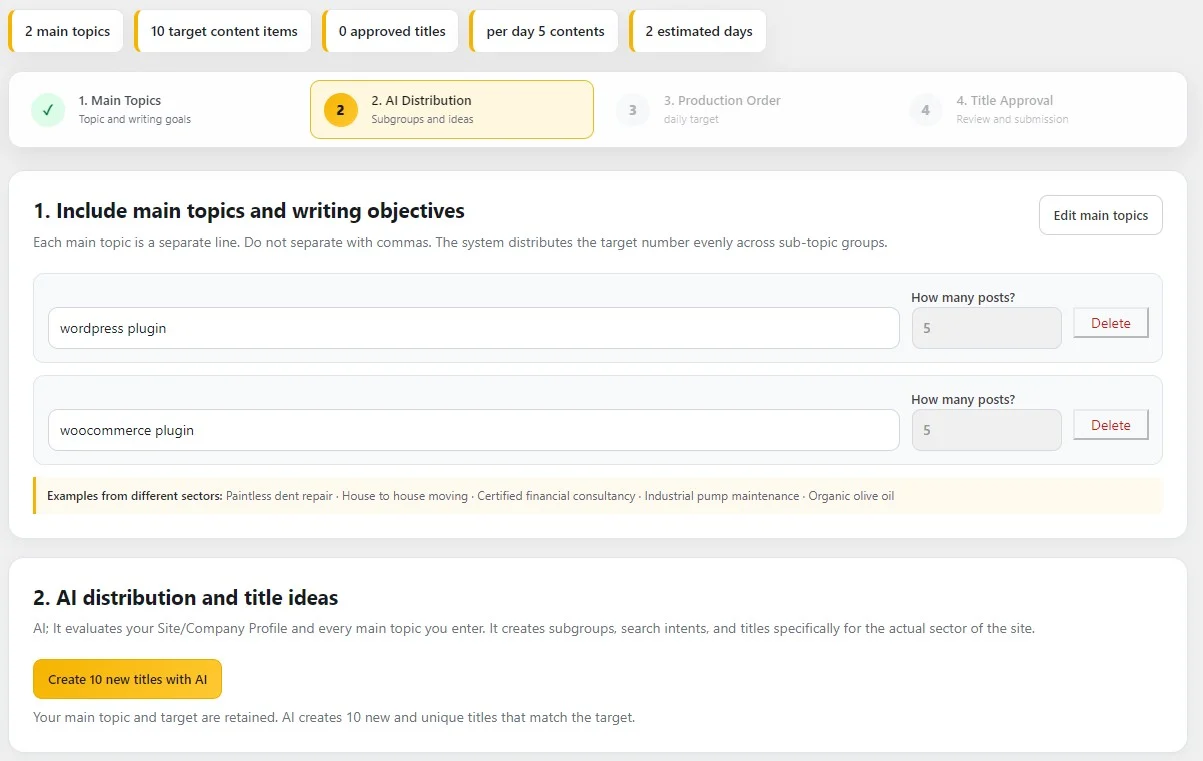
PW Feed can support this type of WordPress workflow by combining AI-assisted content generation, SEO, GEO, AEO, topic planning, internal linking, and controlled publishing through a wordpress plugin environment.
The goal is not to find a secret formula for forcing a page into Google AI Overviews.
The stronger goal is to create content that is useful, clear, accurate, and easy to interpret.
What are Google AI Overviews?
Google AI Overviews are AI-generated summaries that can appear in Google Search for some queries.

Instead of requiring users to open several pages immediately, an overview may provide a direct explanation of the topic.
The system may also present supporting sources or links.
For website owners, this means search visibility can involve more than a traditional blue-link ranking.
A page may contribute useful information to a broader generated response.
This changes how content should be planned.
The article should not only target a keyword.
It should help answer the underlying question.
Google AI Overviews do not make traditional SEO irrelevant
A common mistake is assuming that generative search replaces conventional SEO.
It does not.
WordPress websites still benefit from:

Crawlable content.
Indexable pages.
Clear titles.
Relevant topics.
Internal links.
Good site architecture.
Technical performance.
Accurate information.
Useful metadata.
Traditional SEO remains the foundation.
GEO and AEO add additional content considerations.
A website should therefore think in terms of combined optimization rather than replacement.
There is no guaranteed Google AI Overview inclusion formula
No responsible optimization strategy can guarantee that a particular page will appear in an AI Overview.
Search results can vary.
Queries can produce different interfaces.
Google’s systems can change.
The same query can behave differently over time.
This means claims such as:
Guaranteed AI Overview ranking.
Guaranteed citation in Google AI Overviews.
Guaranteed inclusion through GEO.

should be treated carefully.
A website can improve its readiness.
It cannot control every generated result.
The strongest strategy begins with search intent
Before creating a WordPress article, determine what the user actually wants.
For example, a search such as:
WordPress AI content
is broad.
The user may want:
A definition.
A plugin.
A tutorial.
A comparison.
A way to automate publishing.
A way to optimize AI-generated articles.
These are different intents.
A page created for Google AI Overviews should still focus on one clear informational need.
Search intent remains a fundamental content-planning principle.
Answer the primary question clearly
A page targeting an informational query should provide a direct answer.
For example:
Can WordPress content be optimized for Google AI Overviews?

Yes. WordPress content can be prepared for generative search by using clear topic focus, direct answers, accurate entity descriptions, strong internal linking, consistent business information, and useful supporting detail.
This answer gives the user immediate context.
The article can then explain:
SEO.
GEO.
AEO.
Topic clusters.
Structured data.
Content quality.
The direct answer and the long-form explanation work together.
Do not hide the answer behind a long introduction
A user should not need to read several hundred words before understanding the main point.
This is particularly important for informational questions.
A strong opening can:
Introduce the topic.
State the primary answer.
Explain what the page will cover.
Then move into depth.
Generic introductions such as:
In today’s rapidly changing digital world
add little value.
Specific context is stronger.
Google AI Overview optimization should not become keyword stuffing
A page does not become more relevant by repeating phrases such as:

Google AI Overviews.
AI Overview SEO.
Google AI search.
GEO.
every few sentences.
The information should remain natural.
Related concepts can appear where relevant.
For example:
Generative search.
AI-assisted search.
Answer-focused content.
Entity clarity.
Search intent.
Internal linking.
Semantic relevance.
These terms build context without forcing one phrase repeatedly.
Clear entities help improve information understanding
A generative search system needs to understand what entities are involved.
These may include:
Businesses.
Products.
Services.
Technologies.
Platforms.
Locations.
For PW Feed, useful relationships may include:
PW Feed.
WordPress.
AI content generation.
SEO.
GEO.
AEO.
Publishing workflows.
wordpress plugin functionality.
These relationships should be described clearly across relevant pages.
The content should not rely entirely on vague phrases.
Product descriptions should be explicit
Consider:
Our intelligent solution improves content visibility.
This says very little.
A clearer statement would be:
PW Feed supports AI-assisted WordPress content generation with SEO, GEO, and controlled publishing workflows.
The second statement identifies:
The product.
The platform.
The function.
The optimization context.
Clear descriptions benefit human visitors and AI search systems.
Business information should remain consistent
A website may contain many articles.
Important facts should not change randomly between them.
For example:
The product name should remain consistent.
The platform should remain correct.
Service descriptions should not conflict.
Locations should be accurate.
Feature claims should remain aligned.
This is especially important for AI-generated content.
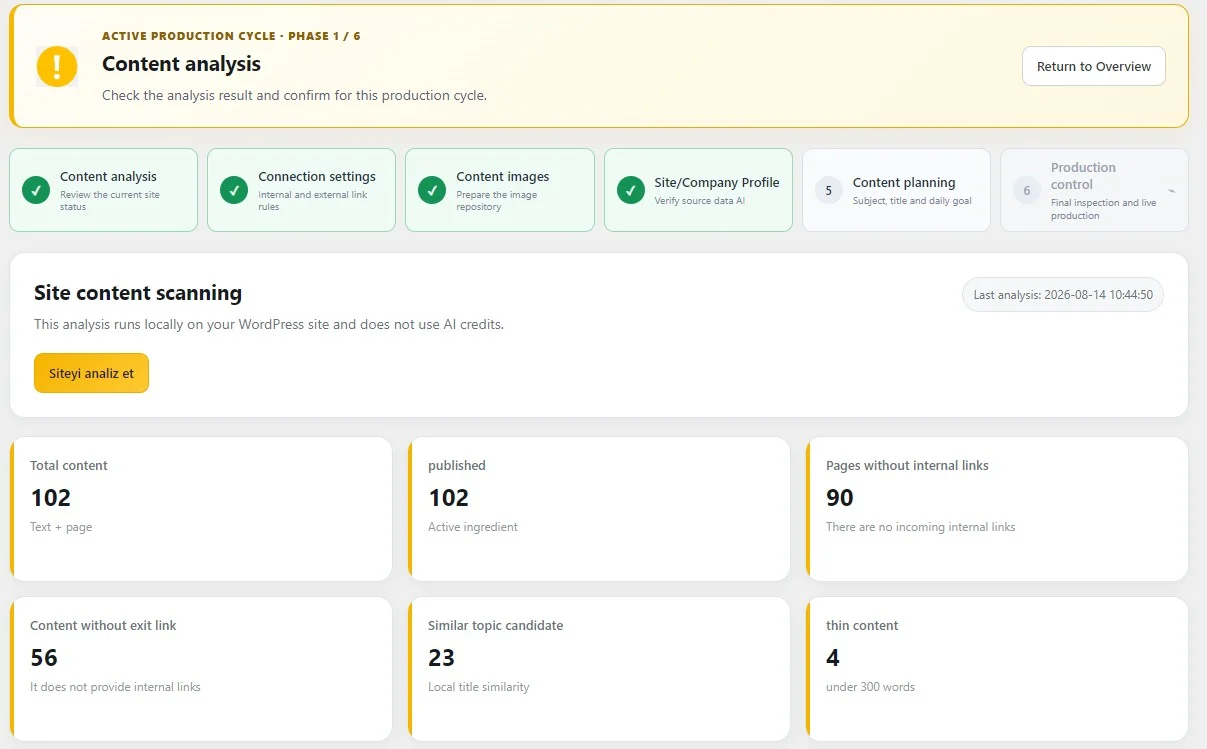
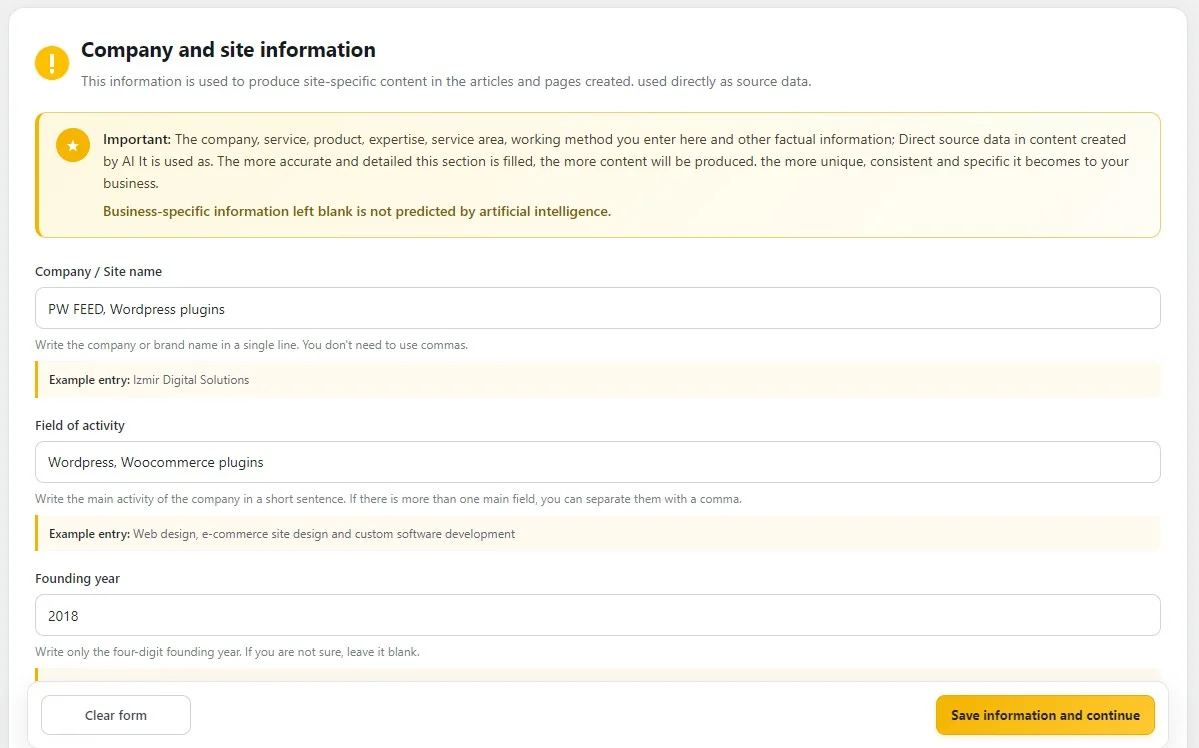
A structured business profile can help maintain consistency.
A business profile can guide AI generation
Instead of asking AI to generate every article using only a title, the system can provide verified business context.
This may include:
Business name.
Product name.
Main features.
Audience.
Services.
Locations.
Preferred terminology.
Important pages.
Claims to avoid.
This helps reduce hallucinated or inconsistent information.
PW Feed can support a workflow where AI content is generated according to predefined site context.
Define technical concepts clearly
A page about Google AI Overviews may mention several technical terms.
Important concepts should be defined when they first matter.
For example:
SEO means Search Engine Optimization.
GEO means Generative Engine Optimization.
AEO means Answer Engine Optimization.
A content cluster is a group of related pages organized around a broader central subject.
Internal linking connects related pages within the same website.
Clear definitions make the article easier to understand.
They also reduce ambiguity.
Do not overdefine everything
Definitions are useful when the concept matters.
They should not make the article feel like a dictionary.
A reader familiar with WordPress does not need a basic explanation of every common feature.
The content should define what is necessary for understanding.
This keeps the article efficient.
Descriptive headings improve content clarity
A heading such as:
Why direct answers matter for Google AI Overviews
is clearer than:
A new opportunity
The first heading tells readers what the section contains.
Descriptive headings help:
Users scan the article.
Search systems understand the page structure.
AI systems identify relevant sections.
This does not mean headings must be robotic.
They should simply communicate meaning.
Each section should focus on one idea
A strong section should have a clear purpose.
For example:
Entity consistency.
Direct answers.
Internal linking.
Structured data.
Content freshness.
These ideas should not be mixed unnecessarily.
Focused sections create cleaner information units.
They also reduce repetition.
Focused paragraphs improve readability
A paragraph should generally develop one main idea.
This is especially useful for long-form WordPress articles.
Large paragraphs combining:
SEO.
Schema.
Internal links.
Pricing.
Product features.
can become difficult to follow.
Separating these concepts improves clarity.
This is helpful for mobile users as well.
Long-form content can work well when the topic needs depth
Google AI Overview optimization does not require short pages.
A complex subject may need significant depth.
This article includes:
Search intent.
SEO.
GEO.
AEO.
Entities.
Internal linking.
Structured data.
Content freshness.
Topic clusters.
WordPress automation.
These subjects justify a longer article.
The important principle is that every section should contribute something useful.
Length should come from depth, not repetition.
Short content can still be useful
Some questions require only a concise answer.
For example:
Does every WordPress page need an FAQ for Google AI Overviews?
No. FAQ content is useful when the page has genuine supporting questions that users actually need answered.
That may be sufficient.
A site should not expand simple answers artificially.
Completeness matters more than word count.
Answer-focused content supports AEO
AEO helps content respond to complete user questions.
For example:
Does traditional SEO still matter for Google AI Overviews?
Yes. Traditional SEO remains important because discoverable, indexable, relevant pages provide the foundation that generative search systems can build on.
This type of answer is direct.
The following paragraphs can explain:
Crawlability.
Search intent.
Metadata.
Internal links.
Site architecture.
AEO improves clarity without replacing SEO.
GEO adds a broader generative-search perspective
GEO focuses on the clarity and usefulness of information in generative search environments.
This can involve:
Clear entity relationships.
Accurate definitions.
Consistent business context.
Useful answers.
Logical page structure.
Topic depth.
A WordPress page can therefore support traditional search and generative search simultaneously.
There is no need to create a separate GEO version of the same article.
SEO, GEO, and AEO can use one content foundation
A high-quality article can serve all three.
For example:
SEO defines the search intent.
The SEO title describes the topic.
GEO improves entity clarity.
AEO provides direct answers.
Internal links connect related resources.
The article remains one coherent page.
This avoids unnecessary duplication.
Content clusters can strengthen topical depth
One page does not need to explain an entire subject.
A WordPress site can create a cluster around AI search.
For example:
How to optimize WordPress content for AI search engines.
How to make WordPress content easier for AI assistants to understand.
How to prepare WordPress content for generative search.
AI search visibility for WordPress websites.
How to create answer-focused content in WordPress.
How to structure WordPress articles for answer engines.
How to optimize WordPress content for ChatGPT search.
How to optimize WordPress content for Google AI Overviews.
These pages are related.
Each should have a distinct purpose.
Together, they create depth.
Avoid duplicate search intent inside the cluster
Closely related topics require careful separation.
For example:
A general AI search page can explain the wider concept.
A ChatGPT page can focus on conversational search.
A Google AI Overviews page can focus on Google’s generative search experience.
The common SEO and GEO foundations may overlap.
The platform-specific intent should justify separate pages.
If the content becomes identical except for the platform name, consolidation may be better.
Google AI Overview pages should not become generic platform swaps
A weak content strategy may create:
ChatGPT SEO article.
Google AI Overview SEO article.
Other AI platform SEO article.
using the same structure and advice.
This creates low differentiation.
A stronger Google AI Overviews page should focus on questions relevant to Google Search.
For example:
How generative answers relate to traditional search.
Why SEO foundations still matter.
How answer-focused content fits into Google’s search environment.
How WordPress pages can support both conventional and generative discovery.
This gives the article a distinct purpose.
Internal linking can strengthen the AI-search cluster
A Google AI Overviews article can link toward related pages about:
GEO.
AEO.
AI search visibility.
ChatGPT search optimization.
Answer-engine structure.
Content clusters.
These links help users continue exploring.
They also create a clearer topic network.
The links should be relevant to the surrounding paragraph.
Do not link every related page everywhere
A cluster may contain many articles.
That does not mean every article should link to every other article.
The link should appear when the destination helps the user.
For example:
A section discussing answer structure can link to an answer-engine article.
A section discussing ChatGPT can link to the dedicated ChatGPT article.
This keeps linking natural.
Descriptive anchor text improves context
Anchor text should tell the reader what the linked page covers.
Useful examples include:
WordPress content for generative search.
Answer-focused WordPress content.
ChatGPT search optimization.
AI-powered internal linking.
The same anchor text does not need to be used repeatedly.
Natural variation is healthier.
Existing pages can be updated for generative search
A website does not need to create only new content.
Older WordPress pages may already cover important topics.
They can be reviewed for:
Missing direct answers.
Outdated terminology.
Weak entity descriptions.
Poor internal linking.
Thin sections.
Old product information.
These pages can be improved.
This may be more efficient than publishing a competing article.
Expand strong pages before creating duplicates
Suppose an existing SEO article already receives relevant traffic.
It may lack information about generative search.
The correct action may be to add a new section.
For example:
How AI Overviews affect modern search visibility.
This preserves the existing page while updating its context.
AI can help identify and draft these expansions.
Do not rewrite successful content without a reason
A high-performing page may already satisfy user intent.
A complete rewrite can introduce unnecessary risk.
Targeted changes are often safer.
For example:
Add one updated definition.
Add one missing direct answer.
Improve one internal link.
Update one obsolete feature reference.
This is content maintenance rather than replacement.
New pages should fill distinct gaps
A new article is valuable when it answers a separate question.
For example:
How to optimize WordPress content for Google AI Overviews
has a different focus from:
SEO vs GEO vs AEO for WordPress websites.
Both can exist.
The first is platform-oriented.
The second is conceptual comparison.
Distinct intent supports healthy site growth.
AI can help find content gaps
A content system can analyze the WordPress library and identify missing areas.
Examples may include:
No article explaining Google AI Overviews.
No page comparing SEO, GEO, and AEO.
No dedicated answer-engine structure guide.
No content explaining internal linking for AI search.
These gaps can become future topics.
AI therefore supports planning as well as writing.
Not every gap deserves an article
A missing subject can be handled in different ways.
Possible actions include:
Create a new post.
Expand an existing article.
Add an FAQ.
Add a section to a product page.
Create an internal link.
Do nothing.
The correct action depends on search intent and business relevance.
This prevents unnecessary content growth.
Original information helps differentiate the site
Generic content is easy to reproduce.
A stronger WordPress article can include:
Real product workflows.
Original observations.
Practical examples.
Actual customer questions.
Verified feature explanations.
Experience-based guidance.
AI can organize this information.
It should not invent the underlying expertise.
This distinction matters.
Avoid generic AI filler
Examples of weak filler include:
AI is changing everything.
The digital world is evolving quickly.
Businesses must adapt to the future.
These statements provide little information.
A better paragraph should explain:
What is changing.
Why it matters.
What the WordPress user should do.
Specificity creates stronger informational value.
Use accurate claims about PW Feed
Product marketing content should describe real or approved capabilities.
Safer language includes:
PW Feed can support AI-assisted WordPress content workflows involving SEO, GEO, topic planning, and controlled publishing.
Avoid unsupported claims such as:
Guaranteed Google AI Overview visibility.
Guaranteed first position.
Guaranteed citations.
Accurate claims create stronger trust.
Structured data can support clear content
WordPress websites may use schema or other structured data.
Relevant types can describe:
Organizations.
Products.
Services.
Articles.
FAQs.
Local businesses.
Structured data can provide machine-readable context.
However, it should match the visible content.
The page and the markup should agree.
Visible content remains essential
Schema does not replace a strong page.
A product page must still explain the product.
A service page must still describe the service.
An article must still answer the question.
An FAQ must still contain useful answers.
Structured data reinforces information.
It does not create quality by itself.
FAQ content can be useful when it reflects real questions
An AI Overview-focused article may answer:
What are Google AI Overviews?
Does traditional SEO still matter?
Can GEO guarantee inclusion?
Does structured data help?
Can AI-generated WordPress content be optimized automatically?
These are useful questions.
The FAQ should not be filled with invented queries solely for markup.
Real questions provide real value.
Google AI Overview optimization should remain human-first
The article should be written for users.
A user should be able to:
Find the answer.
Understand the explanation.
Navigate related topics.
Trust the information.
Take the next step.
If the page becomes unnatural because of excessive GEO or AI terminology, the strategy is weakening the content.
Human clarity and machine readability should support one another.
Content freshness matters for changing search environments
AI search is evolving.
Articles about Google AI Overviews may need periodic review.
Important changes can include:
Terminology.
Search presentation.
Best-practice guidance.
Product capabilities.
Relevant examples.
The page should be updated when the information changes.
This is different from rewriting it simply to change the publication date.
Freshness should reflect real updates
A page should not receive superficial edits merely to appear recent.
Useful updates include:
New information.
Corrected outdated statements.
Improved explanations.
Updated examples.
New relevant internal links.
Content freshness should improve accuracy.
It should not be cosmetic.
A content audit can identify pages that need updates
AI can help analyze WordPress content for:
Old terminology.
Weak entity explanations.
Duplicate topics.
Missing direct answers.
Outdated metadata.
Orphan pages.
Thin sections.
The result can become an improvement queue.
This supports ongoing SEO and GEO maintenance.
Google AI Overviews can create long-tail opportunities
Users often ask detailed questions.
For example:
How can a small business optimize WordPress content for Google AI Overviews without hiring an SEO team?
How can AI-generated WordPress content be structured for both SEO and Google AI Overviews?
Can a WordPress plugin help prepare content for generative search?
These detailed queries contain stronger intent than broad keywords.
A content strategy can address them selectively.
Do not create one page for every conversational query
Many long-tail questions are semantically similar.
For example:
Can AI-generated WordPress content appear in Google AI Overviews?
Can WordPress AI content be used in Google’s generative answers?
Can Google AI Overviews show AI-generated content?
These may belong to the same broader intent.
One strong page can answer them.
Intent grouping prevents content duplication.
Service businesses can apply the same principles
A service website does not need to discuss Google AI Overviews on every page.
It should make its own information clear.
For example:
What service is offered?
Who provides it?
Where is it available?
Who needs it?
How does it work?
This information can support traditional search and AI-powered search alike.
The page should focus on the service, not on repeatedly mentioning generative search.
Local businesses should keep geographic facts accurate
Local queries can be important in AI-driven search.
A WordPress site should clearly identify:
Real business location.
Actual service areas.
Branch information.
Available services.
Contact information.
AI-generated content should not invent locations.
False geographic context weakens quality.
Avoid artificial city pages
A business should not create dozens of nearly identical city pages simply to increase visibility.
A location page should have real local value.
This may come from:
A physical branch.
Distinct service availability.
Meaningful local information.
Genuine coverage differences.
Changing only the location name creates weak pages.
The same principle applies to traditional SEO and GEO.
E-commerce sites need clear product facts
WooCommerce pages can benefit from clear information about:
Brand.
Model.
Category.
Specifications.
Compatibility.
Use cases.
Limitations.
These facts help users and AI systems understand the product.
AI-generated descriptions should remain grounded in verified product data.
Invented technical specifications can create serious quality problems.
Category pages can provide context
A category page can explain:
What the category contains.
How products differ.
Which customer needs which type.
Important selection criteria.
This creates a broader information layer around individual products.
The content should remain useful for shoppers.
A category page should not become a long essay that interferes with usability.
Agencies can standardize quality rules
Agencies managing many WordPress websites can define common rules.
For example:
One primary intent per page.
Early direct answers.
Client-specific business profiles.
Accurate entity descriptions.
Unique SEO titles.
Unique meta descriptions.
Relevant internal links.
No unsupported AI visibility claims.
These standards can be reused.
Client information remains separate.
Client-specific information should never be mixed
Two businesses in the same industry may share similar content topics.
Their facts should remain independent.
Each client may have different:
Locations.
Services.
Products.
Terminology.
Internal pages.
Brand language.
A scalable AI system should preserve these distinctions.
This reduces factual errors and duplicate content.
A wordpress plugin can help make the workflow repeatable
Manual generative-search optimization can become repetitive.
A wordpress plugin can help standardize:
Topic planning.
Content generation.
SEO titles.
Meta descriptions.
GEO rules.
AEO structure.
Internal links.
Publishing controls.
PW Feed can support this type of integrated WordPress AI content workflow.
The site owner keeps strategic control.
AI helps execute the repetitive work.
The workflow should begin with planning
A strong article process may look like:
Identify the user question.
Define search intent.
Check existing content.
Determine whether a new page is needed.
Identify entities.
Prepare the direct answer.
Plan sections.
Choose relevant internal links.
Generate the article.
Create SEO metadata.
Review or publish.
This planning stage improves quality.
It also reduces duplicate pages.
Outline validation can reduce repetitive sections
AI-generated articles sometimes repeat the same idea under different headings.
For example:
Why Google AI Overview visibility matters.
The importance of Google AI Overview visibility.
Why visibility in AI Overviews is important.
These sections may overlap.
An outline can be checked before writing.
Redundant sections can be merged.
This produces a cleaner article.
Draft publishing provides an additional safety layer
A new Google AI Overview article can initially be saved as a draft.
The editor can review:
Search intent.
Definitions.
Product claims.
Entity relationships.
Internal links.
SEO title.
Meta description.
Generative-search claims.
This is especially useful while a site is developing its GEO rules.
The article can then be published after approval.
Direct publishing requires stronger validation
If selected content publishes automatically, pre-publication checks become more important.
The system can confirm:
The topic is approved.
The page does not duplicate existing intent.
Business context exists.
Metadata is complete.
Required links are valid.
Publishing limits are respected.
Unsupported claims are absent.
If a critical check fails, the post can remain a draft.
Publishing volume should remain controlled
AI generation can produce a large number of articles.
Search demand does not increase at the same speed.
A website can use:
Daily limits.
Monthly limits.
Approved topic queues.
Cluster priorities.
Content-gap analysis.
These controls reduce content flooding.
Quality and distinct intent matter more than raw page count.
Google AI Overview optimization should support business outcomes
Visibility alone is not the final goal.
A business wants results such as:
Qualified visitors.
Leads.
Product discovery.
Purchases.
Support reduction.
Brand recognition.
The content strategy should remain connected to these outcomes.
A page that receives visibility but attracts the wrong audience may have limited business value.
The commercial path should remain natural
An educational article should first answer the user’s question.
PW Feed can be introduced where it is genuinely relevant.
Readers who want additional information about PW Feed can continue through the PW Feed contact page.
Users ready to review purchasing options can proceed to the PW Feed buy page.
The commercial action should feel like the next logical step.
It should not interrupt the informational value of the article.
PW Feed and Google AI Overview-ready WordPress content
PW Feed can support WordPress website owners who want SEO, GEO, AEO, and AI-assisted publishing to work together.
The workflow can include:
Content analysis.
Topic selection.
Search-intent definition.
AI article generation.
Answer-focused structure.
SEO titles.
Meta descriptions.
Internal linking.
Draft or direct publishing.
This makes generative-search considerations part of content creation rather than something added manually later.
The wordpress plugin environment can keep the workflow connected to real WordPress content.
Do not optimize only for one Google feature
Google Search will continue evolving.
AI Overviews are one part of that environment.
A website should avoid building its entire content strategy around one interface.
The stronger investment is in durable foundations.
These include:
Useful information.
Clear entities.
Accurate facts.
Strong SEO.
Direct answers.
Topic depth.
Internal links.
Good site architecture.
These principles can remain useful even as search presentation changes.
Platform-specific advice should sit on top of platform-independent fundamentals
A Google AI Overviews page can discuss Google’s generative search environment specifically.
But the foundational strategy remains broader.
A clear article can also support:
Traditional Google Search.
Other search engines.
AI assistants.
Answer engines.
Conversational discovery.
This creates more value from the same content.
It also reduces dependence on one platform.
The strongest optimization often looks like better editing
Many GEO and AEO improvements are familiar editorial improvements.
Make the title clear.
Answer the question.
Remove filler.
Define important terms.
Use specific language.
Connect related pages.
Correct outdated information.
Avoid unsupported claims.
These actions make content better.
They do not require complicated tricks.
This is an important advantage.
A useful self-audit can be simple
Before publishing, ask:
What is this page about?
What question does it answer?
Is the answer clear near the beginning?
Are important entities identified?
Are facts consistent?
Does another page already answer the same question?
Are relevant internal links included?
Is anything unnecessarily repetitive?
Are claims about AI visibility realistic?
If the answers are satisfactory, the page has a stronger foundation.
Final thoughts on optimizing WordPress content for Google AI Overviews
Optimizing WordPress content for Google AI Overviews is not about discovering a hidden ranking switch.
It is about improving the website’s information quality.
Traditional SEO remains important.
The page should be crawlable, indexable, relevant, well linked, and technically accessible.
GEO can improve entity clarity, topical relationships, and usefulness in generative search environments.
AEO can make direct answers easier to identify.
Content clusters can build depth.
Internal linking can connect related subjects.
Structured data can support visible information.
Business profiles can improve consistency.
Old content can be expanded when it already owns an important topic.
New articles should be created when they answer distinct questions.
AI can help automate this process, but human judgment remains important for factual accuracy, business context, and strategic priorities.
A wordpress plugin such as PW Feed can bring AI content generation, SEO, GEO, AEO, internal linking, and publishing controls into one WordPress-centered workflow.
No tool can guarantee that a page will appear in Google AI Overviews.
What a website can control is whether its content is clear, accurate, useful, focused, current, and well connected.
Those qualities matter in traditional search.
They matter in generative search.
And they remain valuable even as the specific search interface continues to evolve.