
SEO vs GEO vs AEO for WordPress websites
WordPress content strategy is becoming more complex.
For years, most website owners focused primarily on SEO.

The objective was straightforward: create pages that search engines could crawl, understand, index, and rank for relevant queries.
Today, two additional concepts are becoming increasingly important.
GEO, or Generative Engine Optimization.
AEO, or Answer Engine Optimization.
These three approaches are related, but they are not identical.
SEO focuses mainly on traditional search visibility.
GEO focuses on how clearly content can be understood and used in generative search environments.
AEO focuses on making content suitable for direct-answer experiences.
For a WordPress website, the strongest strategy is usually not to choose only one.
SEO, GEO, and AEO can work together.
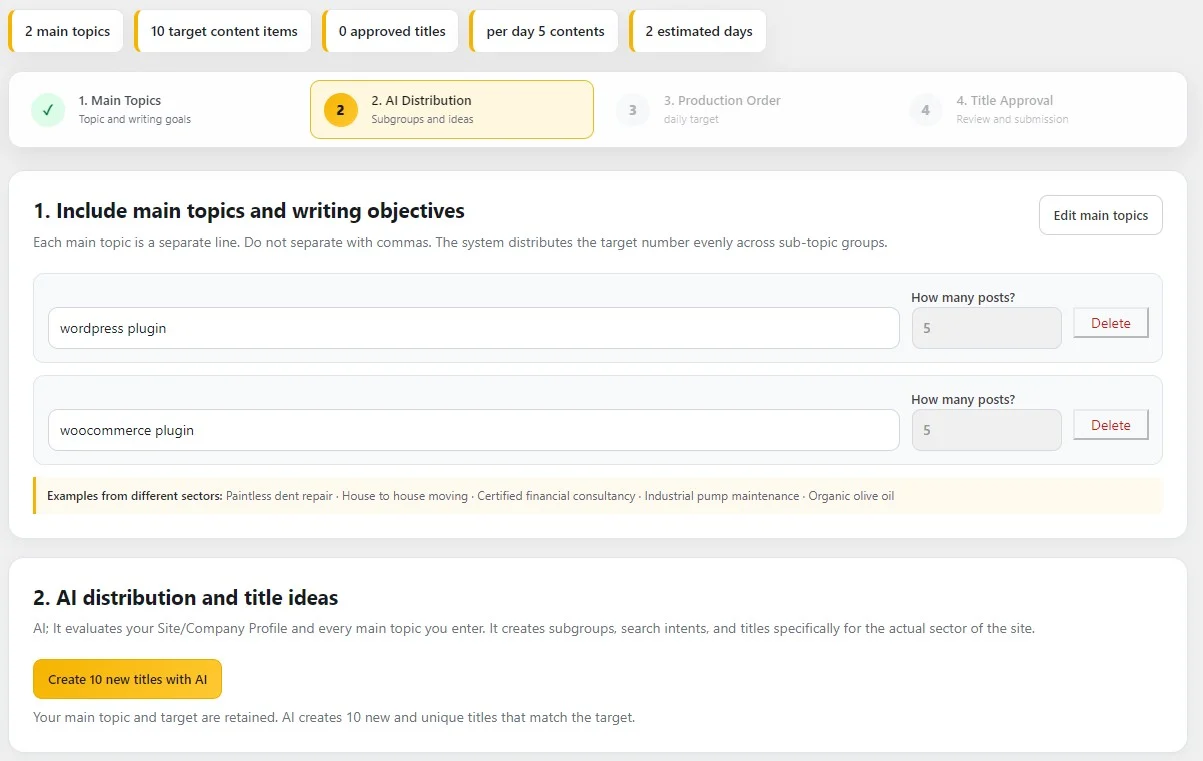
PW Feed can support this combined approach by helping WordPress websites create AI-assisted content with search intent, entity clarity, answer-focused structure, internal linking, metadata, and publishing controls inside a wordpress plugin workflow.
The key is understanding what each method is designed to do.
What is SEO?
SEO means Search Engine Optimization.
SEO focuses on improving a website’s visibility in traditional search engines.
This can include:
Keyword research.
Search intent.
Page titles.
Meta descriptions.
Internal linking.
Site architecture.

Technical accessibility.
Content quality.
Crawlability.
Indexability.
Performance.
Backlinks.
SEO is broader than content writing.
It includes both content-level and technical work.
For a WordPress website, SEO remains a core foundation because search engines still need to find and understand the site before it can appear in search results.
What is GEO?
GEO means Generative Engine Optimization.
GEO focuses on making website information easier to understand and use in generative search environments.
Generative systems may:
Interpret complete questions.
Retrieve information.
Compare multiple sources.
Summarize answers.
Generate recommendations.
This creates different content requirements.
GEO emphasizes areas such as:
Entity clarity.
Consistent terminology.

Explicit relationships.
Direct explanations.
Accurate business information.
Strong contextual depth.
Useful content structure.
The goal is not simply to rank a page.
The goal is to make the information easier for AI-powered systems to interpret.
What is AEO?
AEO means Answer Engine Optimization.
AEO focuses on making content suitable for direct answers.
An answer engine may try to respond immediately to a user question.

For example:
What is a WordPress AI content plugin?
AEO-oriented content would provide a concise answer early.
It might say:
A WordPress AI content plugin is a plugin that uses artificial intelligence to assist with tasks such as article generation, metadata creation, content planning, or publishing workflows inside WordPress.
The article can then provide deeper explanation.
AEO therefore emphasizes:
Clear questions.
Direct answers.
Definitions.
Concise explanations.
Logical sections.
Supporting context.
SEO, GEO, and AEO overlap
These strategies are different, but many best practices support all three.
For example:
Clear page topics.
Useful content.
Accurate information.
Internal links.
Logical structure.
Distinct search intent.

Consistent terminology.
A high-quality WordPress article does not need three separate versions.
The same article can support SEO, GEO, and AEO simultaneously.
This is more efficient.
It also creates a more coherent website.
The main difference is the optimization target
The easiest way to understand the difference is to look at what each approach is primarily optimizing for.
SEO asks:
Can search engines discover and rank this page for relevant queries?
GEO asks:
Can generative systems understand the entities, relationships, and information clearly enough to use the content?
AEO asks:
Can an answer system quickly identify and present a useful response to the user’s question?
These goals overlap.
Their emphasis is different.
SEO starts with search intent
Search intent is central to SEO.
A WordPress page should understand why the user is searching.
For example:
WordPress AI content
could represent many different needs.
The user may want:
A product.
A tutorial.
A definition.
A comparison.
A workflow.
If the page targets the wrong intent, good formatting alone will not solve the problem.
SEO therefore begins with identifying the primary search need.
GEO starts with information clarity
GEO asks whether the page explains important information clearly.
For example:
What is the product?
Who is it for?
What platform does it work with?
What does it do?
How does it relate to other concepts?
A vague sentence such as:
Our smart solution transforms digital publishing
is weak from a GEO perspective.
A clearer version is:
PW Feed supports AI-assisted WordPress content generation with SEO, GEO, and controlled publishing workflows.
The second version provides more usable context.
AEO starts with the user question
AEO focuses on the answer itself.
Suppose the user asks:
Can AI create WordPress content automatically?
An AEO-oriented answer might say:
Yes. AI can generate WordPress articles, create drafts, prepare metadata, and support publishing workflows when the website is configured for those tasks.
The answer comes first.
Then the article explains the details.
This structure is useful for:
Answer engines.
AI assistants.
Conversational search.
Human readers who want fast clarity.
SEO can exist without GEO
A page can be well optimized for traditional search but still have weak entity clarity.
For example, it may:
Use a strong title.
Match a target keyword.
Have good internal links.
But contain vague product descriptions.
This may still support SEO.
However, it may be less useful for generative interpretation.
GEO adds another layer.
GEO can exist without strong SEO
The opposite can also happen.
A page may explain entities very clearly but have poor technical visibility.
For example:
The page may be blocked from indexing.
The title may not reflect the search intent.
The site structure may be weak.
Internal links may be missing.
The information may be useful, but search engines may struggle to surface it.
This is why GEO should not replace SEO.
AEO can exist without strong SEO too
A page may answer a question perfectly.
However, if the page is difficult to discover, the answer has limited visibility.
AEO improves the answer format.
SEO still helps the page become findable.
GEO can help the page fit broader generative search contexts.
The strongest approach combines all three.
SEO focuses more heavily on discoverability
SEO includes many factors related to whether a page can be found.
For WordPress websites, this may involve:
Indexing.
Canonical settings.
Internal linking.
Sitemaps.
Technical performance.
Search-friendly titles.
Useful metadata.
Content relevance.
GEO and AEO are more content-oriented.
SEO has a broader technical scope.
This distinction matters.
GEO focuses more heavily on relationships
Generative systems often benefit from explicit relationships.
For example:
PW Feed works with WordPress.
PW Feed supports AI-assisted content generation.
SEO focuses on traditional search.
GEO focuses on generative search environments.
AEO focuses on direct-answer readiness.
These relationships create context.
GEO is therefore strongly connected with:
Entities.
Definitions.
Context.
Consistency.
Semantic relationships.
AEO focuses more heavily on answer format
AEO asks whether the user can get the answer efficiently.
This can involve:
Question-based headings.
Direct opening answers.
Concise definitions.
Numbered steps.
Clear comparisons.
FAQ sections.
The article does not need to use all of these.
The format should match the question.
For example, a how-to query may need steps.
A comparison query may need clear differences.
A definition query may need a short definition.
AEO does not mean every page needs an FAQ
This is a common misunderstanding.
FAQ content can be useful.
It is not mandatory.
A strong AEO article can use normal explanatory sections.
For example:
What is GEO?
Why GEO matters.
How GEO differs from SEO.
When GEO is useful.
These sections may answer questions without becoming a formal FAQ.
The goal is clarity.
Not a rigid template.
GEO does not mean repeating AI terminology
A page does not become GEO-friendly because it repeatedly says:
AI search.
Generative AI.
GEO.
Answer engines.
The information itself needs to be clear.
For example, a local service page can support GEO by clearly explaining:
The business.
The service.
The location.
The service area.
The process.
The customer need.
It may never mention the word GEO.
That is perfectly acceptable.
SEO does not mean keyword stuffing
SEO has evolved beyond repeating the target keyword.
A page should use the main terminology naturally.
Related concepts can appear where relevant.
For example, a page about WordPress AI content may naturally discuss:
Content automation.
AI-generated posts.
SEO titles.
Meta descriptions.
Draft publishing.
Internal linking.
GEO.
AEO.
This creates semantic context.
The article should remain readable.
All three approaches benefit from distinct search intent
Duplicate pages are a problem regardless of the optimization framework.
For example:
SEO vs GEO for WordPress.
GEO vs SEO for WordPress.
Difference between SEO and GEO in WordPress.
These may represent the same intent.
One strong page can cover the variations.
A separate article should exist when the user need is genuinely different.
For example:
SEO vs GEO vs AEO for WordPress websites
has a distinct purpose because it compares three approaches.
Content clusters support SEO
Content clusters can strengthen traditional SEO by organizing related pages around a broader subject.
For example, an AI search cluster may contain:
SEO.
GEO.
AEO.
ChatGPT search.
Google AI Overviews.
Answer-focused content.
Internal linking.
The central page and supporting articles can link to one another.
This improves site structure.
It also helps search engines understand topical relationships.
Content clusters support GEO
The same cluster also creates semantic context.
A generative system encountering several related pages can see repeated relationships between:
WordPress.
AI content.
SEO.
GEO.
AEO.
Publishing.
Internal links.
The website becomes a richer information environment.
This is useful from a GEO perspective.
Content clusters support AEO
Each supporting page can answer a specific question.
For example:
What is GEO?
How does GEO differ from SEO?
How should WordPress articles be structured for answer engines?
How can content be optimized for Google AI Overviews?
The cluster provides multiple direct answers around one broader subject.
AEO therefore fits naturally into a cluster strategy.
Internal linking helps all three
Internal linking is one of the clearest areas of overlap.
For SEO, internal links help:
Crawling.
Page discovery.
Topic architecture.
Authority flow.
For GEO, internal links help:
Connect concepts.
Show relationships.
Build context.
For AEO, internal links help:
Provide deeper answers.
Move users from a concise answer to a detailed guide.
This makes internal linking a central part of a modern WordPress strategy.
Internal links should remain relevant
A page should not link randomly just to increase link count.
The destination should support the current topic.
For example:
A section about AEO can link to an answer-focused content guide.
A section about GEO can link to generative-search preparation.
A section about SEO metadata can link to unique title or meta-description guides.
The relationship should make sense.
Semantic relevance matters.
Descriptive anchor text benefits all three approaches
Anchor text should explain the destination.
For example:
WordPress GEO optimization.
Answer-focused WordPress content.
AI-powered internal linking.
This helps users.
It also creates context for search and AI systems.
Generic phrases such as click here are less descriptive.
Natural variation should still be used.
Page titles should support SEO first
A title should communicate the search intent.
For example:
SEO vs GEO vs AEO for WordPress websites
clearly identifies the comparison.
The title contains the major concepts.
It also tells the reader what to expect.
A vague title such as:
Three ways to improve your future visibility
provides less search context.
Clear titles help SEO and also improve GEO and AEO understanding.
Meta descriptions primarily support search presentation
Meta descriptions are traditionally associated with SEO.
They can summarize the page purpose.
For example:
Compare SEO, GEO, and AEO for WordPress websites and learn how search visibility, generative search, direct answers, internal linking, and AI content workflows fit together.
The description helps distinguish the page from related articles.
AI can generate unique descriptions as part of the workflow.
GEO cares more about entity consistency than metadata alone
A perfect meta description cannot fix contradictory business information.
If one page says a product is a WordPress plugin and another says it is something completely different, the site has an entity-consistency issue.
GEO therefore requires broader site awareness.
The content should use a stable source of business facts.
This can include a structured site profile.
AEO cares more about answer usefulness than keyword density
An answer should be judged by whether it solves the question.
For example:
What is the difference between SEO and GEO?
SEO focuses on improving visibility in traditional search engines, while GEO focuses on making information easier for generative search systems to understand and use.
That is a useful answer.
Repeating the terms ten more times does not improve it.
Clarity is more important.
SEO usually has the broadest technical scope
SEO can involve areas outside the article itself.
These may include:
Hosting performance.
Mobile usability.
Crawl errors.
Canonicalization.
Redirects.
Site structure.
Indexation.
Structured data.
GEO and AEO can interact with these areas, but they are primarily content and information strategies.
This is why SEO should remain the technical foundation.
GEO should not be treated as a replacement for technical SEO
A page cannot benefit from great generative clarity if search systems cannot access it.
For example:
A noindex page may not appear where intended.
A broken canonical setup can create confusion.
A blocked resource can limit discovery.
Technical SEO still matters.
GEO works best on top of a technically sound site.
AEO should not ignore technical accessibility either
A direct answer has little value if the page cannot be discovered.
The WordPress site still needs:
Accessible content.
Logical URLs.
Internal links.
Crawlable pages.
Search visibility.
This again shows why the three strategies should work together.
Structured data can support SEO
Schema can provide additional structured information to search engines.
For example:
Organization.
Article.
Product.
Service.
Local business.
FAQ.
This may support richer understanding.
Structured data should match the visible page.
It should not contradict the content.
Structured data can support GEO
Schema can also reinforce entity relationships.
For example:
Who the organization is.
Which product belongs to the organization.
Which service is provided.
Which location is relevant.
This can support machine-readable clarity.
However, schema cannot fix vague or inaccurate visible content.
Both layers should agree.
Structured data can support AEO in some contexts
FAQ-style data can reinforce question-and-answer content where appropriate.
However, AEO should not depend entirely on markup.
The visible article still needs clear answers.
An AI assistant may rely on the actual page text.
The content itself remains fundamental.
SEO content can be long-form
Long-form content can support SEO when the subject requires depth.
A comprehensive article may cover many supporting concepts.
However, length alone is not a ranking strategy.
Repetition does not create quality.
The content should remain focused.
This principle also applies to GEO and AEO.
GEO content can be long-form
Generative systems may benefit from rich context.
A longer page can explain:
Definitions.
Relationships.
Examples.
Limitations.
Supporting concepts.
This can create stronger semantic depth.
However, every section should contribute to the central topic.
GEO does not justify endless content expansion.
AEO content can also be long-form
AEO is not limited to short answers.
The direct answer may be concise.
The page can still provide a detailed explanation.
For example:
What is the difference between SEO, GEO, and AEO?
The first paragraph can answer quickly.
The rest of the page can compare:
Goals.
Methods.
Content structure.
Technical scope.
Use cases.
This provides both speed and depth.
The best content length depends on intent
A simple definition may need only a few paragraphs.
A complex comparison may need a long-form guide.
A how-to article may need detailed steps.
The correct length should be determined by:
Question complexity.
User need.
Required evidence.
Supporting concepts.
Not by a universal word-count target.
SEO can identify the target topic
Traditional keyword and intent research can identify what users are searching for.
For example:
WordPress AI SEO plugin.
GEO WordPress.
AEO optimization.
These terms can reveal demand.
The content should then interpret the user’s actual need.
This is where GEO and AEO can enrich the page.
GEO can improve the explanation around the topic
Once the topic is selected, GEO can guide questions such as:
Which entities need to be defined?
Which relationships should be explicit?
Which business facts must remain consistent?
What terminology should be used?
This improves contextual clarity.
It can make the page more useful beyond the target keyword.
AEO can improve how the answer is delivered
AEO can then shape:
The opening response.
Question-based sections.
Definitions.
Comparisons.
Step-by-step instructions.
The page becomes easier for users to scan.
This demonstrates how the three approaches can function as one workflow.
A practical combined workflow can begin with SEO
Step one:
Identify the search intent.
Choose one primary topic.
Check whether the site already has a page for that intent.
Create a clear title.
This establishes the SEO foundation.
The second stage can apply GEO
Identify:
Important entities.
Product relationships.
Business context.
Definitions.
Relevant terminology.
Internal topic relationships.
This helps ensure that the generated article fits the wider site.
The third stage can apply AEO
Determine:
The main question.
The direct answer.
Supporting questions.
Appropriate headings.
Any steps or comparisons.
This improves answer clarity.
The three stages can be automated inside one content-generation workflow.
PW Feed can support a combined workflow
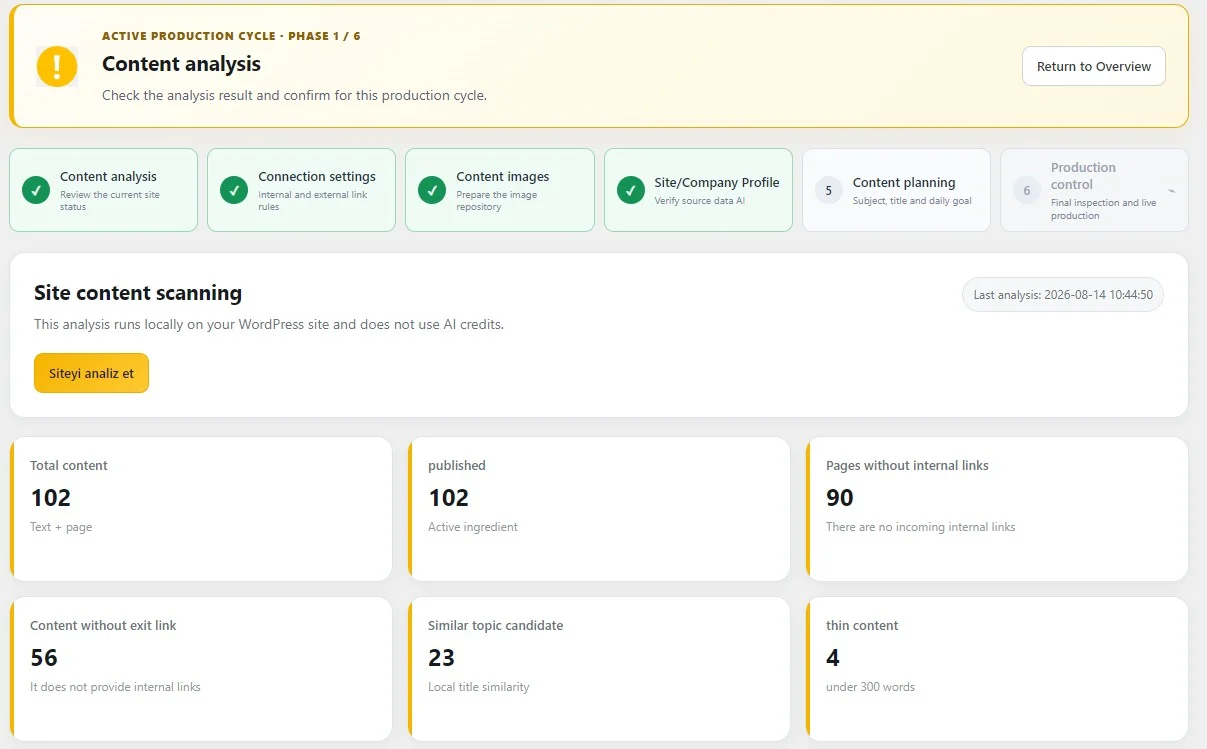
PW Feed can support WordPress users who want SEO, GEO, and AEO principles to influence AI-assisted content creation from the beginning.
The workflow can include:
Topic planning.
Search-intent analysis.
AI generation.
Entity clarity.
Answer-focused structure.
Unique SEO titles.
Meta descriptions.
Internal linking.
Draft or direct publishing.
This avoids treating the three optimization approaches as isolated tasks.
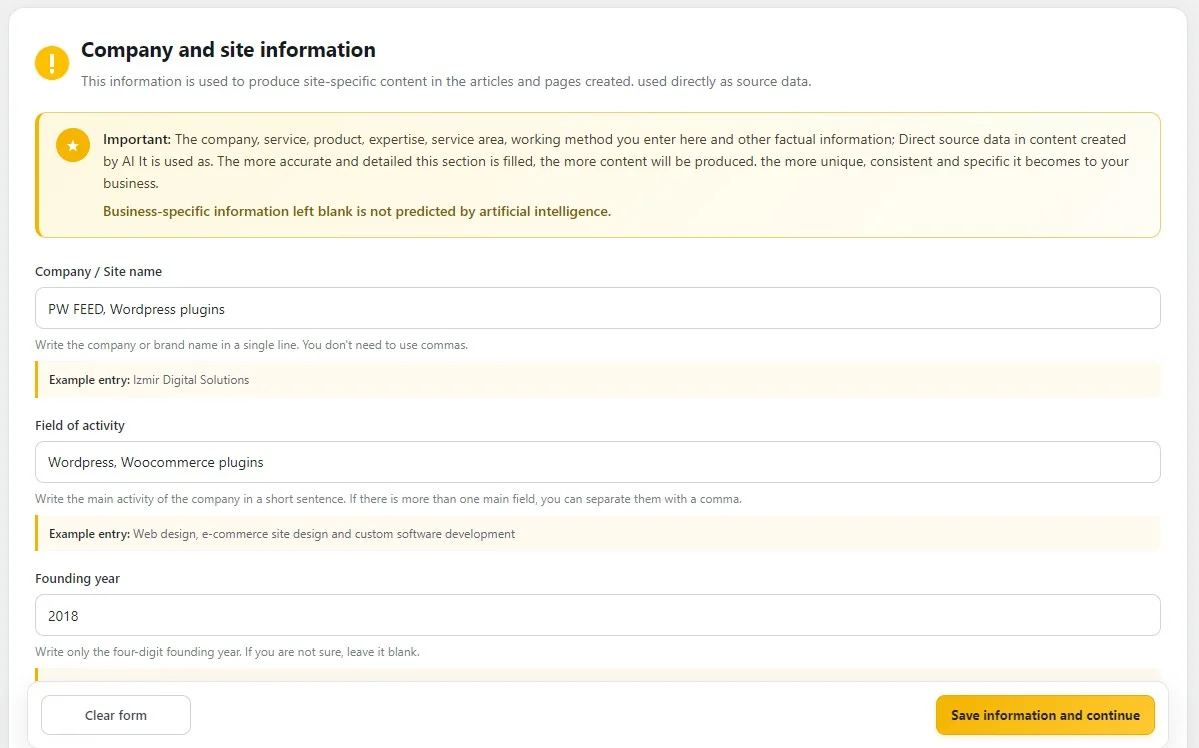
The wordpress plugin environment can keep them close to the actual WordPress site.
A business profile can support GEO and AEO accuracy
AI-generated content needs reliable context.
A business profile may include:
Business name.
Product names.
Services.
Audience.
Locations.
Features.
Approved terminology.
Claims to avoid.
Important internal pages.
This helps the AI generate clearer answers.
It also reduces contradictions across articles.
Business facts should not be invented for SEO
A website should never create false information simply because it looks useful for search.
For example:
Invented locations.
Features that do not exist.
Unsupported awards.
False customer numbers.
These practices weaken trust.
They also create poor GEO signals.
Accurate information should remain the foundation.
GEO particularly benefits from factual consistency
If an AI system encounters contradictory information across the same domain, understanding becomes harder.
For example:
Different product names.
Different service definitions.
Different addresses.
Conflicting feature descriptions.
These inconsistencies should be corrected.
Regular content audits can help identify them.
AEO particularly benefits from concise certainty
A direct answer should communicate clearly what is known.
For example:
Does GEO replace SEO?
No. GEO does not replace SEO. SEO remains the foundation for traditional search visibility, while GEO adds optimization for generative search environments.
This is direct.
The supporting paragraphs can add nuance.
Answer quality matters more than length.
SEO particularly benefits from site architecture
A well-organized WordPress website helps search engines discover and categorize content.
Useful architecture may include:
Logical menus.
Content clusters.
Categories.
Internal links.
Clear URLs.
Central topic pages.
This also creates a stronger foundation for GEO.
The same relationships become more understandable to generative systems.
GEO benefits from site-wide semantic consistency
A single article cannot create the entire entity picture.
The wider site matters.
For example:
Homepage.
Product pages.
Service pages.
Blog content.
FAQs.
About page.
These pages should reinforce compatible facts.
A strong GEO strategy is therefore site-wide.
AEO benefits from page-level clarity
Although site-wide consistency matters, AEO is especially visible at the section level.
The system should be able to locate:
The question.
The answer.
The supporting explanation.
This means individual pages need strong information architecture.
A good AEO page should not rely entirely on the rest of the site to make sense.
SEO helps users find the page
This is perhaps the simplest distinction.
SEO helps the page become discoverable.
GEO helps AI systems understand the broader information.
AEO helps the page answer efficiently.
Together, they cover different parts of the discovery process.
This is why using all three can be valuable.
GEO can support AI search visibility
AI search systems may retrieve and combine information.
A clear page can make this easier.
Useful characteristics include:
Specific statements.
Explicit entity relationships.
Accurate facts.
Clear definitions.
Strong supporting context.
No method guarantees inclusion.
The objective is better readiness.
AEO can support conversational search
Conversational search often involves full questions.
Examples include:
Which is more important, SEO or GEO?
Does WordPress need AEO?
Can one article be optimized for SEO, GEO, and AEO?
AEO-oriented content answers these directly.
This can improve usability for conversational queries.
Can one WordPress article use SEO, GEO, and AEO together?
Yes.
A WordPress article can combine all three approaches.
For example:
SEO selects the search intent and creates a relevant title.
GEO ensures the entities and relationships are clearly explained.
AEO provides direct answers and structured supporting sections.
Internal links connect the page to related content.
This is usually more effective than creating separate versions.
Should every WordPress page use the same balance?
No.
Different pages have different purposes.
A product page may need stronger:
Entity clarity.
Commercial information.
Product relationships.
A tutorial may need stronger:
SEO intent.
Step-by-step AEO structure.
A local service page may need stronger:
Location accuracy.
Service definitions.
Local entity context.
The balance should fit the page.
Product pages can use SEO, GEO, and AEO together
SEO can target product-related search intent.
GEO can explain:
What the product is.
Which platform it works with.
What it does.
How it relates to the business.
AEO can answer:
Who is it for?
Can it do a specific task?
What happens next?
This creates a clearer product page.
Service pages can use all three
SEO can target the service query.
GEO can define:
The service.
The provider.
The location.
The relationship between services.
AEO can answer:
What is included?
Who needs it?
How does it work?
Where is it available?
This creates useful service content.
Blog content can support all three
Blog articles are particularly flexible.
They can:
Target long-tail SEO queries.
Build GEO topic depth.
Answer specific AEO questions.
Connect commercial and informational pages.
This makes blog content an important part of the wider WordPress information architecture.
Local businesses can use all three
SEO helps local services become discoverable.
GEO helps establish:
Business identity.
Location.
Service areas.
Service relationships.
AEO helps answer:
Do you serve this area?
What service do I need?
How does the process work?
All of this should use real geographic information.
Artificial location pages should be avoided.
E-commerce websites can use all three
SEO can help product and category discovery.
GEO can clarify:
Brand.
Model.
Category.
Product relationships.
Compatibility.
AEO can answer:
Who is this product for?
What does it work with?
What is the difference between two products?
This can improve both discovery and shopping clarity.
Agencies can standardize the framework
An agency can define a common process.
For each client:
Identify search intent.
Define entities.
Create direct answers.
Use relevant internal links.
Maintain unique metadata.
Check factual accuracy.
The process can be standardized.
Client data remains separate.
This creates scalable quality.
Do not use one generic prompt for every client
GEO depends heavily on business-specific context.
A generic prompt can create inaccurate or repetitive content.
Each client needs:
Their own business profile.
Their own products.
Their own services.
Their own locations.
Their own terminology.
Their own internal links.
This also supports SEO originality.
SEO helps prevent cannibalization
SEO planning should identify whether several pages target the same intent.
If they do, the site may need to:
Merge them.
Expand one page.
Change the angle.
Redirect duplicates.
This is particularly important when AI generation increases publishing volume.
Content planning should happen before generation.
GEO helps prevent semantic confusion
Two pages can target different keywords but still create confusing entity relationships.
For example, they may define the same product differently.
GEO-oriented review can detect this.
The website should maintain conceptual consistency.
Different wording is fine.
Contradictory meaning is not.
AEO helps prevent answer ambiguity
A page may discuss a topic thoroughly but never answer the central question directly.
AEO identifies this weakness.
The page can add:
A concise definition.
A direct comparison.
A clear yes-or-no answer.
This can improve both user experience and AI readability.
SEO audits, GEO audits, and AEO audits can overlap
A combined content audit may review:
Page intent.
Titles.
Metadata.
Internal links.
Entity consistency.
Definitions.
Direct answers.
Content duplication.
Business facts.
This avoids running three disconnected optimization projects.
One integrated audit can identify several types of weaknesses.
Some problems are SEO problems
Examples include:
Noindex errors.
Broken internal links.
Wrong canonical settings.
Missing titles.
Weak crawl paths.
These should be treated as SEO or technical issues.
GEO cannot replace technical repair.
Some problems are GEO problems
Examples include:
Unclear product identity.
Conflicting business descriptions.
Missing definitions.
Inconsistent terminology.
Weak entity relationships.
These need content and semantic improvement.
Technical SEO alone may not solve them.
Some problems are AEO problems
Examples include:
The page never answers the main question.
Definitions are buried.
Comparison differences are unclear.
A how-to article has no usable steps.
These require answer-focused editing.
The page may already be technically strong.
One page can have all three problems at once
For example:
A service page may have a weak SEO title.
Its service definition may be vague.
Its primary customer question may never be answered.
The page therefore needs:
SEO improvement.
GEO improvement.
AEO improvement.
This is why integrated analysis is useful.
Publishing more content is not automatically better SEO
SEO value depends on relevance and usefulness.
Publishing many similar pages can create:
Cannibalization.
Thin content.
Weak site architecture.
AI makes this risk greater because content can be created quickly.
Publishing control remains important.
Publishing more content is not automatically better GEO
More pages can actually increase confusion if they contain inconsistent descriptions.
GEO benefits from:
Consistent entities.
Useful depth.
Clear relationships.
Not endless content volume.
A smaller coherent site can be stronger than a large contradictory one.
Publishing more content is not automatically better AEO
A website does not need a separate answer page for every wording variation.
Similar questions should be grouped by intent.
One strong answer can cover several natural query forms.
This keeps the site cleaner.
Content gaps should be identified before new articles are created
The website should ask:
What is missing?
Is it a search-intent gap?
An entity gap?
An answer gap?
A depth gap?
The answer determines the correct action.
Sometimes a new page is appropriate.
Sometimes an existing page should be improved.
This is more strategic than automatic topic generation.
A missing SEO topic may need a new page
If users search for a distinct subject and the site has no page, creating one may be appropriate.
For example:
SEO vs GEO vs AEO
may deserve its own comparison page.
This is a clear content gap.
A missing GEO element may only need clarification
Suppose the site has a product page but never clearly states what platform the product works with.
A new article may not be necessary.
The product page can simply be improved.
This is an entity gap, not necessarily a page gap.
A missing AEO answer may need only one new section
Suppose an article discusses AI publishing but never answers:
Can the generated post remain a draft?
Adding a direct section may solve the problem.
A separate article is not always necessary.
This is why optimization should begin with diagnosis.
Content expansion can support all three strategies
An existing page can be expanded with:
New search intent coverage.
Better entity definitions.
Direct answers.
Improved internal links.
Updated terminology.
This can strengthen SEO, GEO, and AEO together.
Expansion is often preferable to creating overlapping pages.
Older pages should be reviewed carefully
A page may already have:
Search visibility.
Backlinks.
Internal links.
User history.
A complete rewrite can remove useful elements.
A targeted improvement may be better.
AI can help identify the missing parts while preserving original expertise.
Freshness matters when the information changes
SEO, GEO, and AEO all depend on accurate information.
If a page discusses:
Software features.
AI search behavior.
Technical standards.
Pricing.
Regulation.
it may need periodic updates.
Changing the publication date without meaningful updates is not enough.
Real content freshness matters.
A central source of business truth can help
AI-generated WordPress content can become more reliable when the website maintains a central profile.
This may contain:
Business name.
Product names.
Features.
Audience.
Locations.
Terminology.
Internal pages.
Claims to avoid.
The same source can guide multiple articles.
This improves GEO consistency.
It can also improve SEO relevance and AEO accuracy.
PW Feed can support this integrated content model
PW Feed can support WordPress websites that want to bring SEO, GEO, and AEO into one AI-assisted content workflow.
Rather than treating optimization as a final checklist, the process can begin with:
Search intent.
Business context.
Entity relationships.
Primary questions.
Internal-link targets.
The content is then generated with these rules already in mind.
SEO metadata can be created.
The article can be saved as a draft or published according to defined controls.
Readers who want additional information about PW Feed can continue through the PW Feed contact page.
Users ready to review purchasing options can proceed to the PW Feed buy page.
Which should a WordPress website prioritize first?
A practical order is:
Start with SEO fundamentals.
Make sure the site is technically accessible.
Make sure pages have distinct search intent.
Then improve GEO clarity.
Define entities.
Correct inconsistencies.
Clarify relationships.
Then improve AEO answer structure.
Add direct answers.
Improve definitions.
Create useful steps and comparisons.
This creates a logical progression.
Small websites do not need three separate teams
A small WordPress business does not need:
One SEO writer.
One GEO specialist.
One AEO specialist.
A single content workflow can apply the relevant principles.
AI can help automate repetitive tasks.
Human oversight can focus on:
Business accuracy.
Strategy.
Important claims.
This makes modern optimization more accessible.
Large websites benefit from clearer responsibilities
Larger sites may need separate expertise.
Technical SEO teams can handle:
Indexation.
Performance.
Site architecture.
Content teams can handle:
Search intent.
GEO clarity.
AEO structure.
The areas should still communicate.
A page should not receive contradictory optimization instructions.
SEO is likely to remain the foundation
Traditional search is not disappearing overnight.
Even as generative search grows, website discoverability still depends heavily on search-engine infrastructure.
This means SEO should remain part of the strategy.
GEO and AEO extend the model.
They do not make the foundation unnecessary.
GEO is becoming more important as search becomes generative
As users receive more AI-generated responses, information clarity becomes more valuable.
Websites should be easy to understand.
Important entities should be consistent.
Relationships should be explicit.
This is a durable content-quality improvement even beyond one specific AI platform.
AEO is becoming more important as users search conversationally
People increasingly ask complete questions.
Pages that answer clearly can serve this behavior better.
AEO encourages:
Direct responses.
Useful definitions.
Comparison clarity.
Logical processes.
These are good editorial practices regardless of platform.
The strongest future strategy is integrated
A WordPress website should not build isolated silos.
SEO.
GEO.
AEO.
All three can contribute to one information system.
The same article can:
Rank in traditional search.
Provide clear generative context.
Answer conversational questions.
Support internal clusters.
Guide users toward related pages.
This integrated model is more sustainable.
Final thoughts on SEO vs GEO vs AEO for WordPress websites
SEO, GEO, and AEO are not three competing replacements for one another.
They solve different parts of the same visibility problem.
SEO helps WordPress pages become discoverable in traditional search.
GEO helps generative systems understand entities, relationships, and context.
AEO helps answer engines and conversational systems identify direct answers.
SEO has the broadest technical scope.
GEO has the strongest emphasis on semantic clarity.
AEO has the strongest emphasis on answer delivery.
The same WordPress article can support all three.
A useful combined workflow begins with search intent.
It defines the primary page purpose.
It checks existing content.
It creates a clear title.
It identifies important entities.
It explains relationships.
It provides a direct answer.
It adds relevant internal links.
It generates unique metadata.
It uses accurate business information.
It avoids duplicate intent.
A wordpress plugin such as PW Feed can help integrate these tasks into an AI-assisted content workflow so optimization happens during creation rather than only after publication.
The main principle is simple:
SEO helps people find the page.
GEO helps AI systems understand the page.
AEO helps the page answer the question.
When all three work together, a WordPress website becomes better prepared for traditional search, generative search, answer engines, and conversational AI discovery without sacrificing clarity for human visitors.