
Why traditional SEO alone may not be enough for WordPress content
Traditional SEO remains essential for WordPress websites.
It helps search engines discover pages, understand topics, index content, and connect relevant searches with useful results.
However, the way people search is changing.
Users are increasingly interacting with AI assistants, generative search systems, answer engines, and conversational interfaces. Instead of entering only a few keywords, they can ask detailed questions and expect synthesized answers.
This creates a broader visibility challenge.
A WordPress page may be technically well optimized for search and still be difficult for AI systems to interpret if its entities are unclear, its answers are buried, its business information is inconsistent, or its content does not explain relationships explicitly.
This does not mean traditional SEO is obsolete.
It means SEO may no longer be enough by itself.
Modern WordPress content can benefit from combining SEO with GEO, or Generative Engine Optimization, and AEO, or Answer Engine Optimization.
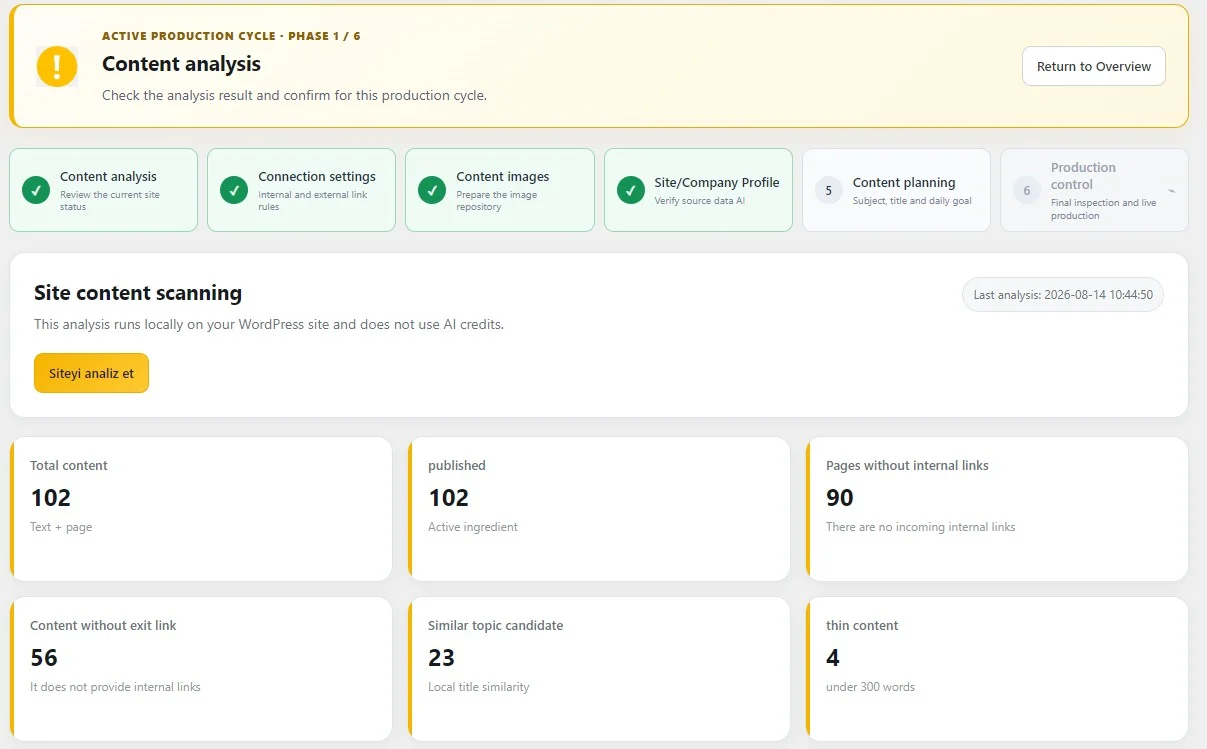
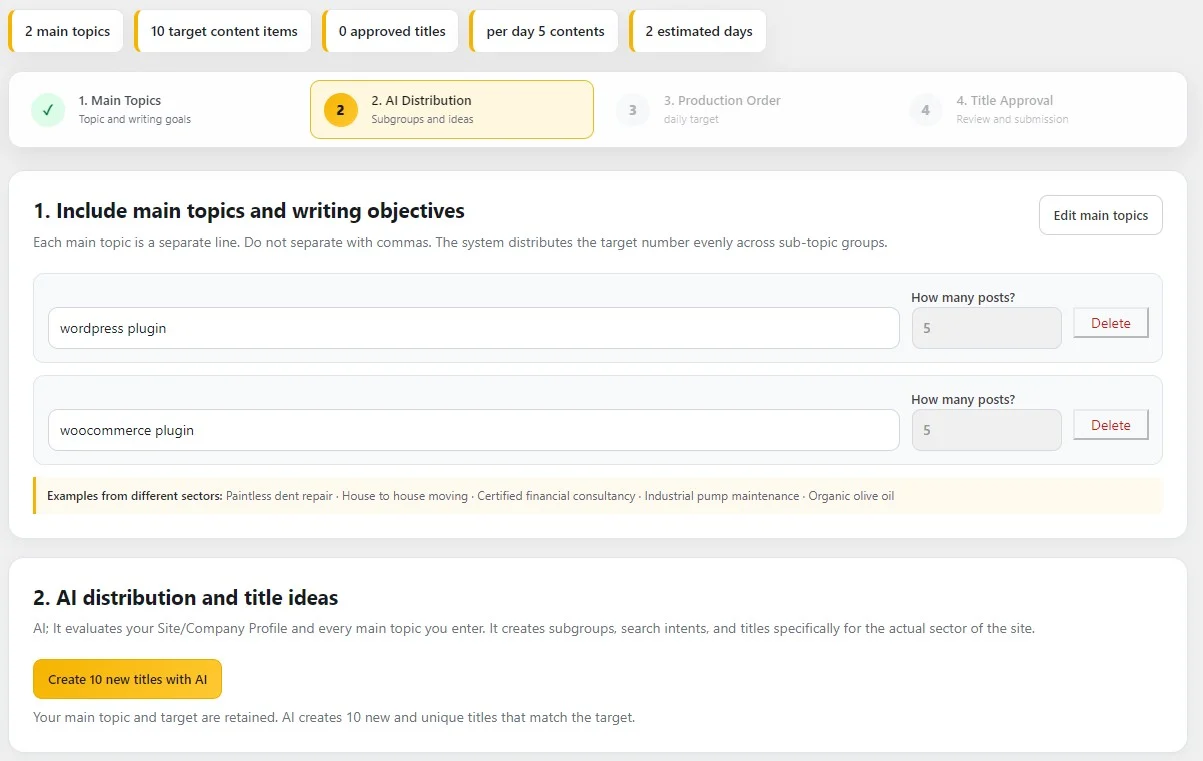
PW Feed can support this broader approach by helping WordPress websites create AI-assisted content with search intent, SEO structure, GEO clarity, AEO-style answers, internal links, metadata, and controlled publishing within a wordpress plugin workflow.
The objective is not to replace SEO.
The objective is to build on it.
Traditional SEO still provides the foundation
SEO remains important because search engines still need to discover and process website content.
A technically inaccessible page will not become successful simply because its wording is clear for AI systems.

Traditional SEO can include:
Search intent.
Page titles.
Meta descriptions.
Internal links.
Crawlability.
Indexability.
Canonical settings.
Site architecture.
Performance.
Structured data.

Content relevance.
These elements remain valuable.
A WordPress website should therefore continue maintaining strong SEO fundamentals.
The problem appears when SEO is treated as the entire content strategy.
Search behavior is becoming more conversational
Traditional keyword searches are often short.
For example:
WordPress AI plugin.
Conversational search can be much more detailed.
A user may ask:
How can I automatically create SEO-friendly WordPress content while keeping manual approval before publishing?
That query contains multiple requirements:
WordPress.
AI.
SEO.
Automation.
Editorial approval.
A page optimized only around a short keyword may not answer the complete need.
Modern content needs to understand the question behind the query.
Users increasingly expect answers, not only links
Traditional search often requires the user to open several pages.
AI-powered search can provide a synthesized response immediately.

This means website content is increasingly competing at the level of information quality.
The question becomes:
Does the page contain a useful answer?
Is that answer easy to identify?
Can the business or product be understood clearly?
Are important relationships explicit?
These are areas where GEO and AEO add value beyond conventional SEO.
A high SEO score does not guarantee a strong page
Many WordPress users are familiar with SEO scoring systems.
A page may receive a strong score because it includes:
A target keyword.
A meta description.
Internal links.
An appropriate title.
A certain content length.
These checks can be useful.
However, a high score does not automatically mean:
The search intent is correct.
The information is original.
The product is clearly described.
The answer is useful.
The page does not duplicate another article.

The business facts are accurate.
SEO scores can support editing.
They should not become the definition of quality.
Keyword optimization alone is too narrow
Traditional SEO discussions have often focused heavily on keywords.
Keywords still matter.
They help define search language.
However, a modern page should also communicate broader meaning.
For example, an article about WordPress AI content may naturally need to discuss:
Content generation.
Search intent.
Publishing workflows.
SEO titles.
Meta descriptions.
Internal links.
GEO.
AEO.
AI search.
These related concepts create semantic depth.
Repeating one exact phrase does not create the same value.
Search intent matters more than mechanical repetition
Suppose a user searches:

AI WordPress content automation.
One page may repeat that phrase ten times.
Another may clearly explain:
How automation works.
When drafts are useful.
How publishing rules can be controlled.
How duplicate topics can be prevented.
How SEO and GEO fit into the workflow.
The second page is likely more useful.
This is why modern SEO should focus on intent and usefulness rather than phrase frequency alone.
Traditional SEO often evaluates the page after it is written
A common workflow looks like this:
Write the article.
Open the SEO tool.
Enter the keyword.
Adjust the title.
Add metadata.
Change keyword usage.
Add links.
This treats optimization as a correction stage.
AI-assisted content creation allows a different workflow.
Search intent, entity clarity, direct answers, metadata, and internal links can influence the article from the beginning.
This can reduce the amount of repair required afterward.
GEO adds entity clarity
Generative Engine Optimization focuses strongly on entities and relationships.
An AI system may need to understand:
What is PW Feed?
What is WordPress?
How does PW Feed relate to WordPress?
What does the product do?
How does SEO relate to GEO?
How does AEO fit into the same workflow?
These relationships should be clear.
Traditional SEO fields alone may not provide enough context.
The visible content needs to explain the information.
Entity clarity is particularly important for brands
A company can have many pages discussing its product.
If the product is described inconsistently, confusion can develop.
For example:
One article calls it a WordPress plugin.
Another calls it a publishing service.
Another uses a completely different product name.
The wording can vary, but the underlying identity should remain consistent.
GEO encourages websites to manage this semantic consistency.
This is especially important when AI generates large amounts of content.
A central business profile can support consistency
AI-assisted WordPress content can use a structured business profile.
The profile can include:
Business name.
Product names.
Services.
Audience.
Locations.
Important features.
Preferred terminology.
Claims to avoid.
Relevant pages.
This becomes a source of truth for generation.
The result can be more consistent than asking AI to infer business information separately for every article.
AEO adds answer clarity
Answer Engine Optimization focuses on making answers easier to find.
For example:
Does SEO alone prepare WordPress content for AI search?
Not always. SEO remains essential for discoverability, but GEO and AEO can improve entity clarity, direct answers, and generative-search readiness.
This is a direct answer.
The rest of the page can explain why.
AEO therefore adds another layer to conventional optimization.
AEO does not mean every page should become an FAQ
This distinction matters.
Answer-focused content can include:
A concise direct answer.
Detailed explanatory sections.
Examples.
Comparisons.
Steps.
Limitations.
FAQs when useful.
AEO is about making the answer clear.
It is not about forcing every article into the same format.
A long-form article can be highly answer-focused.
Traditional SEO may not fully address conversational questions
A keyword list can reveal search demand.
Conversational queries reveal more context.
For example:
Can AI-generated WordPress content be published automatically?
How can a small business use AI for WordPress content without hiring a writer?
Can AI optimize WordPress articles for both SEO and GEO?
These questions contain decision-making information.
Content that answers them directly may be better suited to modern search behavior.
Long-tail queries become more important
AI assistants encourage users to provide context.
This produces more detailed questions.
For example:
How can an agency create WordPress AI content for multiple clients without duplicating the same articles?
That query is highly specific.
It may have lower search volume than a broad keyword.
But the intent is stronger.
A modern WordPress content strategy should consider these detailed needs.
AI-assisted generation makes it easier to create specialized supporting content when a real gap exists.
More pages are not automatically better
AI makes content production fast.
This can create a new problem.
A website may publish hundreds of similar pages.
Traditional SEO already has risks such as:
Cannibalization.
Thin content.
Duplicate intent.
Weak internal architecture.
AI can amplify these problems.
A modern strategy therefore needs content governance.
The website should decide whether each proposed page deserves to exist.
A new keyword variation does not always require a new article
For example:
WordPress AI SEO content.
AI SEO content for WordPress.
WordPress content with AI SEO.
These phrases may represent the same search intent.
Creating separate articles can produce unnecessary duplication.
One strong page can cover the variations naturally.
The decision should be based on user intent, not wording alone.
Content-gap analysis becomes more important
Instead of asking only:
Which keywords can we target?
a stronger question is:
What information is missing from the website?
Possible gaps include:
A missing search-intent topic.
An unanswered customer question.
A weak product explanation.
A missing comparison.
An incomplete content cluster.
A missing GEO relationship.
The correct response may be a new page.
Or it may be an update to an existing page.
Traditional SEO may not detect every semantic gap
An article can be technically optimized but still fail to explain an important relationship.
For example:
The website may mention PW Feed repeatedly but never explain clearly how it relates to WordPress AI content automation.
This is not necessarily a keyword problem.
It is an information-clarity problem.
GEO provides a useful framework for identifying these weaknesses.
Answer gaps are different from keyword gaps
A page may rank for a topic but fail to answer the most obvious question.
For example, an article about automatic content publishing may never answer:
Can the content remain a draft for review?
That is an answer gap.
The solution may be one new section.
A separate keyword-targeted article may not be necessary.
AEO helps identify this type of weakness.
SEO, GEO, and AEO solve different problems
SEO helps answer:
Can the page be discovered?
GEO helps answer:
Can the information and entities be understood clearly?
AEO helps answer:
Can the page provide a useful direct answer?
These are different questions.
A complete content strategy can address all three.
This is why traditional SEO alone may feel incomplete in AI-driven search environments.
Traditional SEO still matters for technical accessibility
No amount of GEO clarity can compensate for serious technical problems.
A WordPress site still needs:
Accessible pages.
Correct indexation.
Logical canonical settings.
Functional internal links.
Useful URLs.
Reasonable performance.
These are SEO fundamentals.
GEO and AEO should be built on top of them.
They are not substitutes for technical maintenance.
Technical SEO and content optimization should remain separate concepts
It is useful to distinguish between:
Technical SEO.
Content SEO.
GEO.
AEO.
Technical SEO handles areas such as:
Crawlability.
Indexation.
Redirects.
Canonicalization.
Sitemaps.
Content SEO handles:
Search intent.
Titles.
Topics.
Internal links.
GEO handles:
Entities.
Relationships.
Generative clarity.
AEO handles:
Questions.
Direct answers.
Answer structure.
Understanding these layers makes responsibilities clearer.
A traditional SEO plugin may still be useful
WordPress SEO plugins can provide valuable functions.
Depending on the plugin, these may include:
Metadata management.
Sitemaps.
Canonical settings.
Schema.
Redirects.
Indexing controls.
These can remain important.
The argument is not that SEO plugins should be removed.
The argument is that content strategy should not depend only on their checklists or scores.
AI-assisted content generation can handle some optimization tasks at the content layer.
SEO plugins cannot replace business knowledge
An SEO plugin does not automatically know:
What a product really does.
Which claims are accurate.
Which locations are real.
Which customer questions matter.
Which content should not be duplicated.
These decisions require business context.
AI can assist when supplied with reliable information.
Human oversight remains important for important facts.
GEO requires site-wide consistency
Traditional SEO work can sometimes be page-specific.
GEO often benefits from reviewing the website as a whole.
For example:
Does the homepage describe the product consistently?
Do blog articles use the same product identity?
Do service pages agree about locations?
Are definitions compatible?
Does structured data match visible content?
This site-wide perspective is important.
AI systems may encounter multiple pages from the same domain.
AEO requires page-level clarity
AEO has a strong page-level component.
Each article should make its central answer clear.
For example:
What is GEO?
How is GEO different from SEO?
Can WordPress content be optimized for generative search?
The page should not require users to infer the answer from several vague paragraphs.
A clear first response can improve the entire article.
SEO may help a page rank without answering well
A page can sometimes attract search traffic while still being frustrating.
For example:
The title promises an answer.
The introduction is long.
The page contains general information.
The direct answer never appears clearly.
This is a poor user experience.
AEO encourages a stronger alignment between the title and the answer.
The page should fulfill its promise.
GEO may help a page become easier to interpret without changing the target keyword
A GEO improvement does not always require new keywords.
For example:
Change:
Our platform helps improve publishing.
to:
PW Feed supports AI-assisted content generation and controlled publishing in WordPress.
The page topic remains the same.
The entity relationship becomes clearer.
This is an information-quality improvement.
SEO may focus on traffic while GEO and AEO can improve information usefulness
Traffic is important.
But not all traffic has equal value.
A page should also help users:
Understand a concept.
Choose between options.
Evaluate a product.
Solve a problem.
Find the next relevant resource.
GEO and AEO encourage content to serve these information tasks more explicitly.
This can support stronger user journeys.
Modern search can reduce the importance of the first click
In traditional search, the website often needs the user to click before receiving the answer.
Generative systems may provide part of the answer before a click happens.
This changes the role of website content.
The page may contribute information to the discovery process.
The website therefore needs to provide information that is worth using.
Generic filler becomes less valuable.
Specific expertise becomes more important.
Original knowledge becomes a stronger differentiator
AI can generate general explanations very easily.
A website that only repeats common information may struggle to differentiate itself.
Original value can come from:
Real workflows.
Product-specific details.
Original research.
Expert observations.
Real customer questions.
Practical implementation advice.
Known limitations.
AI can help organize this knowledge.
It should not invent it.
Generic AI text can weaken a content strategy
Weak AI-generated articles often contain phrases such as:
In today’s fast-paced digital landscape.
AI is revolutionizing everything.
Businesses must adapt to stay competitive.
These phrases are easy to produce.
They communicate little.
A stronger article explains something specific.
For example:
A WordPress AI content workflow can generate a draft, create metadata, check the topic against existing content, and then wait for editorial approval.
Specific information is more valuable.
Expertise should be visible in the content
A business may have deep knowledge but keep it inside:
Sales conversations.
Support emails.
Internal documentation.
Employee experience.
These insights can become useful website content.
For example:
What mistakes do customers repeatedly make?
Which feature causes confusion?
When is one workflow better than another?
What should not be automated?
These questions can create distinct, useful articles.
This strengthens both SEO and GEO.
Direct answers can expose expertise quickly
A user should not need to read an entire article to discover whether the business understands the question.
A strong direct answer demonstrates competence early.
For example:
Should every WordPress AI article be published automatically?
No. Direct publishing can be appropriate for predefined low-risk content, while draft-first workflows are usually better when factual review, business claims, or editorial approval are important.
This is clear.
The article can then explain the reasoning.
Answer quality matters more than answer length
A short answer can be excellent.
A long answer can be poor.
The main criteria are:
Accuracy.
Clarity.
Relevance.
Appropriate qualification.
Useful context.
AEO encourages this focus.
It does not reward verbosity for its own sake.
Traditional SEO may encourage page creation when expansion would be better
Keyword research can reveal many related terms.
A site may interpret every term as a new article opportunity.
This can create unnecessary duplication.
A stronger approach asks whether the existing page already owns the topic.
If yes, expansion may be better.
For example:
Add a new GEO section.
Add an answer block.
Add a comparison.
Improve internal links.
This strengthens the existing URL.
Content expansion can support SEO, GEO, and AEO simultaneously
An older WordPress page may need:
A clearer title.
A stronger direct answer.
An updated definition.
A better entity description.
More relevant internal links.
One update can improve all three optimization layers.
This is often more efficient than creating new pages.
Old content should not be rewritten blindly
AI makes rewriting easy.
That does not mean it is always wise.
An existing page may already have:
Search history.
Internal links.
Backlinks.
Original expertise.
Useful examples.
A full rewrite can remove value.
Targeted improvement is often safer.
The goal should be improvement, not novelty for its own sake.
High-performing pages need careful editing
If a page is already performing well, changes should have a clear purpose.
For example:
Fix outdated information.
Clarify one definition.
Add one missing direct answer.
Improve one weak internal link.
There is no need to rewrite the entire article just to apply a new optimization label.
SEO, GEO, and AEO should improve the page, not destabilize it unnecessarily.
Low-performing pages need diagnosis
A weak page may fail because of:
Wrong search intent.
Duplicate content.
Thin information.
Poor structure.
Weak internal links.
Technical indexing problems.
Unclear entity information.
No direct answer.
Different causes need different solutions.
An integrated audit is therefore more useful than applying the same SEO checklist to every page.
Traditional SEO audits may need broader content checks
A modern audit can review:
Search intent.
Titles.
Metadata.
Internal links.
Technical access.
Entity consistency.
Definitions.
Direct answers.
Content duplication.
Business accuracy.
This combines SEO, GEO, and AEO thinking.
The audit becomes more useful for AI-era content.
Internal linking becomes more important, not less
Internal links support traditional SEO by helping search engines discover and understand pages.
They also support GEO by showing relationships.
They support AEO by guiding users from a concise answer toward deeper information.
For example:
A page about GEO can link to:
Generative search preparation.
AI search visibility.
SEO vs GEO vs AEO.
These connections create a stronger knowledge network.
Internal linking should follow user logic
The correct link is the one that answers the next natural question.
For example:
A reader learning about AEO may next want to understand answer-engine article structure.
That link is useful.
A random product page link may not be.
Semantic relevance should guide automatic internal linking.
This keeps the site helpful.
Content clusters remain valuable
A broad topic can be divided into distinct supporting pages.
For example, a WordPress AI search cluster can include:
AI search optimization.
Generative search preparation.
AI assistant readability.
Answer-focused content.
Answer-engine structure.
ChatGPT search.
Google AI Overviews.
SEO vs GEO vs AEO.
Each page has a clear purpose.
Together, they provide depth.
Content clusters must avoid internal competition
The pages should not simply repeat the same article.
For example:
AI search visibility
and
generative search preparation
should have different focus.
One may emphasize discoverability.
The other may emphasize preparation workflow.
This distinction creates useful topical depth.
A cluster built only from keyword variations can become weak.
A content cluster can support commercial pages naturally
Informational content can link toward a relevant product or service.
For example:
An article about WordPress AI content automation can explain the general workflow.
A relevant section can then mention PW Feed.
Readers who want additional information can continue through the PW Feed contact page.
Users ready to review purchasing options can proceed to the PW Feed buy page.
The commercial connection should remain relevant.
Traditional SEO alone may not fully explain product relationships
A page may contain a keyword-rich product description but still leave questions unanswered.
For example:
Does the product work inside WordPress?
Does it generate drafts?
Does it support content planning?
How does it relate to GEO?
These questions are important for entity understanding and user decision-making.
GEO and AEO encourage more explicit answers.
Product pages should become information resources
A strong product page can explain:
What the product is.
Who it is for.
What platform it works with.
What tasks it supports.
What limitations exist.
How users can proceed.
This is useful for:
SEO.
GEO.
AEO.
Sales.
Support.
A product page should not rely entirely on slogans.
Service pages need the same clarity
A service page should answer:
What is the service?
Who provides it?
Who needs it?
How does it work?
Where is it available?
What is the next step?
These are straightforward questions.
Answering them clearly improves user experience.
It also creates stronger machine-readable context.
Local SEO alone may not be enough for local AI queries
Local SEO traditionally focuses on:
Location.
Business listings.
Service pages.
Reviews.
Local relevance.
Generative queries may ask more detailed questions.
For example:
Which type of service is best for this problem in my area?
A strong local website should explain:
Services.
Real locations.
Service areas.
Differences between options.
Business identity.
GEO adds value by strengthening these relationships.
Local information must remain factual
AI-generated content should not invent:
Cities.
Branches.
Service areas.
Addresses.
A website should use real geographic information.
Creating artificial location pages can weaken both SEO and GEO quality.
Accuracy matters more than coverage volume.
E-commerce also needs more than keyword optimization
A WooCommerce product page may rank for a product name.
But AI-assisted shopping queries can ask:
Is this product compatible with my device?
What is the difference between two models?
Who is this product for?
Clear product attributes, descriptions, relationships, and answers become important.
SEO helps discovery.
GEO and AEO improve interpretation and decision support.
Product facts should come from verified data
AI should not invent:
Specifications.
Compatibility.
Materials.
Dimensions.
Features.
Incorrect e-commerce information can directly harm customers.
AI can help transform verified product data into readable content.
The source data should remain authoritative.
Agencies need more than a shared SEO checklist
An agency managing many WordPress sites may use common SEO standards.
That is useful.
However, GEO requires client-specific context.
Each client has different:
Products.
Services.
Locations.
Terminology.
Audience.
Claims.
AEO also requires different customer questions.
The process can be standardized.
The content context should remain unique.
Generic client prompts create risk
If every client article is created from the same generic prompt, output can become:
Similar.
Vague.
Inaccurate.
Repetitive.
A stronger system uses client-specific profiles and topic rules.
This protects originality and factual consistency.
AI generation should be connected to the actual WordPress site
A generic writing tool may not know:
Which articles already exist.
Which titles are already used.
Which pages should receive internal links.
Which topics are duplicated.
A wordpress plugin can work closer to the site environment.
PW Feed can support a workflow where AI content generation uses WordPress-specific context.
This can make automation more useful.
A modern workflow can start before writing
Instead of starting with:
Write an article about this keyword.
the workflow can begin with:
What is the search intent?
Does the site already cover it?
Which entity relationships matter?
What is the main question?
What should the direct answer be?
Which internal pages are relevant?
What business facts are required?
Then the article can be generated.
This planning creates better content.
AI can assist with the decision not to publish
This is an important development.
AI automation should not always create a page.
Sometimes the correct recommendation is:
Do not create a new article.
Expand the existing one.
Merge two pages.
Add a direct answer.
Improve internal links.
This makes AI useful as an editorial decision system, not just a writing engine.
Publishing limits remain important
AI can generate content rapidly.
A website should still control publishing volume.
Possible controls include:
Daily limits.
Monthly limits.
Approved topic queues.
Cluster priorities.
Draft-only content types.
These controls protect quality.
The goal is not maximum publication speed.
The goal is a coherent content library.
Draft-first workflows can improve quality
A site introducing AI content automation can save articles as drafts first.
The editor can review:
Search intent.
Entity accuracy.
Direct answers.
Internal links.
SEO title.
Meta description.
Business claims.
This creates a learning stage.
The automation rules can improve over time.
Direct publishing needs stronger validation
If content publishes automatically, pre-publication checks become more important.
For example:
The topic is approved.
The page is not duplicating existing intent.
Business context exists.
Metadata is complete.
Important claims meet rules.
Publishing limits are respected.
If validation fails, the content can remain a draft.
This provides controlled automation.
Traditional SEO may focus on individual pages while modern optimization needs site awareness
A WordPress site is a connected system.
The homepage.
Product pages.
Service pages.
Blog posts.
FAQs.
Categories.
These pages influence one another.
GEO especially benefits from site-wide semantic consistency.
Internal linking also requires site awareness.
This broader perspective becomes important as content libraries grow.
A site-wide content profile can reduce contradictions
Suppose the same product is discussed in fifty articles.
Without central guidance, AI may describe it differently each time.
A shared profile can preserve:
Core product identity.
Approved features.
Audience.
Terminology.
Relevant internal pages.
This creates stronger consistency.
It also reduces editorial corrections.
The future is not SEO versus AI search
It is tempting to frame the change as:
Old SEO versus new AI search.
That is too simplistic.
Traditional search and AI-assisted discovery can coexist.
A WordPress site should prepare for both.
SEO helps maintain conventional discoverability.
GEO improves information clarity.
AEO strengthens direct answers.
These approaches are complementary.
The strongest content serves humans first
The website should not become unnatural in an attempt to optimize for machines.
Bad signs include:
Keyword stuffing.
Repeated brand mentions.
Artificial questions.
Dozens of duplicate city pages.
Overly rigid article templates.
The page should remain useful to a human reader.
Clear human communication usually improves machine interpretation too.
Good GEO often looks like good writing
Many GEO improvements are familiar editorial practices.
Define the subject.
Use specific language.
Explain relationships.
Avoid contradictions.
Add useful context.
Remove vague filler.
These are simply strong writing principles.
Generative search makes their value more visible.
Good AEO often looks like good customer communication
Customers want clear answers.
AEO encourages:
Answering quickly.
Explaining conditions.
Avoiding evasive language.
Providing next steps.
These are also strong customer-service principles.
A website applying AEO can become easier to use even before considering AI search.
Good SEO remains good information architecture
SEO still encourages:
Clear page topics.
Logical URLs.
Useful internal links.
Relevant content.
Strong navigation.
These foundations support the wider strategy.
SEO does not need to disappear.
It needs to be integrated with newer content requirements.
PW Feed and the broader WordPress content model
PW Feed can support WordPress users who want to move beyond a traditional SEO-only content workflow.
The content process can combine:
Search intent.
AI generation.
SEO titles.
Meta descriptions.
GEO entity clarity.
AEO direct answers.
Internal linking.
Duplicate-content checks.
Draft or direct publishing.
This allows optimization to influence the article before it is published.
The wordpress plugin environment can keep these tasks connected to the actual site.
Why this integrated approach can reduce manual work
Without integration, the workflow may involve:
Topic research.
Writing.
SEO editing.
Metadata creation.
Internal-link research.
GEO review.
AEO review.
Publishing.
AI can automate parts of this process.
The site owner can focus more on:
Strategy.
Accuracy.
Business knowledge.
Important editorial decisions.
This is a more scalable model.
Modern WordPress content needs both creation and governance
AI content generation solves only one problem:
Producing text.
A serious publishing system also needs to decide:
What should be created?
What should not be created?
Which page owns the topic?
Which facts are authoritative?
Where should internal links go?
Should the article publish automatically?
This governance layer becomes increasingly important.
Traditional SEO alone does not cover every part of this workflow.
The goal should be a knowledge environment, not a collection of keywords
A strong WordPress website should gradually become a connected information system.
Product pages explain products.
Service pages explain services.
Blog articles answer questions.
Cluster pages organize topics.
Internal links connect knowledge.
Business profiles maintain consistency.
SEO helps discover the system.
GEO helps interpret it.
AEO helps extract useful answers.
This is a more durable content model.
Final thoughts on why traditional SEO alone may not be enough for WordPress content
Traditional SEO remains essential.
It should not be abandoned.
WordPress websites still need strong technical foundations, clear search intent, useful titles, relevant metadata, internal links, crawlable pages, and good site architecture.
However, modern search behavior is broader.
Users increasingly ask complete questions.
AI assistants interpret information.
Generative search systems synthesize answers.
Answer engines look for clear responses.
This means WordPress content can benefit from additional layers.
GEO helps make entities and relationships clearer.
AEO helps make answers easier to identify.
SEO helps the page become discoverable.
Together, they create a stronger content model.
A wordpress plugin such as PW Feed can support this integrated workflow by combining AI-assisted generation, SEO, GEO, AEO, internal linking, metadata, content analysis, and publishing controls.
The main lesson is not that traditional SEO has failed.
It is that search has expanded.
A website optimized only around keywords, metadata, and technical checklists may miss opportunities to improve:
Entity clarity.
Answer quality.
Conversational relevance.
Generative-search readiness.
Site-wide consistency.
Modern WordPress content should therefore be useful at several levels.
It should be easy to find.
Easy to understand.
Easy to answer from.
Easy to connect with related information.
And most importantly, useful to the person asking the question.
When SEO, GEO, and AEO work together, a WordPress website becomes better prepared for traditional search, AI-assisted search, generative answers, and conversational discovery without sacrificing the foundations that made SEO valuable in the first place.