
AI content generation for niche WordPress websites
Niche WordPress websites operate differently from broad publishing platforms. Their strength usually comes from specialization.
Instead of trying to cover every possible subject, a niche website focuses on a particular industry, product category, profession, technology, service, hobby, audience, or problem area. This narrow focus can create an important advantage in search because the website has an opportunity to develop substantial depth around a clearly defined subject.
The challenge is maintaining that depth.
A niche website may begin with several strong pages but eventually struggle to identify new topics that are genuinely relevant. Publishing random articles can weaken the site’s focus, while repeatedly writing about the same core keyword can create overlapping pages.
AI content generation can help solve this problem when it is used strategically.
Rather than using artificial intelligence to produce generic articles at scale, niche WordPress websites can use AI to explore specific subtopics, answer detailed questions, expand content clusters, identify overlooked subjects, and create long-form resources around areas closely connected to the site’s specialization.
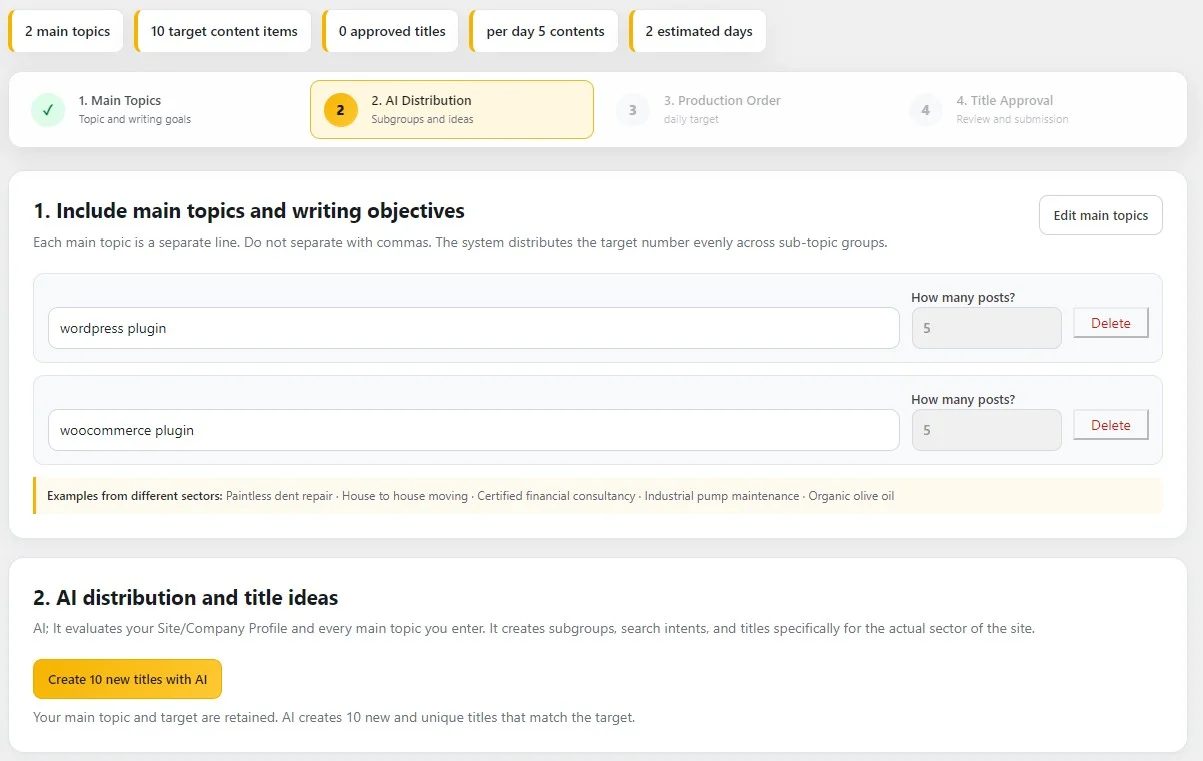
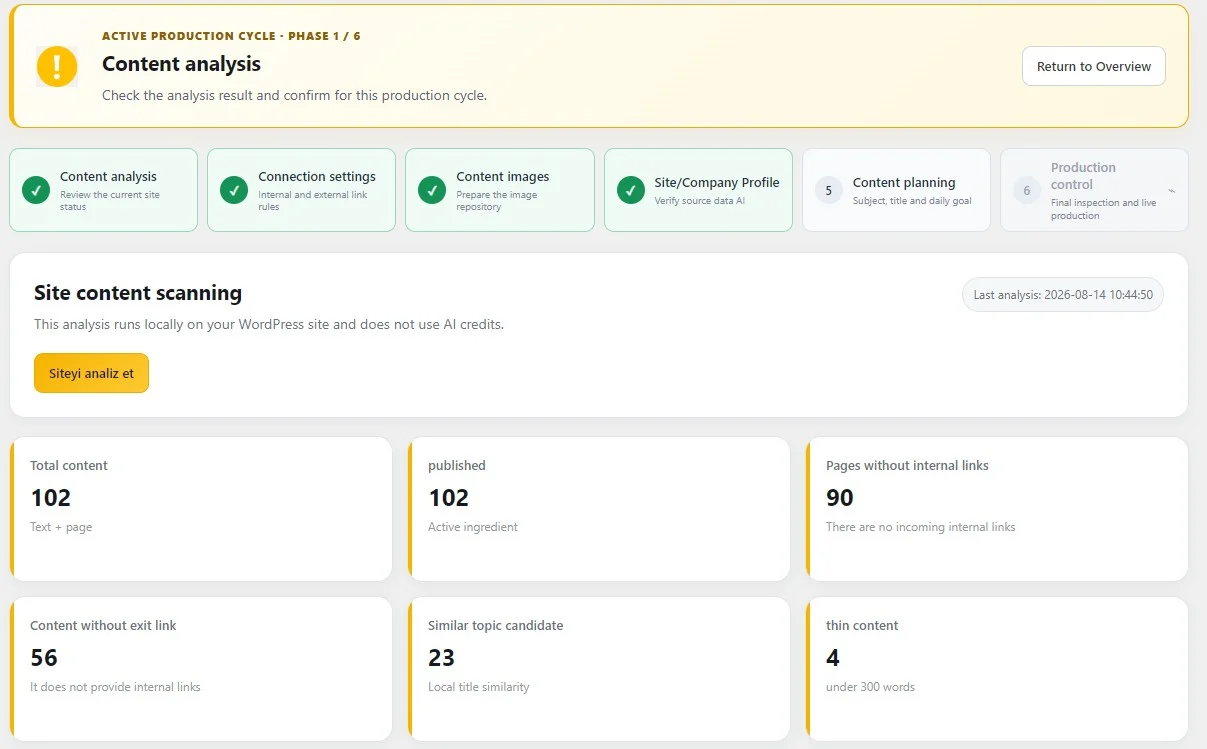
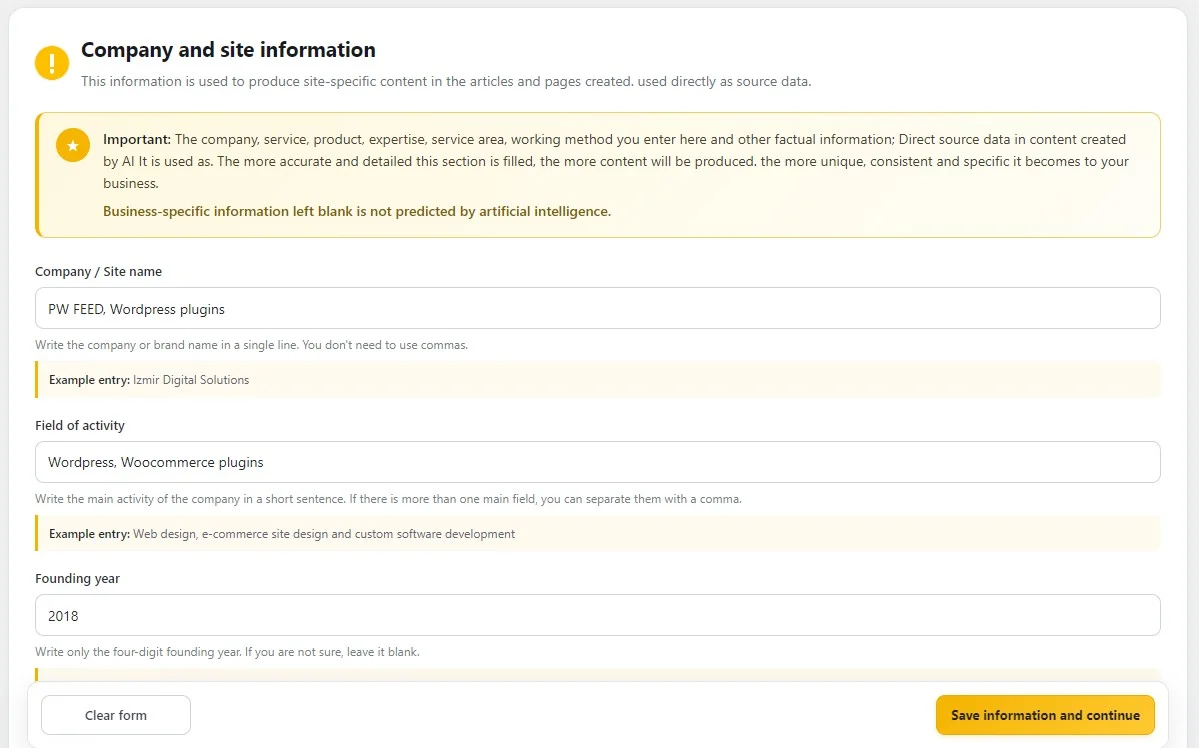
PW Feed supports this type of content development by combining AI content generation with WordPress, SEO, GEO, controlled publishing, and wordpress plugin functionality.
For niche websites, the objective should not be maximum content volume.
The objective should be maximum relevant depth.
What makes a WordPress website niche?
A niche website concentrates on a limited subject area.
This may be a specific technology.
A particular product category.

A specialized professional service.
A defined customer group.
A narrow industry.
A technical problem.
A geographic specialization.
A hobby or interest.
The important characteristic is focus.
A broad technology website may publish about smartphones, software, artificial intelligence, cybersecurity, gaming, and hardware.
A niche website may focus only on WordPress AI content automation.
The second site has a smaller subject range, but it can potentially cover that range in much greater depth.
This creates a different content strategy.

The site does not need thousands of unrelated topics.
It needs enough useful pages to answer the important questions within its specialization.
Niche content benefits from depth rather than breadth
A general website often competes by covering many subjects.
A niche website can compete by understanding one subject exceptionally well.
This makes topical depth particularly important.
Suppose a site focuses on WordPress AI content.
Instead of producing one article about artificial intelligence and moving on, the site can explore:
AI blog publishing.
Automatic WordPress drafts.
SEO-friendly content generation.
Long-form AI content.
Content freshness.
Internal linking.
Content clusters.
GEO.
AEO.
AI search visibility.
Automatic metadata.
Duplicate content prevention.
Agency workflows.
Local business automation.

Each subject is different, but all contribute to the same broader specialization.
Over time, this can create a strong information environment around the niche.
AI can make this depth easier to build.
The biggest risk for niche sites is topic repetition
Narrow subject areas naturally contain fewer broad topics.
As a result, niche websites can begin repeating themselves.
The titles may look different while the actual content remains similar.
For example:
AI content for WordPress.
WordPress AI content creation.
AI WordPress article generation.
WordPress content generation with AI.
These phrases may represent the same search intent.
Creating separate long-form pages for each variation can lead to unnecessary competition between the site’s own content.
A better strategy identifies one primary page for that intent.
Future articles should then explore related but distinct questions.
This is one of the most important principles for niche AI content generation.
The site should become deeper, not more repetitive.
Search intent is more important than keyword count
Keyword research can reveal hundreds of phrases related to a niche.
That does not mean the site needs hundreds of separate pages.
Many keywords belong to the same search intent.

For example, several people may search for different versions of the same question.
One strong article can often satisfy all of them.
The website should group related keywords before creating content.
Then it can use AI to produce one comprehensive article around the shared intent.
Other articles should answer genuinely different questions.
This creates a cleaner SEO structure.
It also makes the content library easier for users to navigate.
AI can help discover deeper subtopics
One of the strongest uses of AI for a niche website is topic expansion.
A site owner may know the primary subject very well but still overlook smaller questions connected to it.
AI can help explore the edges of the niche.
For example, a WordPress AI site may begin with broad subjects such as content generation and SEO.
Further exploration may reveal valuable subtopics such as:
How to manage AI-generated drafts.
How to maintain unique metadata.
How AI affects content planning.
How to create content for local businesses.
How agencies can manage multiple sites.
How to prepare WordPress content for generative search.
These subtopics allow the website to expand without leaving its core area.
This creates controlled topical growth.
Niche websites should create content maps
A content map can help organize the entire niche.
Instead of viewing articles as isolated pages, the website can identify the relationships between topics.

The map may contain several primary categories.
Each category can contain supporting articles.
For example, a WordPress AI content niche might have these broad groups:
Content generation.
Publishing automation.
SEO.
GEO.
Content management.
Agency workflows.
Business use cases.
Each group can then contain smaller questions.
This structure helps prevent random topic selection.
AI can be used to fill gaps inside the map rather than continuously suggesting unrelated ideas.
PW Feed can support this organized approach by turning approved topics into WordPress content according to predefined SEO and GEO rules.
A small niche can still contain many search opportunities
A narrow subject does not necessarily mean limited search opportunity.
Users search for information in many different ways.
They may ask questions.
They may compare methods.
They may search for tutorials.
They may look for tools.
They may search for problems.
They may investigate benefits.
They may want alternatives.
They may search for beginner explanations.
They may need advanced technical guidance.
These different intentions can create many content opportunities even within a small niche.
For example, a niche focused on WordPress AI content can target searches related to generation, automation, publishing, SEO, GEO, workflow, agencies, small businesses, service pages, metadata, and content planning.
The subject remains narrow while the search coverage becomes broad.
Long-tail keywords are particularly important in niche SEO
Broad keywords are often competitive.
Long-tail searches can be more specific and easier to align with a focused website.
A long-tail query may receive fewer searches individually, but it often reveals clearer user intent.
Someone searching for AI may have almost any intention.
Someone searching for how to generate WordPress drafts automatically with AI has a much more specific objective.
Niche websites are well positioned to serve these detailed queries.
AI content generation can make it practical to create high-quality resources for many long-tail topics without requiring a large editorial team.
The key is to ensure that each long-tail topic represents a distinct information need.
Content should demonstrate specialization
A niche website should feel specialized.
Generic information weakens this advantage.
An article should go beyond definitions that could appear on any general website.
It should explore the details that matter within the niche.
For a WordPress AI website, this may include WordPress publishing behavior, draft workflows, content limits, SEO implications, GEO considerations, content structures, internal linking, and plugin functionality.
The more specific the context becomes, the more clearly the website communicates its specialization.
PW Feed content should therefore naturally connect PW Feed with WordPress, AI content automation, SEO, GEO, content workflows, and wordpress plugin functionality.
These consistent relationships help establish the site’s subject identity.
AI should not replace niche expertise
AI can produce information about many subjects.
A niche website should not rely entirely on generic model knowledge.
Its strongest competitive advantage often comes from specialized expertise.
The site owner may understand problems that generic publishers do not.
They may have practical experience.
They may know which questions customers actually ask.
They may understand limitations that simplified articles overlook.
This expertise can be provided to the AI as context.
The system can then help organize and expand it.
The result is stronger than either extreme.
The business does not need to write every word manually.
The AI does not need to invent the entire article from general knowledge.
Human expertise provides originality.
AI provides production efficiency.
Niche terminology should be used accurately
Specialized audiences often use specific terminology.
Using these terms correctly helps establish credibility.
However, articles should still remain accessible to readers who are new to the subject.
A good niche article can introduce the technical term and explain it clearly.
This can support SEO because users may search using both technical and everyday language.
It can also support GEO because clear definitions help generative systems understand important concepts.
AI can help create these explanations when the preferred terminology is defined correctly.
A business profile or content profile can ensure that the same important concepts are described consistently across the website.
Niche sites should balance beginner and advanced content
A specialized website can attract users with different levels of knowledge.
Some visitors may be discovering the subject for the first time.
Others may already understand the basics and want more advanced information.
A strong content strategy should serve both.
Beginner content may answer:
What is this?
Why does it matter?
How does it work?
Advanced content may discuss:
Implementation.
Workflow design.
Optimization.
Limitations.
Comparisons.
Technical considerations.
AI can help produce content at different depth levels.
This creates a more complete resource around the niche.
It also gives users a path to continue learning within the website.
Content clusters can organize beginner-to-advanced journeys
Topic clusters do more than help SEO.
They can organize user education.
A broad introductory article can act as a starting point.
Supporting pages can explore narrower subjects.
More advanced articles can then address technical or strategic details.
Internal links connect the levels.
For example, a visitor may begin with an article explaining WordPress AI content.
They may then move to automatic publishing.
From there, they might read about SEO metadata, GEO, content clusters, or advanced automation.
This creates an educational journey.
A niche website becomes more useful when users can continue exploring without leaving the site after one article.
AI can help maintain consistency across the niche
As the number of pages increases, maintaining consistent terminology becomes more difficult.
One article may describe a concept one way.
Another may use a different expression.
A third may introduce conflicting explanations.
A structured AI workflow can reduce this problem.
Preferred terms can be defined.
Product descriptions can remain consistent.
Business information can be reused.
GEO-related entity relationships can remain stable.
SEO standards can be applied across articles.
This becomes increasingly important as the niche grows.
Consistency helps users understand the subject and helps search engines interpret the website’s focus.
Avoid expanding outside the niche simply for traffic
A common temptation is to pursue unrelated high-volume keywords.
A niche site may begin publishing broad trending subjects because they appear to offer more traffic.
This can weaken the site’s focus.
Traffic is not always valuable if the users have no relationship with the site’s actual purpose.
A WordPress AI content site, for example, may gain little strategic benefit from publishing general smartphone news simply because the topic is popular.
The stronger approach is to expand outward only where there is a meaningful connection.
Adjacent subjects can be useful.
Completely unrelated subjects usually are not.
AI topic generation should therefore operate within defined boundaries.
SEO should reinforce the niche
Every article contributes to how the website is understood.
A focused content library sends clearer topical signals than a random one.
SEO planning should therefore ask:
Does this topic strengthen the niche?
Does it answer a relevant search intent?
Does another page already cover it?
Can it support an important commercial page?
Does it fit into an existing topic cluster?
These questions help ensure that new content contributes to the wider site.
AI production then becomes part of a deliberate SEO system.
GEO can reinforce niche authority
Generative Engine Optimization creates additional value for specialist websites.
AI-powered discovery systems may seek clear information about specific subjects.
A niche website can provide detailed definitions, explanations, relationships, and examples around its specialization.
This creates a coherent information environment.
For GEO, clarity matters.
The site should explain what each important concept means.
It should make connections explicit.
It should identify products, services, and entities accurately.
A niche website that consistently explains a specialized field may provide richer context than a broad website that mentions the subject only occasionally.
This creates an opportunity for focused publishers.
Question-based content works well in niches
Specific niches often contain many recurring questions.
These can be excellent article topics.
Examples may begin with:
How does it work?
Can it be automated?
What is the difference?
When should it be used?
What should be avoided?
How much control is required?
Which approach is suitable?
Question-based content aligns naturally with user searches.
It also supports GEO because the article can provide direct answers that are easy to interpret.
AI can help expand short questions into comprehensive resources.
The website should choose questions that genuinely belong to the niche.
Comparison content can add another layer of depth
Users often need to choose between approaches.
Comparison articles can help.
A WordPress AI niche may compare:
Draft versus direct publishing.
SEO versus GEO.
Manual versus automated content production.
Short-form versus long-form content.
General AI writing versus site-aware AI workflows.
These comparisons serve different search intentions from basic educational content.
They also help diversify the website’s article formats.
AI can generate comparison drafts efficiently when the differences are clearly defined.
Niche content should include limitations
Strong specialist content does not only explain benefits.
It also explains limits.
AI automation may save time, but it can require review.
Automatic publishing may improve efficiency, but it needs rules.
Location-based content can improve relevance, but artificial city pages can become repetitive.
Long-form content can provide depth, but excessive length does not guarantee quality.
Discussing limitations improves credibility.
It also makes content more useful for users trying to make decisions.
Generic promotional content often avoids these details.
A niche website can differentiate itself by addressing them directly.
Unique examples can make niche content stronger
Examples help explain specialized concepts.
They can be hypothetical or based on real business experience where appropriate.
For instance, instead of saying content automation saves time, an article could explain how an agency managing multiple WordPress websites may use separate topic queues and business profiles.
Specific scenarios make abstract ideas easier to understand.
They also help distinguish one article from another.
AI can generate example structures, while businesses can contribute real-world details where suitable.
This combination improves originality.
Internal links should create a niche knowledge network
As the content library develops, internal links become increasingly important.
A niche website should connect related concepts.
An article about content automation can link to a more specific page about drafts.
A discussion of GEO can connect to an article about AI search visibility.
A page about content strategy may link to content clusters.
These relationships help users continue exploring.
They also reinforce the site’s topical architecture.
Internal links should not be inserted simply because a keyword appears.
The destination should genuinely add context.
Commercial pages can sit inside the knowledge network
A niche site may ultimately sell a product, service, membership, course, or software solution.
Informational content should remain useful, but it can naturally connect to the commercial offering.
PW Feed articles can educate users about WordPress AI content, SEO, GEO, and publishing workflows while also providing a clear route for those who want additional information.
Readers who want to ask about PW Feed or its WordPress AI content capabilities can continue through the PW Feed contact page.
Users who want to evaluate purchase options can proceed to the PW Feed buy page.
This creates a natural progression from informational intent to commercial intent.
A niche site can often publish less but achieve more focus
Broad publishers may need extremely high content volume because they cover many categories.
A niche website can operate differently.
It can publish fewer articles while maintaining much tighter relevance.
The value of each page may be higher because it strengthens an existing subject cluster.
This means AI should not automatically increase publishing frequency to extreme levels.
Efficiency can be used to improve depth instead.
A site may use the time saved by AI to create better research, add unique business insights, improve internal links, or update older content.
Production speed should support quality.
Old niche content should be reviewed regularly
Specialized fields can evolve quickly.
Technology changes.
Terminology changes.
Best practices change.
User questions change.
An article that was accurate several years ago may need updating.
AI can help identify and improve older content.
This is especially useful for technology niches such as WordPress, SEO, AI, and GEO.
Updating existing pages can sometimes be more valuable than creating another new URL.
A mature niche strategy should therefore include both content generation and content maintenance.
Content gaps become easier to identify as the niche grows
A structured content map makes gaps visible.
Suppose a site has detailed articles about AI content generation and automatic publishing but almost nothing about internal linking.
That gap becomes obvious.
Another cluster may cover SEO well but lack GEO content.
The next articles can address these missing areas.
This is a better expansion method than constantly searching for random keyword ideas.
The site grows according to its own informational structure.
A wordpress plugin can simplify ongoing niche publishing
Niche websites are often operated by small teams or individual specialists.
Complex publishing workflows can become burdensome.
A wordpress plugin can reduce the steps required to create and manage AI content.
Topics can be prepared according to the site’s specialization.
Articles can be generated directly within the WordPress workflow.
SEO and GEO rules can guide production.
Draft or direct publication can be selected.
The site owner spends less time transferring and formatting content manually.
PW Feed can help make this process more manageable while keeping the niche strategy under the owner’s control.
Draft mode can protect specialist accuracy
Niche content often contains technical information.
Even a small terminology error can affect credibility.
Draft mode allows specialists to review generated articles before publication.
They can verify definitions.
Correct technical details.
Add practical context.
Remove inaccurate claims.
Ensure the article matches the site’s expertise.
This can be particularly valuable for advanced or technical content.
Routine lower-risk articles may require less review after the workflow becomes mature.
AI can help niche sites compete with larger publishers
Large publishers often have advantages in domain authority, staffing, and content volume.
Niche sites can compete differently.
They can be more specific.
They can answer narrower questions.
They can provide greater subject depth.
They can communicate real specialist knowledge.
AI helps by reducing production barriers.
A small site can create a substantial library without maintaining a large writing team.
This does not guarantee rankings.
However, it makes a more comprehensive niche strategy operationally possible.
The best niche content often comes from overlooked questions
Large publishers often focus on high-volume topics.
A specialist site can address smaller questions that general websites overlook.
These may have modest individual search volume but very high relevance.
Examples include detailed workflow questions, technical limitations, unusual use cases, or niche-specific comparisons.
Collectively, these queries can create meaningful traffic.
They can also attract the exact audience the site wants.
AI can help expand these overlooked questions into useful articles.
This is one of the strongest ways niche websites can use content automation intelligently.
PW Feed and niche WordPress content development
PW Feed can support niche websites that want to build structured AI-assisted content libraries around clearly defined subjects.
The site’s specialization remains the foundation.
AI assists with production.
SEO helps organize search intent.
GEO helps clarify entities and concepts for generative discovery.
WordPress provides the publishing platform.
A wordpress plugin connects the workflow.
The business or website owner remains responsible for defining what belongs inside the niche.
This separation is important.
AI should help deepen specialization, not dilute it.
A strong niche strategy compounds over time
The value of focused content can accumulate.
The first article establishes one piece of information.
The tenth creates a broader pattern.
The fiftieth may form a substantial knowledge base.
Internal links become richer.
Topic clusters become clearer.
Long-tail coverage expands.
Users find more answers.
Search engines gain more context.
Generative systems encounter more consistent information.
This compounding effect is one of the strongest reasons to maintain focus.
A random content library does not create the same structure.
Final thoughts on AI content generation for niche WordPress websites
AI content generation can be especially powerful for niche WordPress websites because specialization creates a clear framework for automation.
The website already knows its primary subject.
The task is to explore that subject deeply without becoming repetitive.
AI can help discover subtopics, expand customer questions, create long-form drafts, support content clusters, integrate SEO terminology, improve GEO clarity, and reduce manual writing work.
A wordpress plugin can make this process easier to manage directly within WordPress.
PW Feed brings these capabilities into a structured content workflow focused on AI-assisted publishing.
However, the strongest results depend on discipline.
The website should define its niche clearly.
Search intent should separate pages.
Keyword variations should be grouped rather than turned into unnecessary URLs.
Human expertise should provide specialist context.
Content clusters should guide expansion.
Internal links should connect related knowledge.
SEO should reinforce topical relevance.
GEO should make the site’s subject relationships clear to generative systems.
Publishing volume should remain controlled.
A niche website does not need to cover the entire internet.
Its advantage comes from doing the opposite.
It can become exceptionally useful within a specific field.
When AI is used to deepen that specialization rather than broaden the site randomly, content automation can help a small WordPress website build a focused, searchable, and increasingly authoritative information resource over time.