
AI-powered internal linking for WordPress content
A WordPress website can contain excellent articles and still perform below its potential if those pages remain disconnected from one another.
A visitor may arrive on an article, read the information, and leave because there is no clear path toward another useful page. Search engines may discover dozens of related articles without receiving strong signals about how those pages fit together. Important service or product pages may receive little internal support even though the blog contains highly relevant content.
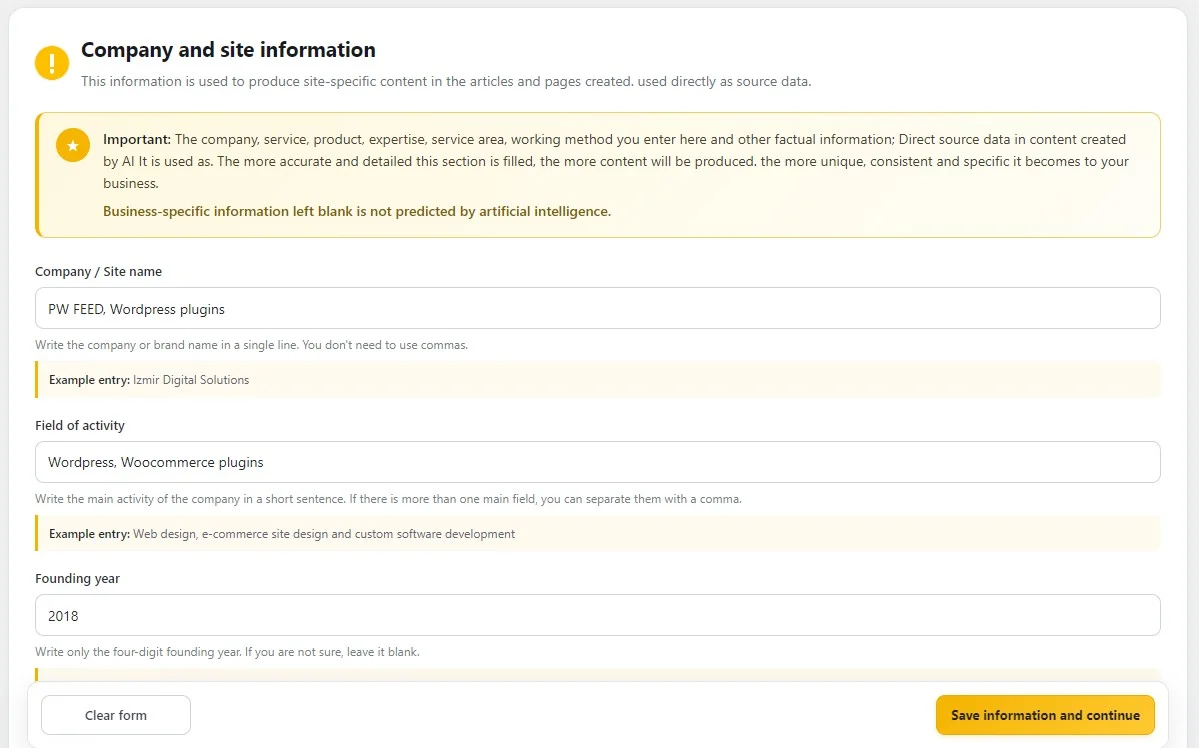
Internal linking helps solve these problems.
An internal link connects one page of a website with another page on the same domain. When these links are created intelligently, they can improve navigation, support SEO, strengthen topic relationships, distribute attention toward important pages, and make the website easier for both users and AI-driven systems to understand.
The difficulty is scale.
Adding relevant internal links manually is manageable when a WordPress site contains twenty pages. It becomes much harder when the site contains hundreds or thousands of posts.
Artificial intelligence can help automate this process.
AI can analyze article topics, identify semantic relationships between pages, suggest suitable destinations, and help determine which existing content should be linked from a new article.
PW Feed can support this broader WordPress AI content workflow by combining content generation, SEO, GEO, publishing automation, and wordpress plugin functionality.
The objective is not to insert as many links as possible.
The objective is to create meaningful connections between related information.
What is an internal link?
An internal link points from one page on a website to another page on the same website.

For example, an article about automatic WordPress publishing may link to another article explaining automatic WordPress drafts.
A page discussing AI SEO content may link to a detailed guide about unique SEO titles.
An article explaining GEO may connect to another page about optimizing WordPress content for generative search.
These links create pathways between related subjects.
For users, they provide opportunities to continue learning.
For search engines, they help reveal website structure.
For AI systems, they can reinforce relationships between entities, topics, products, and supporting information.
A strong internal linking strategy therefore contributes to the entire information architecture of a WordPress site.
Internal linking is more than navigation
Website navigation usually includes menus, categories, breadcrumbs, or footer links.
These are useful, but contextual internal links serve a different purpose.

A contextual link appears naturally inside the content because another page provides useful additional information.
Suppose an article briefly mentions duplicate AI content.
Instead of explaining the entire subject again, the article can link to a dedicated page about preventing duplicate AI content in WordPress.
This allows each page to remain focused.
The current article provides enough context to understand the subject.
The linked page provides deeper information.
This is one of the most valuable functions of internal linking.
It helps build a website where individual articles specialize while the site as a whole remains comprehensive.
Why AI is useful for internal linking
Manual internal linking requires knowledge of the entire website.
The editor must remember:
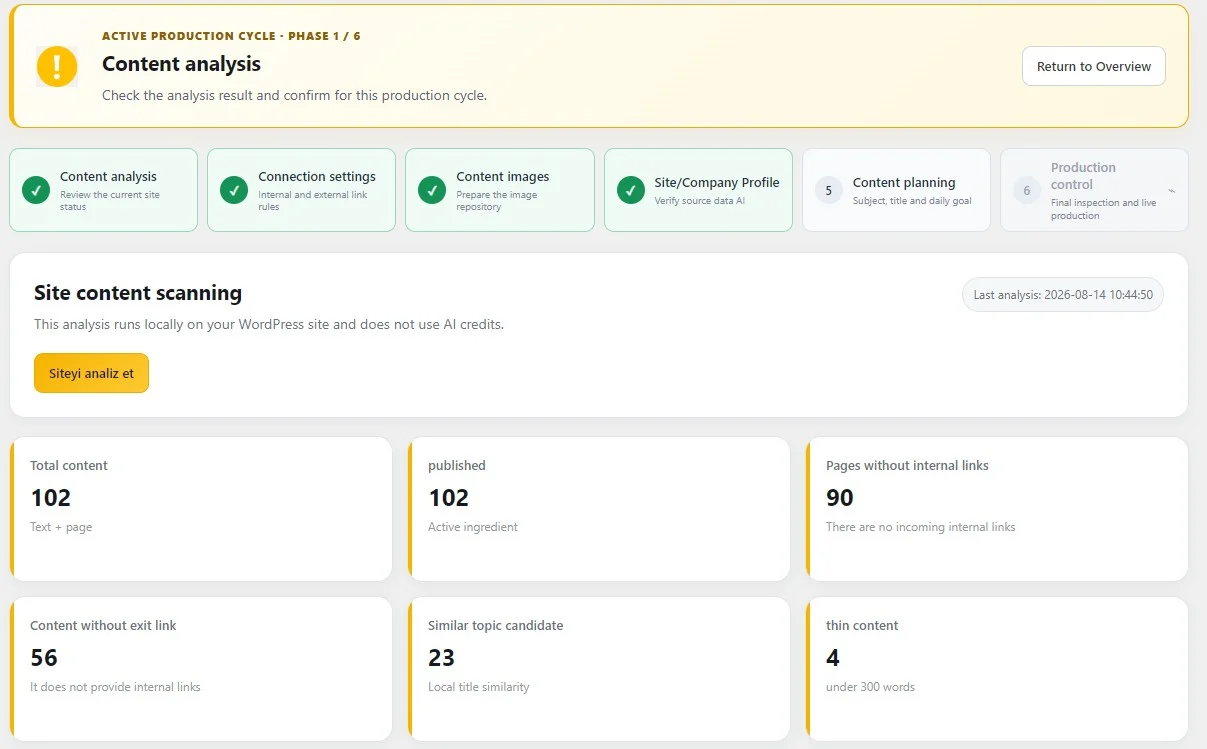
Which pages exist.
What each page discusses.
Which page is the primary resource for a topic.
Which commercial pages are important.
Which articles need more internal support.
Which anchor text would be appropriate.
As the content library grows, this becomes increasingly difficult.
AI can analyze topics semantically.
Instead of relying only on exact keyword matches, it can recognize related concepts.
An article about automatic publishing may be relevant to content planning even when the exact phrase content planning does not appear repeatedly.
This semantic understanding creates stronger linking opportunities.

AI can therefore help transform a large WordPress archive into a more connected content network.
Relevant links should always come first
Automation can create links quickly, but relevance is more important than quantity.
A page should only link to another page when the destination provides useful additional information.
Suppose an article discusses automatic meta descriptions.
A link to an article about SEO title generation may be relevant because both belong to metadata optimization.
A link to an unrelated local business article would provide much less value.
The same principle applies even if both pages contain the word WordPress.
Shared keywords do not automatically create a useful relationship.
AI-powered internal linking should therefore be semantic rather than mechanical.
Keyword matching alone is not enough
Traditional automatic linking systems often work through keyword rules.
For example, every time the phrase WordPress SEO appears, the system may link to the same page.
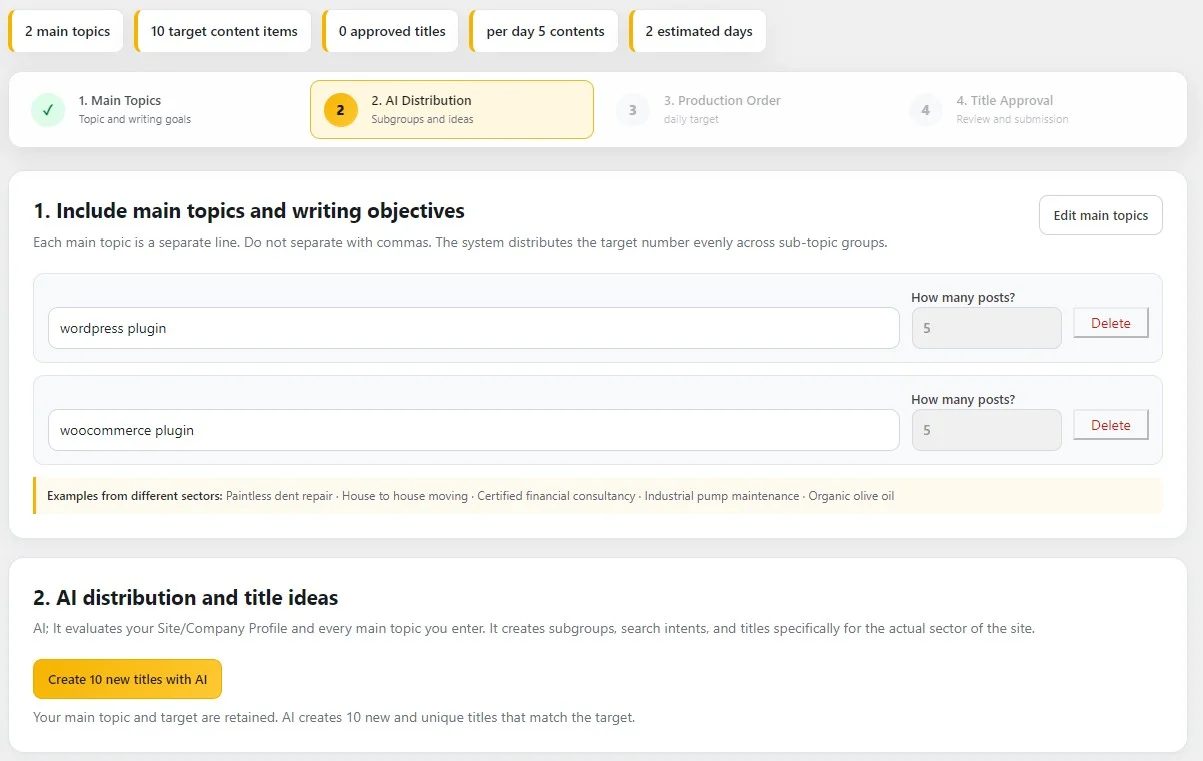
This can create several problems.
The same link may appear too often.
The destination may not actually be the most relevant page in every context.
Anchor text may become repetitive.
The article may contain unnecessary links.
AI can improve this by considering the surrounding paragraph.
The system can evaluate what concept is actually being discussed and select a destination based on meaning.
This produces more natural internal linking.
Every important topic should have a primary page
Internal linking becomes easier when the website has clear topic ownership.
Suppose the website has one primary article about duplicate AI content.

Whenever other pages briefly discuss duplication, they can link toward that primary resource.
The same can apply to:
Automatic WordPress publishing.
AI content planning.
Unique SEO titles.
Meta descriptions.
Internal linking.
GEO.
AI search visibility.
Topic ownership creates hierarchy.
Supporting pages do not need to compete with the main resource.
Instead, they strengthen it through contextual links.
This structure can also help prevent keyword cannibalization.
Topic clusters are ideal for internal linking
A topic cluster contains several related pages around a broader subject.
For example, a WordPress AI SEO cluster may include:
SEO-friendly AI content.
Automatic SEO titles.
Automatic meta descriptions.
Duplicate content prevention.
Internal linking.
Content planning.

AI search optimization.
These pages should not exist independently.
They can connect to one another where the relationship is meaningful.
An article about meta descriptions may link to the title-generation article.
A duplicate-content article may link to topic planning.
An internal-linking article may link to content clusters.
This creates a network of supporting information.
The user can explore the subject in greater depth.
Search engines can recognize the broader topical structure.
AI can identify content clusters automatically
A large WordPress site may not have formal topic clusters.
AI can help identify them.
The system can analyze article titles, summaries, categories, and content.
Pages discussing similar concepts can be grouped together.
The site owner can then review these groups and decide which pages should function as primary resources.
This can reveal useful relationships that were not obvious before.
It can also expose problems.
For example, a cluster may contain six pages with nearly identical search intent.
That may indicate duplication rather than healthy topical depth.
Internal linking analysis can therefore become part of a broader content audit.
New articles should receive links during generation
One efficient approach is to consider internal linking while the article is being created.
The AI knows the new article’s subject.
It can also know which existing pages are relevant.
Suitable links can therefore be incorporated naturally during generation.
This is easier than publishing the article first and performing a separate linking task later.
The new page enters WordPress already connected to the wider website.
PW Feed can support a structured workflow where content generation, SEO considerations, GEO clarity, and publishing work together rather than being treated as completely separate processes.
Existing pages should also link toward new content
Internal linking should work in both directions.
When a new article is published, older relevant pages may also deserve links to it.
For example, suppose a site already has an article about WordPress content strategy.
Later, it publishes a detailed guide about AI-powered internal linking.
The older strategy article may now have an opportunity to link to the new guide.
Without this update, the new article receives only outbound links and may remain relatively isolated.
A mature linking system therefore considers both:
Links from the new article to existing content.
Links from existing content toward the new article.
AI can help identify these reverse-link opportunities.
Orphan pages should be identified
An orphan page is a page that receives little or no meaningful internal linking from other content.
The page may still be accessible through a sitemap or category archive, but it is not well integrated into the site’s contextual structure.
These pages can be difficult for users to discover naturally.
They may also receive weaker signals about their importance.
AI can help analyze the WordPress content library and identify pages with limited internal support.
The site owner can then determine whether the page deserves:
Additional links.
Content improvement.
Integration into a topic cluster.
Consolidation with another page.
Or removal if it no longer provides value.
This makes internal linking part of website maintenance.
Important commercial pages need contextual support
Blog content should not only link to other blog articles.
Relevant informational pages can also support important product and service pages.
Suppose a user is reading about WordPress AI content automation.
If PW Feed provides a relevant solution, the article can naturally connect the informational topic with the product.
However, the link should make sense in context.
A commercial page should not be inserted simply because the business wants more links.
The informational content should create a genuine reason for the user to continue.
Readers who want additional information about PW Feed and its WordPress AI content capabilities can continue through the PW Feed contact page.
Users ready to evaluate the product can proceed to the PW Feed buy page.
These links represent different stages of the user journey.
Internal linking can support the customer journey
Users do not all enter a website with the same objective.
Some are learning.
Some are comparing.
Some are evaluating solutions.
Some may already be ready to purchase.
Internal links can guide them between these stages.
A broad educational article can link to a more detailed guide.
The detailed guide may link to a product explanation.
The product explanation can lead to purchase or contact options.
This creates a natural progression.
AI can help identify which content belongs to different stages of the journey.
Internal linking then becomes part of conversion architecture as well as SEO.
Anchor text should describe the destination naturally
The visible words used in a link are called anchor text.
Good anchor text provides context.
A phrase such as duplicate AI content in WordPress tells the reader what type of page may open.
Generic anchor text such as click here provides much less information.
However, anchor text should not be manipulated excessively.
Using exactly the same keyword-rich anchor text every time can make the linking pattern look unnatural.
AI can generate varied but accurate anchor text according to context.
For example:
Prevent duplicate AI content.
AI content duplication guide.
Avoid overlapping WordPress articles.
WordPress duplicate-content strategy.
These phrases may all point toward the same relevant resource when appropriate.
The variation should remain natural.
Do not over-optimize anchor text
SEO sometimes encourages website owners to think about anchor text primarily as a ranking signal.
This can lead to forced writing.
A sentence may become awkward simply because a target keyword needs to be inserted.
A better approach starts with readability.
The anchor should tell users what they will find.
Keywords can appear naturally when they accurately describe the destination.
AI-powered linking should therefore optimize for semantic clarity rather than exact keyword repetition.
This creates a healthier internal link profile.
Too many internal links can reduce usefulness
If AI can insert links automatically, it may be tempting to link every relevant phrase.
This is unnecessary.
A paragraph containing several links can distract the reader.
Repeated links to the same destination add little value.
The strongest links are selective.
The website can prioritize pages that provide genuine additional depth.
A long article may naturally contain several internal links.
A short page may need only a few.
There should not be a rigid requirement to insert a particular number.
Context should determine the linking density.
Repeated links to the same destination are usually unnecessary
If an article links to a specific page early in the content, linking to the same page repeatedly may provide little additional value.
There are exceptions.
A long article may revisit the subject much later.
A call to action may use the same commercial destination for a different reason.
But repeated linking should not become automatic.
An AI system should ideally understand whether the destination has already been introduced.
This prevents clutter.
It also keeps the page easier to read.
Internal links can reduce unnecessary content repetition
One of the strongest editorial benefits of internal linking is the ability to avoid explaining everything on every page.
Suppose an article about automated content planning needs to mention duplicate-content prevention.
Without internal links, the writer may repeat several paragraphs explaining duplication.
With a dedicated duplicate-content page, the planning article can provide a concise explanation and link to the deeper resource.
This improves originality.
Each article focuses on its primary subject.
Related concepts remain accessible.
A connected site therefore needs less repeated text.
Internal linking supports content specialization
This leads to an important content architecture principle.
Pages should specialize.
One page can be the best resource on automatic titles.
Another can specialize in metadata.
Another can focus on content consistency.
Another can explain internal linking.
The articles are connected but not interchangeable.
Internal links allow this specialization to work.
Users can move between resources when they need more detail.
This helps create a site that is both focused at the page level and comprehensive at the domain level.
SEO benefits from clear page relationships
Search engines analyze links as part of website structure.
Internal links can help indicate:
Which pages are related.
Which pages are central.
Which supporting pages belong to a topic.
How deeply content is buried.
Which pages receive strong internal attention.
This does not mean that simply adding hundreds of links will improve SEO.
The quality of the architecture matters.
A logical network is more useful than a dense random network.
AI can assist by finding semantic relationships that support this structure.
GEO also benefits from connected information
Generative Engine Optimization emphasizes clear information relationships.
A WordPress website may explain an entity across several pages.
Internal links can help connect those explanations.
For PW Feed, different pages may discuss:
PW Feed and AI content generation.
PW Feed and SEO.
PW Feed and GEO.
PW Feed and WordPress automation.
PW Feed and publishing workflows.
These articles remain distinct, but internal links can establish that they belong to the same information environment.
Generative systems encountering these pages can more easily recognize repeated relationships between the product, platform, and functions.
This supports broader entity clarity.
GEO linking should remain useful for humans
GEO should never become an excuse for creating artificial link patterns.
Links still need to help users.
If two pages have no useful relationship, linking them simply to connect entities is unnecessary.
The strongest GEO structure usually aligns with good user experience.
Clear pages.
Clear topics.
Accurate information.
Logical links.
Consistent entities.
These principles support both human readers and AI interpretation.
AI can identify semantic relationships beyond exact terms
This is one of the most valuable differences between simple automation and AI-powered linking.
Two pages may be closely related without sharing identical keywords.
For example, an article about editorial approval workflows may be strongly related to automatic WordPress drafts.
A traditional keyword system may miss the connection if the phrase automatic drafts is not used.
AI can understand that drafts are part of editorial review and approval.
This makes semantic linking possible.
As content libraries grow, these deeper connections can improve the overall information network.
AI can score potential links by relevance
A large website may have many possible destinations for one paragraph.
AI can help rank them.
For example, a section discussing SEO title duplication may potentially link to:
A unique SEO title article.
A duplicate-content article.
A general SEO automation page.
All may be relevant.
The most useful destination depends on the exact context.
An AI system can assign stronger relevance to the page that directly answers the issue being discussed.
This reduces random linking.
It also allows the site to prioritize the most helpful resource.
Primary pages should receive more strategic support
Not all pages have equal importance.
A website may identify certain cornerstone or primary resources.
Supporting articles can link naturally toward these pages.
This helps create a hierarchy.
For example, a broad page about WordPress AI SEO content could function as a central resource.
Supporting articles about titles, meta descriptions, internal linking, GEO, and content automation can strengthen that broader topic.
At the same time, the central page can link outward to the detailed resources.
This creates a hub-and-supporting-page structure.
Internal linking should reflect content hierarchy
A website with no hierarchy can become difficult to understand.
Every page appears equally important.
A structured linking system can establish levels.
A broad guide sits at the top of a subject.
Supporting articles explore narrower questions.
Specific technical pages go deeper.
Commercial pages provide solutions where relevant.
This structure gives users multiple entry points while maintaining organization.
AI can help recognize these relationships and recommend links accordingly.
Old WordPress articles often contain missed opportunities
Many established websites have years of content that was published without a deliberate internal linking strategy.
These archives can contain valuable opportunities.
An older article may mention a topic that now has a detailed dedicated page.
A previously isolated commercial page may now have several relevant supporting articles.
An outdated link may point to a less useful destination.
AI can help review older content and identify these opportunities.
The result can be stronger site architecture without requiring entirely new articles.
Content audits should include internal links
A WordPress content audit can evaluate more than titles and text.
It can also examine linking structure.
Useful questions include:
Which pages receive few internal links?
Which pages receive many irrelevant links?
Which topic clusters are poorly connected?
Which commercial pages have useful informational support?
Which articles repeatedly link to the same destinations?
Which links point to outdated or removed pages?
This information can create a prioritized improvement list.
AI can assist with the analysis and provide suggestions.
Broken internal links should be corrected
As WordPress websites evolve, pages may be deleted, moved, or consolidated.
Internal links can become broken.
This creates a poor user experience.
It can also weaken the content network.
A linking system should therefore consider maintenance.
Automatic or AI-assisted checks can identify invalid destinations.
The site owner can replace the link, remove it, or redirect the old page appropriately.
Internal linking is not a one-time setup.
It requires ongoing management as the website changes.
Consolidated articles require link updates
Suppose two overlapping articles are combined into one stronger page.
Existing links may still point to the old URLs.
The website should update these relationships.
This is especially important when AI-assisted content audits identify duplication and recommend consolidation.
Content architecture, redirects, and internal linking should work together.
Otherwise, the site may improve one problem while creating another.
A mature WordPress content system treats these activities as connected.
New content can automatically create reverse-link suggestions
When an article is generated, AI can identify older pages that could benefit from linking to it.
For example, after publishing an article about internal linking, the system may identify previous content about topic clusters, SEO automation, or content planning.
These articles can become candidates for reverse-link updates.
The system does not necessarily need to modify them automatically.
It can create a review queue.
This balances automation with control.
Automatic modifications require caution
Directly editing older published articles can be more sensitive than creating new content.
An automated system should avoid making uncontrolled changes.
A useful workflow might:
Identify linking opportunities.
Rank them by relevance.
Present them for review.
Apply approved changes.
For highly controlled sites, some low-risk modifications may eventually be automated.
However, the site owner should maintain authority over important content.
AI assistance should reduce workload without creating unpredictable editorial changes.
A wordpress plugin can simplify internal linking automation
Internal linking becomes more practical when the analysis and publishing environment are connected.
A wordpress plugin has direct access to the site’s content structure.
It can work with existing posts, pages, titles, categories, and approved destinations.
PW Feed can integrate AI content creation with broader SEO and GEO workflows so that internal linking can become part of the article production process rather than a completely separate task.
This reduces manual work.
It also allows new content to be created with awareness of the existing WordPress site.
A WordPress-specific workflow is valuable
Generic AI tools can suggest links conceptually, but they may not know the exact content available on the WordPress site.
A WordPress-aware system can work with real pages.
This makes recommendations more practical.
Instead of saying link to an article about SEO titles, the system can identify the actual relevant page already published on the website.
This distinction is important.
Internal linking needs real destinations, not abstract suggestions.
Site context turns AI recommendations into actionable WordPress changes.
Internal linking can support multilingual WordPress sites
Multilingual websites introduce additional complexity.
Links should usually send users to the correct language version of the destination.
An English article should not accidentally send a reader to a Turkish page when an English equivalent exists.
AI can help match language, topic, and page relationships.
The system should also avoid assuming that every article has an equivalent translation.
Multilingual internal linking therefore requires both semantic relevance and language awareness.
A site-aware wordpress plugin workflow can make these rules easier to manage.
Local-business websites require geographic relevance
Local WordPress websites may have several service or location pages.
Internal links should reflect real relationships.
A general service article may connect to the main service page.
A location-specific article may link to an appropriate real location page.
However, the system should not create links to artificial geographic pages simply because city names appear in the article.
The same accuracy rules that apply to local content generation should apply to local internal linking.
SEO and GEO both benefit from genuine geographic relationships.
Agencies can use AI linking across many client sites
Agencies managing multiple WordPress websites face substantial internal-linking workloads.
Each client may have hundreds of pages.
Manual review becomes expensive.
AI can help identify relevant relationships within each site.
However, client data must remain separated.
A page from one client should never become a destination on another client’s site unless it is intentionally an external link.
Each WordPress installation requires its own content map.
AI automation can scale the process while preserving client-specific architecture.
Internal linking can help agencies demonstrate strategic value
Agencies often focus reports on new article counts.
Internal linking creates another valuable service.
An agency can show that it is improving the client’s existing content ecosystem rather than only publishing more pages.
For example:
New articles connected to priority service pages.
Orphan pages reduced.
Topic clusters strengthened.
Old content linked to new resources.
Duplicate subjects consolidated.
These improvements represent structural SEO work.
AI can reduce the manual effort required to provide this service.
AI linking should respect editorial priorities
The most semantically relevant page is not always the page the business wants to prioritize.
A site may have several relevant destinations.
One may be a key service page.
Another may be an informational article.
Business goals should therefore be part of the linking rules.
The system can combine relevance with priority.
However, commercial priority should never override usefulness completely.
A link to a product page should still make sense in context.
The best internal linking balances editorial relevance and business objectives.
High-value pages can receive controlled support
A business may define several important pages.
These might include:
Primary product pages.
Key service pages.
Core guides.
Important category pages.
Contact routes.
AI can consider these destinations when analyzing new content.
If a relevant opportunity exists, the high-value page can receive a contextual link.
This is more effective than automatically linking to the same commercial page from every article.
Controlled relevance produces a more natural structure.
Not every article needs a commercial link
Informational content should remain informative.
Some pages may have no natural reason to link to a purchase page.
That is acceptable.
The user should not be forced into a commercial path from every paragraph.
A broader content architecture can still guide interested visitors toward commercial information through related pages.
The strongest internal linking strategy serves the user’s next logical question.
Sometimes that next question is educational.
Sometimes it is commercial.
AI can help distinguish between them.
AI can reduce linking bias toward recent content
Editors often remember recent articles better than older ones.
As a result, new content may receive many links while valuable older pages are forgotten.
AI can analyze the entire archive.
This creates a more balanced linking strategy.
An article published three years ago may still be the best destination for a particular concept.
If it remains accurate and useful, it deserves consideration.
AI can therefore help rediscover valuable older content.
Freshness should still be considered
An old article may be relevant but outdated.
Before AI recommends it as a destination, the system should ideally consider whether the page remains current.
If not, the site can update the old article first.
This creates another useful workflow:
Find a relevant older page.
Check its quality and freshness.
Update if necessary.
Then strengthen it with new internal links.
Internal linking can therefore trigger broader content maintenance.
Internal links can support content freshness
Adding a relevant link to an older article can improve that article’s usefulness.
More importantly, the process of reviewing the article may reveal information that should be updated.
This turns internal linking into a maintenance opportunity.
AI can help identify which older articles become relevant when new topics are published.
A growing content system can therefore continuously reconnect and refresh itself.
Content planning and internal linking should work together
The best internal linking begins during topic planning.
Before creating a new page, the website can ask:
Which content cluster will this page join?
Which existing pages will link to it?
Which pages will it link toward?
Does a primary page already exist?
Will this article fill a real gap?
These questions help ensure that the new page has a place within the site.
It is less likely to become an orphan.
It is also less likely to duplicate an existing topic.
Internal linking is therefore closely connected to content strategy.
Internal linking can reveal whether a new topic belongs on the site
Sometimes a proposed article has almost no natural relationship with the existing content.
This can be a warning sign.
Perhaps the topic falls outside the website’s specialization.
If a WordPress AI SEO site proposes an article about an unrelated consumer product, there may be few meaningful internal links.
The lack of relationships reflects weak topical relevance.
This does not mean every new subject needs dozens of links.
However, a healthy new topic should usually connect naturally to at least part of the existing information architecture.
This provides another useful planning test.
SEO and GEO benefit from the same logical architecture
A well-connected website can support multiple discovery systems.
Traditional SEO benefits from clear topic relationships and page hierarchy.
GEO benefits from coherent information and stable entity relationships.
Users benefit from easier navigation.
These goals are aligned.
There is no need to build one internal linking structure for search engines and another for AI systems.
Logical, useful connections are the foundation for both.
The strongest architecture reflects the real relationships between information.
PW Feed and AI-powered internal linking
PW Feed can support WordPress users building a broader AI-assisted content system rather than treating each generated article as an isolated page.
The website defines its topics.
AI helps generate content.
SEO guides search relevance.
GEO supports clear entity relationships.
Internal links connect related information.
WordPress remains the publishing environment.
A wordpress plugin can reduce the operational work required to manage these relationships at scale.
The result is a more connected content library.
AI should recommend, not create random links
The key principle is control.
AI can identify opportunities.
It can rank relevant destinations.
It can suggest anchor text.
It can help insert links during content generation.
It can identify reverse-link opportunities.
But every recommendation should follow clear rules.
The destination must exist.
The page must be relevant.
The link must help the reader.
The anchor text must make sense.
The site architecture must remain understandable.
Automation without these rules can create a cluttered website.
Internal linking quality matters more than link count
A website with thousands of internal links is not automatically well structured.
The important question is whether the links explain relationships.
One relevant link can be more useful than five arbitrary ones.
A high-quality internal linking strategy prioritizes:
Context.
Relevance.
Hierarchy.
User value.
Topic relationships.
Accurate destinations.
Natural anchor text.
AI can help manage these qualities across a large WordPress site.
The purpose of automation is to make thoughtful linking scalable.
Final thoughts on AI-powered internal linking for WordPress content
AI-powered internal linking can transform a WordPress website from a collection of individual articles into a connected information system.
The value goes far beyond inserting hyperlinks automatically.
AI can analyze page meaning.
It can identify related subjects.
It can connect topic clusters.
It can suggest primary resources.
It can help find orphan pages.
It can identify reverse-link opportunities.
It can support commercial pages when the relationship is genuine.
It can reduce repeated explanations by directing users toward deeper resources.
SEO benefits from clearer content architecture.
GEO benefits from understandable relationships between entities and topics.
Users gain easier paths through the website.
A wordpress plugin can make these processes easier to integrate with real WordPress content.
PW Feed can support a structured AI content workflow in which generation, SEO, GEO, internal linking, and publishing operate as parts of the same system.
The most important principle remains relevance.
Artificial intelligence should not attempt to place the largest possible number of links inside an article.
It should identify the connections that genuinely improve the page.
When every internal link answers the question “Where should the reader logically go next?”, automation can strengthen both individual articles and the entire WordPress website.
A connected site is easier to explore, easier to manage, and easier to understand.
That is the real value of AI-powered internal linking.