
How to create location-based content automatically in WordPress
Location-based content can help a WordPress website connect services, expertise, and useful information with the geographic areas a business genuinely serves. For local companies, regional service providers, multi-location businesses, agencies, and organizations operating across several cities or districts, geographic relevance can become an important part of both SEO and GEO strategy.
However, location-based content is also one of the easiest areas to automate badly.

Creating dozens of pages by changing only the city name can produce repetitive, low-value content. A page for one location should not be an identical copy of another page with a different place name inserted into the text. Search engines, users, and AI-powered discovery systems all benefit more from accurate and meaningful geographic information.
AI provides an opportunity to create location-oriented WordPress content more efficiently, but automation needs clear rules.
PW Feed can support this process by combining AI content creation with WordPress, SEO, GEO, geographic context, and wordpress plugin functionality. The objective is not to manufacture artificial location pages. It is to create useful content that connects a real business, real services, and real operating areas in a clear and structured way.
What is location-based WordPress content?
Location-based content is information created with a meaningful geographic context.
The location may be a country, region, city, district, neighborhood, or actual service area.
A local service business may publish content explaining how a service is available within its city.
A company operating in several cities may create genuinely different resources for customers in each market.
A national business may publish regional information when customer needs vary geographically.
A multi-location organization may create dedicated pages for real physical branches.
The important distinction is relevance.

Geographic terminology should exist because location affects the information being provided.
Adding a city name to an unrelated article does not automatically create useful local content.
Why location-based content can support SEO
Many users include geographic terms when searching for services.
Someone researching a general subject may enter a broad informational query.
Someone ready to find a provider may add a city, district, or nearby location.
This creates a stronger local search intent.
A business that clearly explains where it operates can help search engines connect the website with relevant geographic searches.
However, local SEO is not simply a matter of keyword repetition.
Search engines need consistent information about the company, services, location, and related subjects.
Location-based articles can contribute to this wider context when they are accurate.
They can also provide supporting information around important local service pages.
For example, a central service page may explain what the business provides.
Supporting articles can answer more specific customer questions relevant to the same market.
This creates stronger topical and geographic relationships across the website.
GEO adds another reason to clarify location
Generative Engine Optimization makes geographic clarity increasingly important.
Users now ask AI systems questions that include local intent.
They may ask for a type of service in a particular area, information about providers in a city, or advice relevant to a geographic market.
Generative systems need understandable relationships between entities.
A website should clearly communicate:
Who the business is.

What it provides.
Where it is based.
Which locations it genuinely serves.
Which services are available in those areas.
How geographic information relates to the business.
When these relationships are expressed consistently, the website can provide clearer information for both traditional search engines and AI-powered discovery systems.
GEO therefore gives businesses another reason to avoid inaccurate or artificial location targeting.
The first rule is to use real geographic information
A business should not use location automation to create the appearance of operating everywhere.
Geographic content should reflect reality.
If a company has one physical location but serves customers from several surrounding districts, the content can explain this accurately.
If a business has branches in multiple cities, those real locations can receive appropriate pages.
If a company operates nationally, broader geographic language may be suitable.
The important point is that AI should not invent service areas.
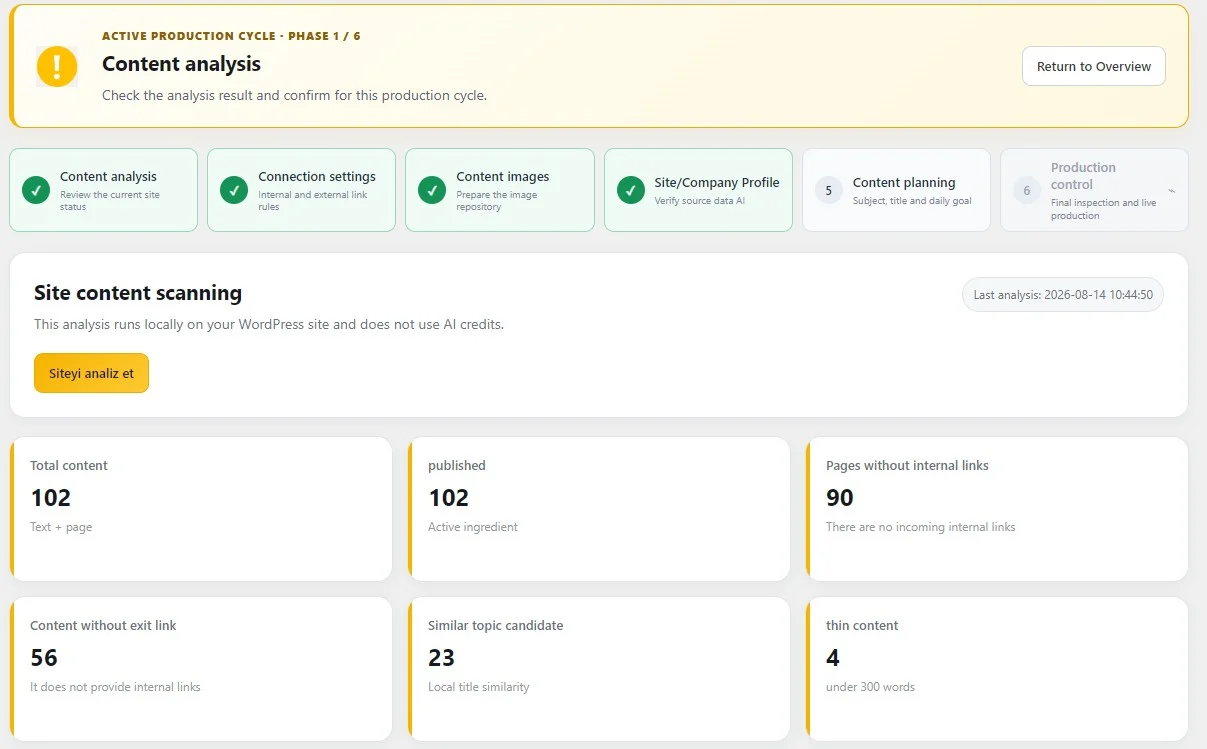
A WordPress content system should receive approved location information before generating geographic content.
This reduces the risk of misleading pages.
For GEO, consistent geographic entities also make the business easier to interpret.
A location page needs more than a place name
Suppose a business serves three cities.
It may be tempting to create the same article three times and replace the city name.
This is not a strong content strategy.
A useful location page should provide additional information relevant to that geographic context.

Depending on the business, this may include:
Actual service availability.
Customer needs common in the area.
Local operating arrangements.
Relevant service categories.
Real branch information.
Regional conditions affecting the service.
Practical travel or service coverage information.
Frequently asked questions from customers in that market.
Not every business will have meaningful differences between locations.
If no meaningful differences exist, separate long-form pages may not be necessary.
One accurate service-area page can sometimes be stronger than dozens of artificial location pages.
AI should identify whether a location deserves its own page
Automatic content generation should include a strategic decision before writing begins.
Does this location represent a distinct content opportunity?
A city with a real office may clearly justify its own page.
A major service area with substantial customer demand may also justify dedicated content.
A tiny neighborhood that has no unique business relevance may not.
Generating pages simply because geographic names exist can create unnecessary site expansion.
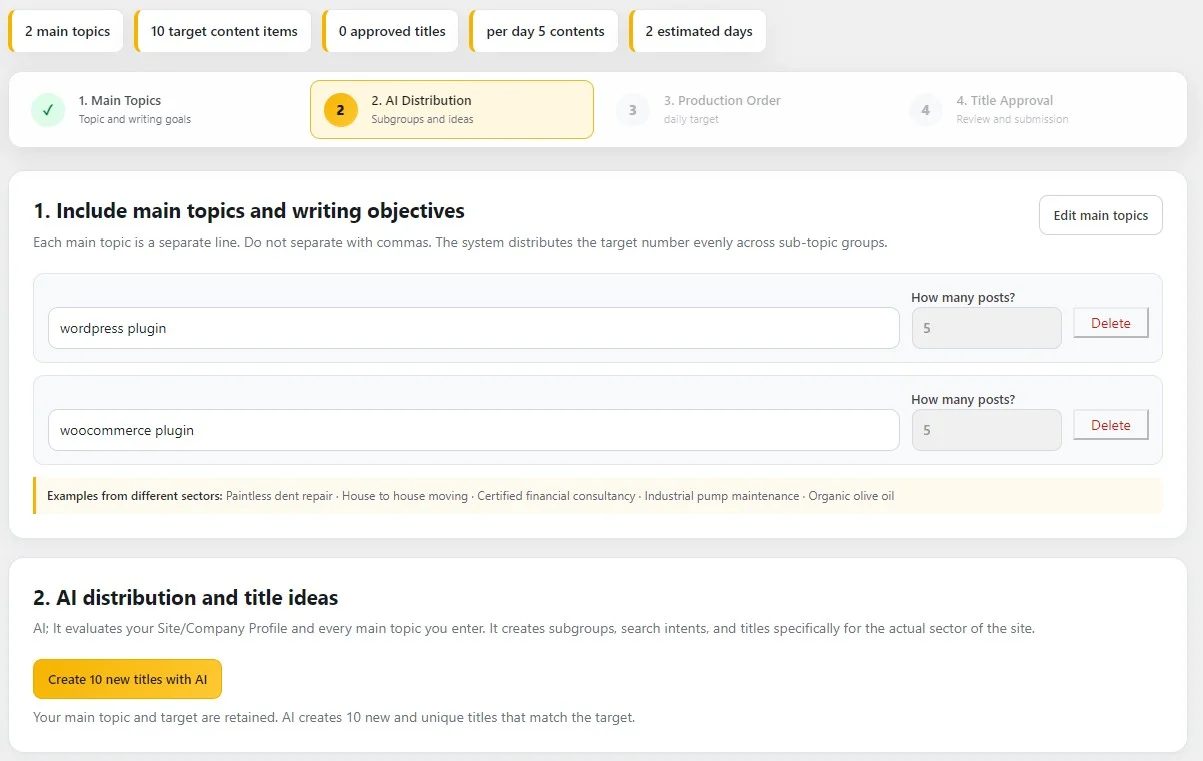
PW Feed content workflows can be structured so that approved locations are defined before AI content is created.
This preserves control.
Automation then handles production rather than making uncontrolled geographic decisions.

Location-based content should answer local search intent
A geographically targeted article should consider what the user is actually searching for.
Someone including a location in a query may want:
A nearby provider.
Information about service availability.
A business operating in that city.
Regional expertise.
A local solution to a particular problem.
Directions or contact information.
Location-specific service details.
The content should respond to that intent.
A page that contains the location keyword but provides only generic industry information may not satisfy the user.
Search intent should therefore determine the information included.
This is the same SEO principle used for non-local pages, but geographic intent adds another dimension.
Local service pages and informational articles have different purposes
A WordPress website can use several types of geographic content.
A location service page is usually commercial.
It explains what the business provides in the relevant area.
An informational article may address a local question or subject without functioning as a direct sales page.
These content types should not be confused.
For example, a service page may introduce the company and explain availability in a city.
A supporting blog article may answer a common problem faced by customers in the same market.
Both pages can be useful because they serve different intentions.
AI content automation should preserve this distinction rather than producing multiple pages with nearly identical commercial messages.
Geographic keyword stuffing should be avoided
One of the easiest ways to weaken location-based content is to repeat the city name excessively.
A paragraph does not become more relevant because the location appears four times.
Natural language is more useful.
The location can appear where it genuinely adds context.
Related geographic terms may also appear naturally when appropriate.
The primary focus should remain the user’s question.
Search engines understand contextual relationships much better than simple keyword counting.
GEO also benefits from clear descriptions rather than repetitive location phrases.
A strong article should read naturally even when geographic optimization is part of the strategy.
Automatic city-page generation needs strict controls
AI can technically create hundreds of location pages quickly.
This capability should be treated carefully.
Imagine a company that serves one metropolitan area containing many districts and neighborhoods.
Automatically generating a full article for each place may create dozens of pages with almost no meaningful distinction.
Instead, the business should identify which geographic areas genuinely deserve dedicated content.
Others can be mentioned accurately within broader pages.
This creates a cleaner website.
It also reduces the risk of doorway-style content whose primary purpose is capturing location keywords rather than helping users.
Automation should improve geographic coverage, not multiply weak pages.
Location content should use business-specific context
A generic location page can be created for almost any company.
A useful page should reflect the actual business.
AI needs context.
This may include:
Business name.
Primary address.
Real service areas.
Products or services.
Operating model.
Target customers.
Important local information.
Preferred terminology.
Contact routes.
Commercial pages.
The richer the verified business context, the more specific the generated article can become.
This is particularly important for local SEO because incorrect location information can create confusion.
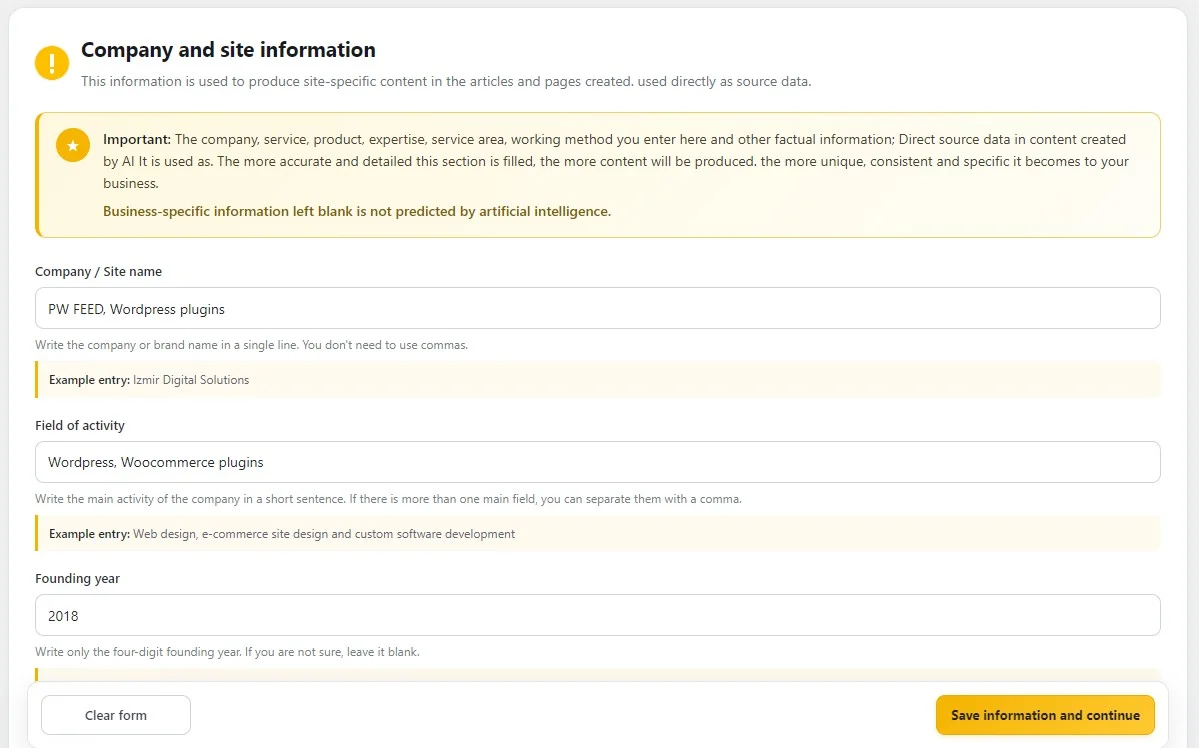
PW Feed can be associated clearly with WordPress, AI content generation, SEO, GEO, and wordpress plugin workflows in its own content. Other businesses should establish similarly clear relationships around their actual services and locations.
Multi-location businesses need separate entity clarity
Some companies genuinely operate multiple branches.
In this situation, location-based content can be especially valuable.
Each branch may have:
A distinct address.
Different opening hours.
Different contact details.
Different service availability.
Different staff.
Different geographic coverage.
AI-generated content should preserve these distinctions.
A page for one branch should not accidentally contain the phone number or address of another.
This is where structured business data becomes important.
Before generating content, the system should know which location profile belongs to which page.
Accurate entity relationships support SEO, user trust, and GEO.
Regional differences can create genuinely unique content
Some industries are influenced by geographic conditions.
Climate may matter.
Local regulations may matter.
Property types may differ.
Consumer preferences may vary.
Regional infrastructure may affect the service.
Different markets may use different terminology.
These differences create legitimate opportunities for location-specific content.
AI can incorporate them when accurate information is available.
This makes each location page genuinely distinct.
Instead of changing only the place name, the article explains something that matters specifically to users in that market.
This is a much stronger form of geographic content creation.
Customer questions can vary by location
Businesses operating across multiple areas may notice different customer questions.
One region may frequently ask about a certain service.
Another may have different concerns.
These patterns can become valuable content inputs.
The company can collect recurring questions by market.
AI can then create articles around them.
This produces content based on real local demand.
It also creates natural differentiation between geographic pages.
A local content strategy becomes stronger when it reflects actual customer behavior rather than a generated list of place names.
AI can make regional content production more practical
Creating unique articles for several legitimate markets manually can be expensive.
Research, writing, optimization, and publication must be repeated for each location.
AI can reduce the writing component.
The business supplies approved location data and relevant distinctions.
AI develops the content.
An editor can review it when necessary.
This makes regional expansion more manageable for smaller companies.
The business can maintain accuracy without requiring a large local content team.
A wordpress plugin can simplify geographic publishing
Location-based content often requires repeated WordPress tasks.
The administrator creates a post.
Adds a title.
Copies the content.
Formats it.
Adds links.
Assigns categories.
Saves or publishes the article.
A wordpress plugin connected to AI content generation can reduce many of these repetitive steps.
Approved geographic topics can move directly into the WordPress workflow.
Draft status can be used for pages requiring local verification.
More predictable informational content can follow a more automated process.
This is particularly useful when a company manages several locations or an agency manages many local clients.
Draft mode is valuable for geographic content
Location information deserves verification.
A spelling error in a city name may be minor.
An incorrect business address is much more serious.
The same applies to service coverage.
AI should not publish statements about locations without reliable input.
Draft mode allows businesses to confirm:
City names.
District names.
Addresses.
Service availability.
Geographic claims.
Local terminology.
Contact information.
This can be especially useful when first implementing location automation.
Once the system consistently uses approved data correctly, selected content may require less manual review.
Agencies can automate local content for multiple clients
Digital agencies often manage many local WordPress sites.
Manual location content production becomes difficult as the client portfolio expands.
AI can help if every client maintains its own geographic profile.
One business may serve a single city.
Another may have five physical locations.
Another may operate across a wider region.
The content system should never mix these contexts.
Separate profiles protect client accuracy.
They also allow agencies to create more specific content without rewriting the same geographic instructions for every article.
SEO titles should differentiate locations naturally
Location pages often need geographically relevant titles.
However, titles should remain readable.
A title that contains a service name, city, district, region, and several keyword variations may become excessive.
The title should communicate the core subject and relevant location clearly.
Different pages should also have distinct titles.
If several branch pages exist, geographic differentiation can occur naturally through the actual location.
Informational articles may require a different title structure based on the question being answered.
Automatic title generation should therefore consider both geography and search intent.
Meta descriptions should reflect the actual location page
Generic meta descriptions reduce differentiation.
If a company has several location pages, each description should accurately represent the specific page.
A branch page may summarize the service and geographic context.
An informational article may summarize the question addressed.
AI can create these descriptions automatically, but the underlying context should remain location-specific.
This supports a cleaner SEO structure.
It also reduces the chance that dozens of pages appear almost identical in search results.
Internal links can strengthen geographic architecture
Location-based content should connect logically with the rest of the website.
A regional article may link to the relevant service page.
A central service page may connect to important location pages.
A branch page may link to useful informational content.
This creates a structured network.
Users can move between geographic and service information.
Search engines can understand the relationships.
Generative systems can encounter clearer connections between the business, locations, and services.
Internal linking should be selective.
Not every location needs to be linked from every article.
The structure should remain useful rather than mechanical.
Location pages should not compete unnecessarily
A business serving neighboring areas may create several pages targeting similar searches.
Careful planning is required to prevent them from competing.
Each page should have a legitimate geographic purpose.
The main business location may have a stronger local page.
Surrounding service areas may be represented differently when the business does not maintain physical offices there.
Informational content can support the wider geographic market without pretending that every location represents a branch.
This distinction helps create a more accurate site architecture.
Content can support both local and broader searches
A local business does not need every article to contain a geographic keyword.
Some topics are universal.
For example, a detailed explanation of a service may be useful regardless of location.
Other articles may benefit from local context.
A balanced strategy uses both.
Broad informational content can build topical authority.
Location-oriented content can clarify geographic relevance.
Together, these pages create a more complete website.
Overusing local keywords on every page can make the site unnecessarily repetitive.
Location accuracy helps build trust
Users expect geographic information to be reliable.
If a page claims a company operates nearby but the contact information suggests otherwise, trust can decline quickly.
Misleading geographic pages may generate traffic, but they do not necessarily generate satisfied customers.
A sustainable strategy should favor accuracy.
Real service areas.
Real addresses.
Real branch information.
Real availability.
AI content automation should reinforce these facts rather than inventing broader coverage.
This also supports GEO because consistent information makes entity interpretation easier.
Location-based content should lead naturally to action
A visitor researching a service in a specific area may have relatively strong commercial intent.
Once the page answers the user’s question, a clear next step can be useful.
Readers who want additional information about PW Feed, its AI content capabilities, or WordPress automation can continue through the PW Feed contact page.
Users ready to review purchasing options can proceed to the PW Feed buy page.
For other local businesses, calls to action may lead to the relevant contact, appointment, quote, or service page.
The action should correspond to the purpose of the page.
GEO favors consistent business and location relationships
A generative system trying to understand a local business benefits from consistency.
If one page identifies the company as operating in one city, another says something different, and a third introduces unrelated locations, the overall picture becomes less clear.
A well-managed geographic content strategy reinforces stable relationships.
The business has a defined identity.
It provides defined services.
It operates from or serves defined locations.
The website should communicate these relationships repeatedly and accurately.
This can strengthen the site’s informational coherence.
AI can support content expansion without geographic spam
The greatest benefit of AI is efficiency.
That efficiency should be used to produce more useful geographic information, not more geographic noise.
A business can expand from a main location page into carefully selected supporting topics.
One article may answer a local customer question.
Another may explain a regional consideration.
Another may cover an important service category in the relevant market.
Each new page adds value.
This is very different from creating a page for every possible district automatically.
Controlled expansion produces a cleaner and more trustworthy WordPress website.
PW Feed and automated location-based content
PW Feed can help businesses incorporate location information into a broader AI-powered WordPress content workflow.
Approved geographic context can guide article generation.
SEO can help align content with relevant searches.
GEO can improve entity and location clarity.
WordPress manages the publishing environment.
A wordpress plugin can reduce repetitive production work.
The business remains responsible for defining real service areas and accurate location information.
AI assists with converting that context into useful content.
This division of responsibility is important.
Technology handles production.
The business defines reality.
A geographic content strategy should evolve with the business
Service areas can change.
New offices may open.
A business may stop serving a particular region.
Customer demand may shift.
Location-based content should reflect these changes.
Old pages may need updating.
New geographic opportunities may become relevant.
AI can make these updates easier, but the source information must remain current.
A static location database can eventually create outdated content.
Businesses should therefore review geographic profiles periodically.
This is particularly important for multi-location operations.
Not every location query deserves a dedicated page
Keyword research may reveal many geographic variations.
This does not mean every phrase requires a separate URL.
Some queries can be served by one broader page.
Others may justify dedicated content because the location has genuine relevance.
The content strategy should determine page creation based on usefulness.
This helps control site size.
It reduces duplication.
It also ensures that important pages receive enough depth.
AI makes content creation easier, but it should not remove editorial judgment about what deserves its own page.
SEO and GEO can reinforce geographic accuracy
SEO encourages businesses to communicate relevant geographic information clearly.
GEO adds another reason to maintain consistent entity relationships.
Both benefit from:
Real locations.
Clear service descriptions.
Useful content.
Natural terminology.
Consistent business details.
Accurate links.
Distinct page purposes.
These principles create a geographic content strategy that can remain useful even as search interfaces evolve.
Final thoughts on automatic location-based WordPress content
Creating location-based content automatically in WordPress can help businesses expand geographic visibility while reducing the manual work involved in producing individual articles and pages.
However, geographic automation requires discipline.
Real business locations should guide the content.
Real service areas should be defined before generation.
City names should not be inserted mechanically.
Separate location pages should provide meaningful differences.
Duplicate geographic content should be avoided.
Customer questions can create valuable local topics.
Regional differences can provide genuine originality.
SEO should connect content with geographic search intent.
GEO should make relationships between businesses, services, and locations easy to understand.
A wordpress plugin can simplify production and publishing.
PW Feed brings these elements together within a structured AI content workflow.
The strongest location-based strategy does not attempt to create a page for every place name that can be found on a map.
It identifies the locations that genuinely matter to the business and creates useful information around them.
When AI automation follows real geography, distinct search intent, SEO, GEO, accurate business context, and controlled publishing rules, location-based WordPress content can expand visibility without turning the website into a collection of repetitive city pages.